
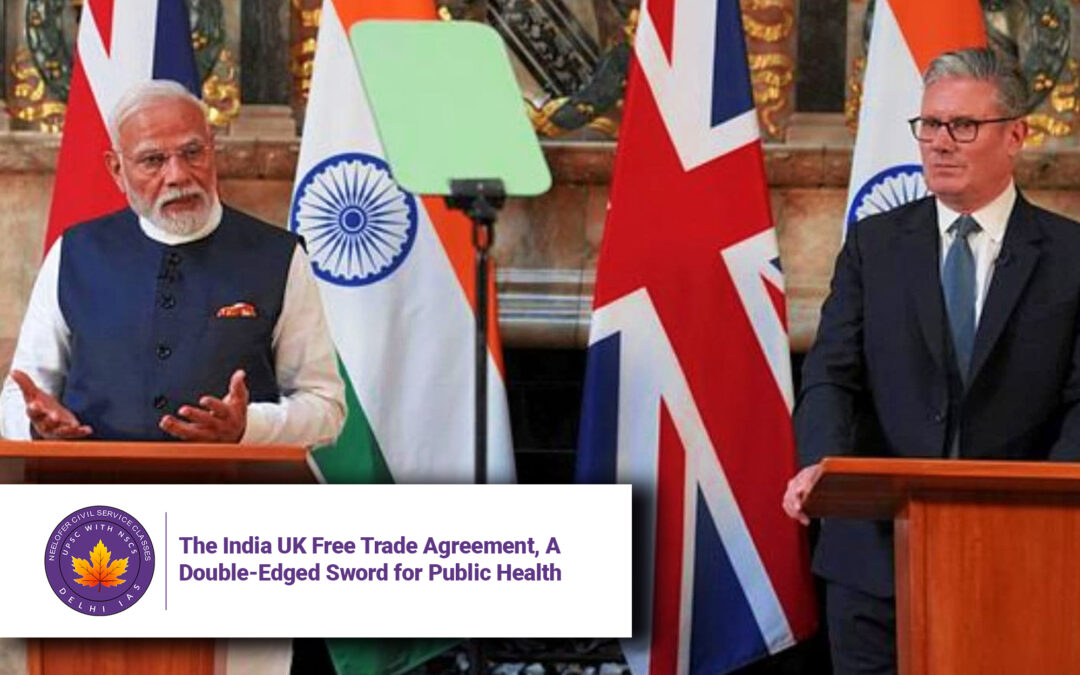
The India UK Free Trade Agreement, A Double-Edged Sword for Public Health
Why in News?
On July 24, 2025, India and the United Kingdom signed their long-negotiated Free Trade Agreement (FTA) during the visit of UK Prime Minister Rishi Sunak to India. The Indian Union Cabinet approved the agreement on July 22, 2025. Officially named the Comprehensive Economic and Trade Agreement (CETA), the deal was earlier announced on May 6, 2025, and marks a significant milestone in India’s global economic diplomacy. 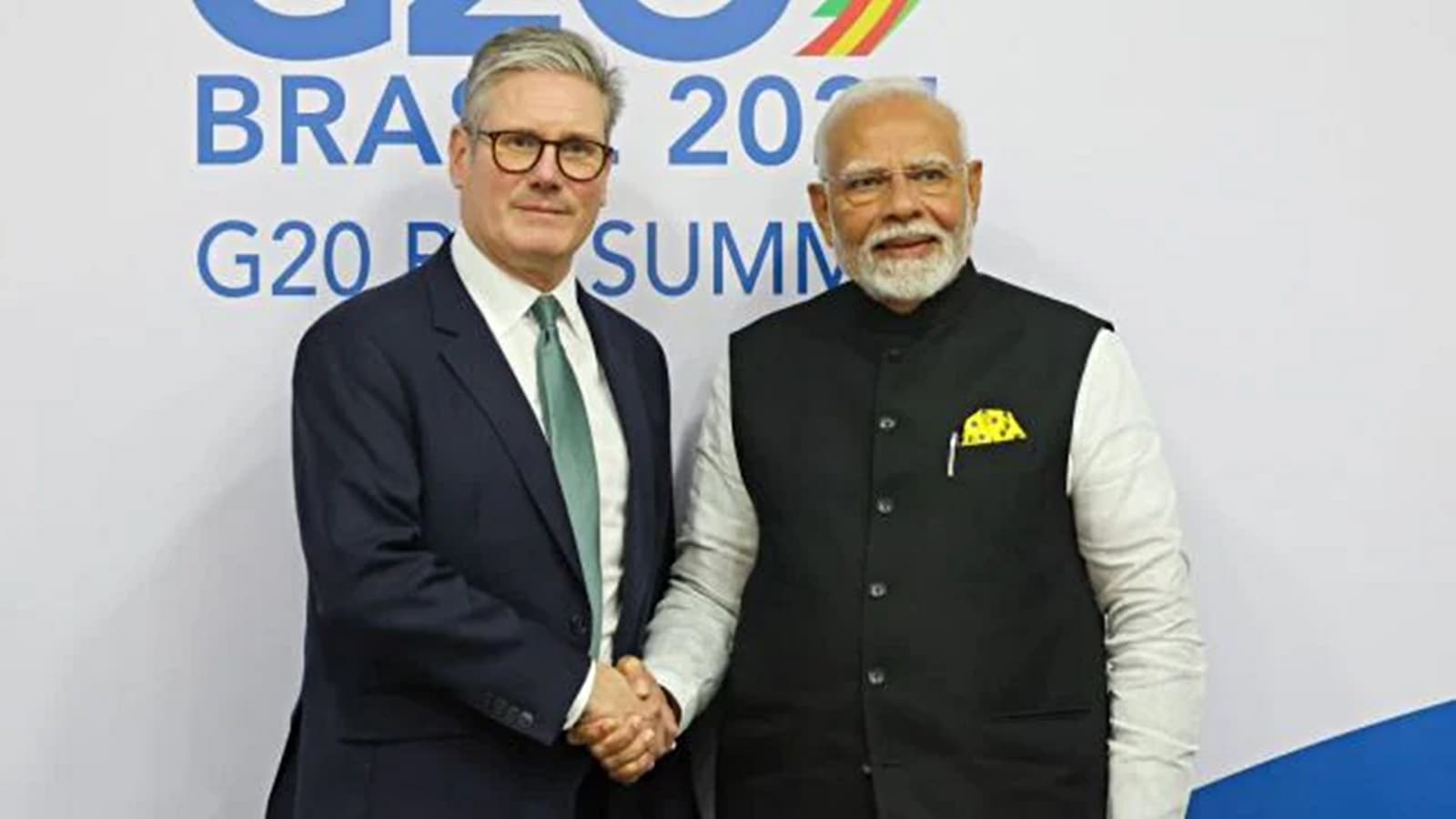
However, public health experts and watchdogs have raised red flags regarding the possible adverse health impacts of this FTA. The deal, they argue, could lead to a surge in the availability and consumption of ultra-processed and unhealthy foods, particularly from the UK, undermining India’s efforts to tackle rising non-communicable diseases (NCDs).
Introduction
The India-UK FTA, on paper, represents a promising move for trade, investments, and economic integration. It eliminates tariffs on various goods, including key food exports from the UK like biscuits, chocolates, and sugary drinks—many of which fall under the category of High Fat, Sugar, and Salt (HFSS). These products, while lucrative for industry, pose serious risks to public health in India.
Given India’s ongoing battle with rising obesity, diabetes, hypertension, and other lifestyle-related disorders, the agreement could open the floodgates for cheaper, harmful foods, made even more appealing through aggressive marketing tactics, especially towards children.
Public health professionals such as Dr. Chandrakant Lahariya (public health physician) and Dr. Arun Gupta (paediatrician and nutrition policy expert) have voiced strong concerns that the FTA, in its current form, lacks health safeguards, and could worsen the country’s already fragile food environment.
Key Issues
1. Unhealthy Food Imports and Their Health Implications
The FTA allows duty-free import of products like confectioneries, soft drinks, and snacks from the UK. Many of these are classified as HFSS and ultra-processed foods (UPFs). These food products are linked to:
-
Increased risk of obesity
-
Higher incidence of type-2 diabetes
-
Cardiovascular diseases
-
Early onset of non-communicable diseases among children and adolescents
Studies in countries with similar trade deals, such as Mexico under the North American Free Trade Agreement (NAFTA), revealed that a lack of public health provisions can lead to drastic spikes in the consumption of junk foods, resulting in an upsurge in health problems.
Mexico’s experience post-NAFTA included:
-
Surge in sugary drink consumption
-
Rise in diet-related diseases
-
Introduction of a ‘soda tax’ and warning labels on foods only after years of damage
India could be heading down a similar path unless proper regulatory mechanisms are embedded into the FTA framework.
2. Inadequate Regulation of Food Marketing in India
A significant concern is the marketing of junk food to children. India’s existing regulatory framework is weak:
-
There are laws against misleading advertisements, but enforcement is inconsistent.
-
Regulatory agencies often fail to identify or penalize misleading ads.
-
Self-regulation by the Advertising Standards Council of India (ASCI) has proven insufficient.
Popular tactics include:
-
Using cartoon mascots on food packages to attract children.
-
Endorsements by celebrities and sports icons, which normalize junk food choices.
-
Misuse of “star ratings” on food products to mislead consumers.
Although these marketing tools can be potent, they often go unregulated, allowing companies to push HFSS products unchecked.
3. The FTA Ignores India’s Own Nutrition Policy Advancements
India has made strides in nutrition labeling and food safety policy through mechanisms such as:
-
Front-of-Pack Nutrition Labeling (FOPNL): Introduced to help consumers quickly understand nutrition content.
-
Food Safety and Standards (Labelling and Display) Regulations: Mandates labels on packaged foods.
However, implementation remains weak:
-
FSSAI’s star-rating system has been criticized for diluting the impact of warnings.
-
Progress on mandatory warning labels has been slow and inconsistent.
-
In 2022, draft guidelines for mandatory labels for high sugar, salt, and fat foods were introduced, but have yet to be enforced.
India risks undoing this progress if the FTA allows unrestricted entry of products without mandatory front-of-pack warnings or marketing controls.
4. Rise of Lifestyle Diseases in India
India is facing a public health emergency due to lifestyle diseases:
-
According to the Lancet (2022), poor diets are a leading cause of death and disability.
-
The consumption of UPFs and HFSS foods is linked to higher obesity rates and poor metabolic health.
-
Children are increasingly exposed to unhealthy diets early in life, setting the stage for chronic diseases in adulthood.
The Public Health Foundation of India (PHFI) and civil society organizations have consistently warned that unregulated trade in harmful food products can worsen these outcomes.
5. Lack of Public Outrage and Awareness
Unlike in some Latin American countries where civil society has fought for stronger food laws, India lacks widespread public discourse around nutrition-related trade issues. Despite the efforts of researchers and advocates, the health implications of the FTA remain largely ignored in public and media spaces.
The FTA’s approval, without robust debate, highlights the gap between economic diplomacy and health diplomacy.
Alternative Approaches
To protect public health while maintaining trade ties, the following alternatives and safeguards are recommended:
1. Health Impact Assessments for All FTAs
Just as Environmental Impact Assessments are conducted for infrastructure projects, India should institutionalize Health Impact Assessments as a mandatory component of trade negotiations.
These assessments can help:
-
Forecast long-term health consequences
-
Suggest policy buffers (e.g., taxes, labeling laws)
-
Guide public awareness campaigns
2. Tightening Food Marketing Laws
The government must:
-
Ban advertisements of HFSS products during children’s TV hours.
-
Prohibit celebrity endorsements of junk food.
-
Penalize false or misleading health claims.
-
Enforce pre-broadcast vetting of food advertisements.
3. Strengthening Food Labeling Regulations
India should:
-
Replace voluntary FOPNL with mandatory, color-coded warning labels.
-
Align food labeling with WHO recommendations.
-
Ensure that imported products meet Indian labeling standards before entering the market.
4. Public Awareness and Advocacy Campaigns
Educating citizens about the health harms of ultra-processed foods is essential. Civil society, media, schools, and health professionals must:
-
Promote healthy eating through public campaigns
-
Advocate for legislative safeguards
-
Pressure policymakers to put health before trade gains
Challenges and the Way Forward
Challenges
-
Political Will: Trade deals are often rushed for economic gains, ignoring public health.
-
Industry Lobbying: Powerful food lobbies resist reforms and influence policy decisions.
-
Lack of Data: Limited public health surveillance systems to track dietary impacts in real-time.
-
Fragmented Regulation: Different ministries (Health, Commerce, Food Processing) operate in silos.
The Way Forward
The Indian government must ensure that health policies do not remain isolated from trade negotiations. India has already demonstrated leadership in tobacco control and pharmaceutical price caps—similar assertiveness is needed for food safety.
The following should be prioritized:
-
Integrate public health clauses in all trade agreements.
-
Provide legal autonomy to regulatory bodies like FSSAI and ASCI.
-
Fund large-scale dietary risk surveillance studies.
-
Ensure transparency in FTA negotiations with health sector input.
Conclusion
The India-UK FTA is being hailed as a landmark deal in trade and diplomacy. However, it is imperative that economic growth does not come at the cost of public health. The inclusion of tariff-free access to harmful HFSS and ultra-processed food products is a dangerous loophole that could accelerate India’s already alarming epidemic of lifestyle diseases.
As the FTA inches closer to implementation, it is crucial for policymakers to balance trade ambitions with health commitments. Public health experts, civil society, and aware citizens must ensure that the government doesn’t miss this opportunity to craft a healthier and more equitable food environment for all Indians.
Five Key Questions and Answers
1. What is the India-UK Free Trade Agreement (FTA)?
It is a bilateral trade deal signed on July 24, 2025, between India and the UK, officially named the Comprehensive Economic and Trade Agreement (CETA), aimed at boosting trade and investments through tariff eliminations.
2. Why are public health experts concerned about this FTA?
Because it allows duty-free imports of high-fat, high-sugar, and ultra-processed foods from the UK, which can significantly harm India’s efforts to reduce non-communicable diseases.
3. What lessons can be learned from Mexico’s experience with trade and junk food?
Mexico’s NAFTA deal led to a sharp rise in processed food consumption, obesity, and diabetes, forcing it to later introduce soda taxes and food warning labels.
4. What are the gaps in India’s food regulation policies?
Weak enforcement of advertising laws, ineffective labeling systems, and over-reliance on industry self-regulation, all of which fail to protect consumers from misleading food promotions.
5. What steps should the Indian government take going forward?
Integrate public health clauses in trade deals, make nutrition labels mandatory, ban misleading advertisements, and ensure that all imported foods meet Indian safety standards.

