
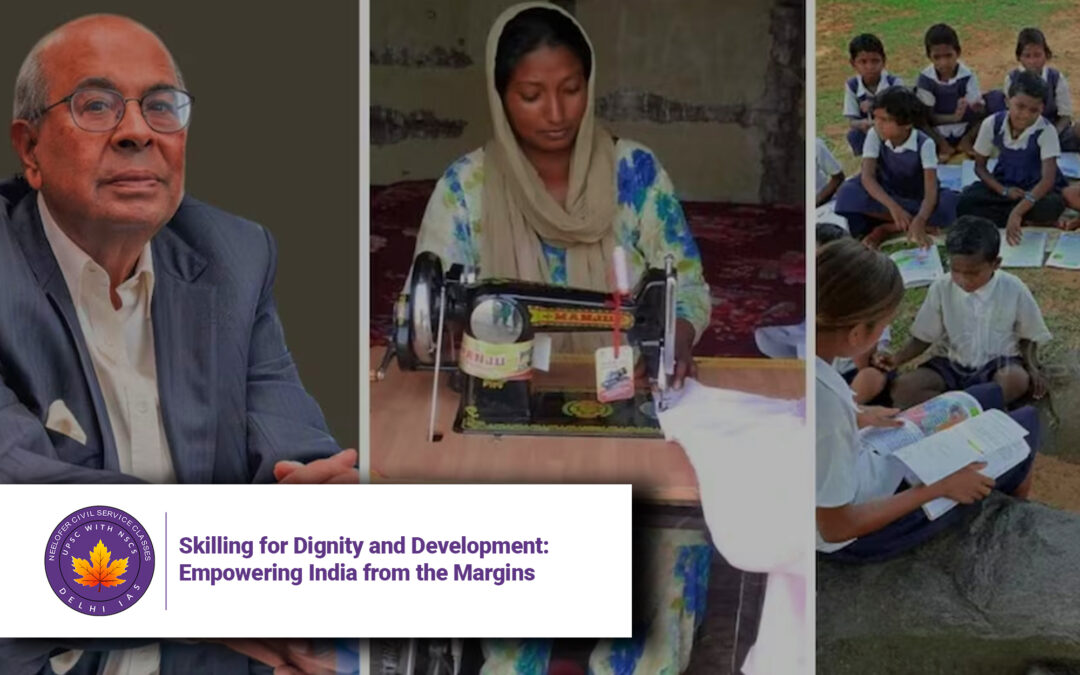
Skilling for Dignity and Development, Empowering India from the Margins
Why in News?
A recent article by Siddharth Sharma, CEO of Tata Trusts, emphasizes the need to rethink India’s approach to skilling. The focus is shifting from merely creating job-ready individuals to nurturing human dignity, innovation, and sustainable livelihoods—especially for those on the margins of society. 
Introduction
India’s growth story is incomplete without inclusive skilling. The story of Pratibha Kalita, a 45-year-old artisan from Assam, exemplifies how traditional crafts, when empowered with the right skills and resources, can become tools of dignity, freedom, and economic resilience. Sharma’s commentary makes a strong case for reimagining skilling as a transformative process, beyond just employment.
Key Issues and Insights
1. Pratibha Kalita’s Journey: A Model of Transformative Skilling
Pratibha, from a remote village in Assam, turned her weaving skills—once used only for household needs—into a thriving business. With support in branding, business management, and hands-on training, she not only uplifted her family but created jobs for other women. Her story underscores that true skilling enables agency and dignity, not just employment.
2. Beyond Traditional Skilling Metrics
The current approach to skilling often reduces it to statistics: “How many youth did we train? How many jobs did we create?” While these metrics are important, they miss the larger picture—what freedoms and opportunities skilling truly unlocks for individuals, especially those at the margins.
3. Dignity-First Skilling: The Need of the Hour
Sharma highlights that skilling should be human-centred. It must enable individuals to use their skills meaningfully and shape their future. Quoting APJ Abdul Kalam: “Real education enhances the dignity of a human being and increases his or her self-respect.”
4. Bridging the Access Gap
Owning a smartphone doesn’t ensure access unless it’s paired with electricity, digital literacy, and freedom from social norms. Skilling must involve not just providing tools, but ensuring individuals can use them meaningfully—especially women and marginalized communities.
5. Role of Philanthropy and Innovation Ecosystems
India’s youth are eager to build and lead. They need an ecosystem that respects their potential and gives them tools to innovate. Philanthropic organizations can support local innovations, mentor systems, and scalable models to make skilling impactful.
Examples of Real-World Impact
-
A handloom artisan scaling traditional work using modern design and tech.
-
A rural sports coach mentoring youth for discipline and leadership.
-
A community worker promoting school attendance and health.
-
A rural health worker improving health outcomes.
-
A self-help group leader enabling women-led enterprises.
These represent the true face of skilled India—not just as job holders, but as changemakers.
Conclusion
India has millions of Pratibhas—individuals with talent and tradition but lacking opportunity. Skilling must go beyond classrooms to empower people in their environments. It must teach them, support them, and nurture them to rewrite their stories. The twin goals: skill them, and nurture them.
Q&A Section
1. Who is Pratibha Kalita and why is she important?
Pratibha Kalita is a 45-year-old artisan from Assam who transformed her traditional weaving skills into a successful business, creating jobs and preserving her heritage.
2. What is the main argument made by Siddharth Sharma?
Sharma argues that skilling should be about human dignity, problem-solving, and empowerment—not just job creation.
3. Why is the current view of skilling seen as limited?
It focuses only on numbers—how many trained, how many placed—without assessing the long-term impact on individuals’ lives.
4. How can skilling be made more effective?
By ensuring access to technology, digital literacy, local support systems, and freedom from societal restrictions, especially for women.
5. What role can philanthropy play in skilling?
Philanthropic organizations can build supportive ecosystems, fund innovation, mentor youth, and invest in long-term impact rather than quick outcomes.

