
NATO Strategic Shift and the Emerging Global Power Equations
Why in News?
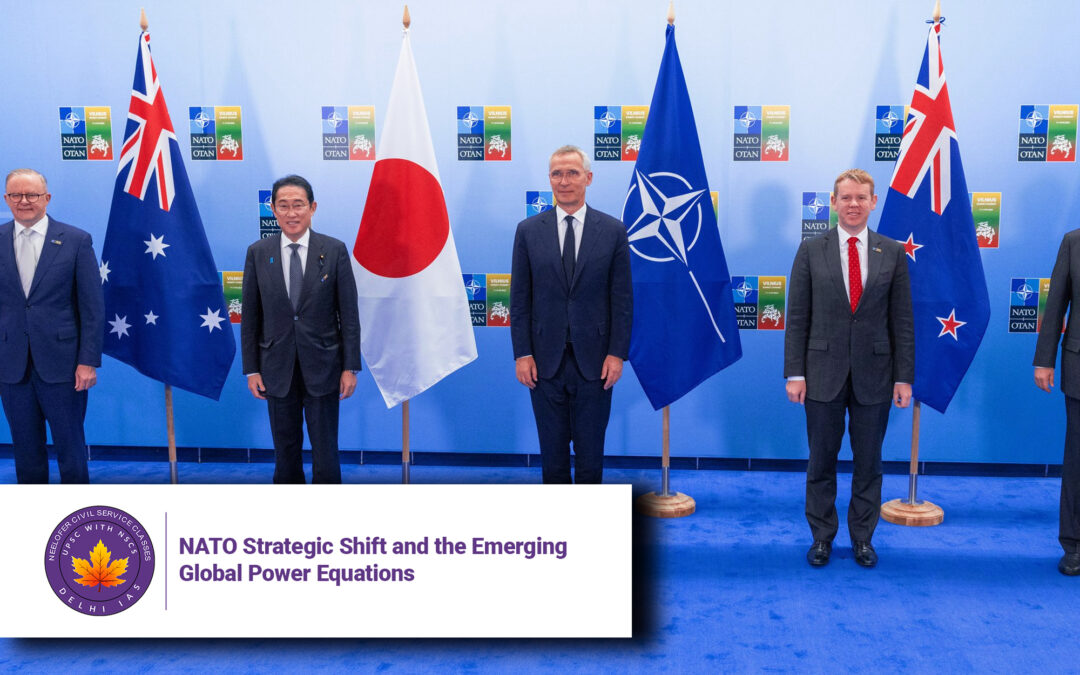
During the recent NATO summit in The Hague, a major shift in strategic priorities and transatlantic unity emerged, with significant implications for the global security landscape, particularly in the context of evolving U.S.–Europe relations and rising global geopolitical tensions. 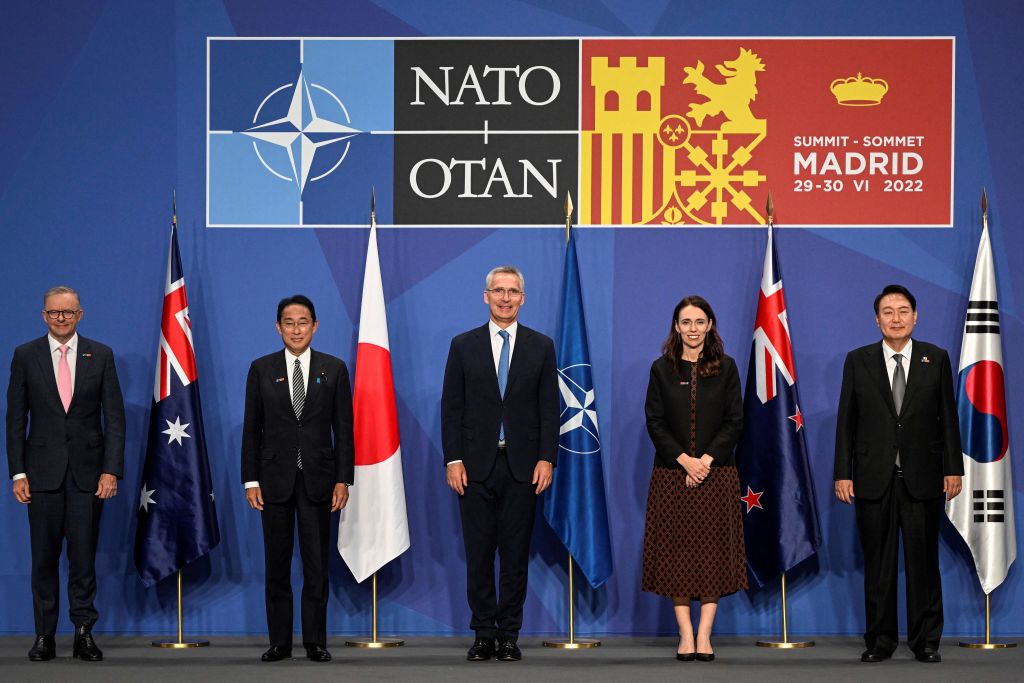
Introduction
In a world marked by increasing great power rivalries and unpredictable leadership, the recent NATO summit signals a recalibration in global defense policy. Once criticized by former U.S. President Donald Trump as obsolete or exploitative, NATO is now undergoing strategic renewal. Trump’s changing tone and the growing European commitment to collective defense indicate a shift toward deeper cooperation and deterrence.
NATO’s Renewed Commitments
The summit led to a reaffirmation of shared goals among NATO members. A new consensus emerged to increase defense spending commitments, targeting 50% of GDP by 2035, with 3.5% allocated specifically to emerging needs such as:
-
Cybersecurity
-
Artificial intelligence
-
Infrastructure resilience
-
Crisis management and defense innovation
This commitment marks a departure from the past trend of declining or stagnant military investments in Europe. The Hague Declaration now defines defense spending as a pillar of transatlantic cooperation and not just an obligation.
Transatlantic Cooperation Gains Strength
The biggest revelation is the shift in tone and action from Europe. The Hague Declaration reflects Europe’s intent to shoulder greater responsibility, especially in light of Russia’s war in Ukraine. Germany, France, and other countries are now pushing for larger roles in shaping NATO’s direction.
The U.S., though more cautious, has also acknowledged the importance of alliance-based defense cooperation. The recent alignment of Washington and Europe on matters of cybersecurity, space, and hybrid warfare suggests a cohesive NATO strategy going forward.
Implications for Global Order
The NATO summit arrives at a time of high geopolitical tension:
-
The U.S. and its allies face rising challenges from Russia, China, Iran, and North Korea.
-
The Indo-Pacific remains a key area where NATO’s role could evolve.
-
Russia’s Ukraine invasion has forced European nations to confront hard security realities.
-
Asia-Pacific partnerships are now increasingly seen as critical extensions of NATO’s strategic outlook.
As efforts to strengthen transatlantic cooperation continue, rival powers are expected to intensify their counterstrategies. The summit underlines that collective security remains vital in an era of economic uncertainty, regional conflicts, and tech-based warfare.
Conclusion
The Hague summit marks a turning point for NATO and the global order. By committing to increased defense spending and a more equitable distribution of strategic responsibilities, the alliance seeks to remain a cornerstone of global peace. However, with rival powers pushing back and tensions escalating, the road ahead for NATO and global diplomacy will be fraught with new challenges.
5 Questions & Answers
Q1. What was the key highlight of the recent NATO summit in The Hague?
A: The summit focused on increasing defense spending commitments to 50% of GDP by 2035 and reaffirmed NATO’s role in collective security and crisis management.
Q2. How has Europe’s stance within NATO changed recently?
A: European countries have committed to greater financial and operational responsibility, signaling a shift from reliance on the U.S. to a more balanced partnership.
Q3. Why is this strategic change significant for the U.S.?
A: It relieves some of the U.S.’s security burdens, encourages sustainable alliance management, and strengthens NATO’s deterrence posture globally.
Q4. How does this affect global rivalries?
A: As NATO consolidates its strength, opposing powers like China, Russia, Iran, and North Korea are likely to intensify counterstrategies, escalating global competition.
Q5. What challenges lie ahead for NATO?
A: Ensuring member compliance, dealing with divergent national interests, and responding to rapidly evolving threats like cyber warfare and hybrid aggression.

