
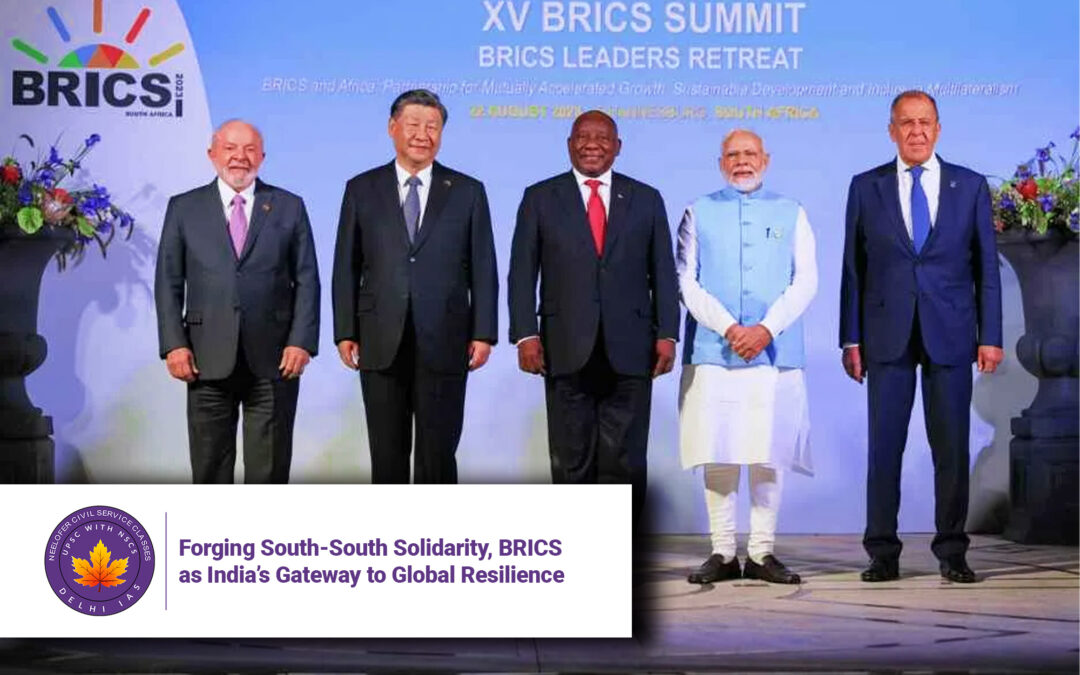
Forging South-South Solidarity, BRICS as India’s Gateway to Global Resilience
Why in News?
As the BRICS bloc prepares for its 2025 summit in Rio de Janeiro, momentum builds for a recalibrated global order—one where emerging economies chart their own course. With India Inc. at the cusp of deeper integration, the BRICS platform is evolving into more than a diplomatic gathering. It is becoming a strategic launchpad for inclusive growth, trade diversification, and South-South cooperation. 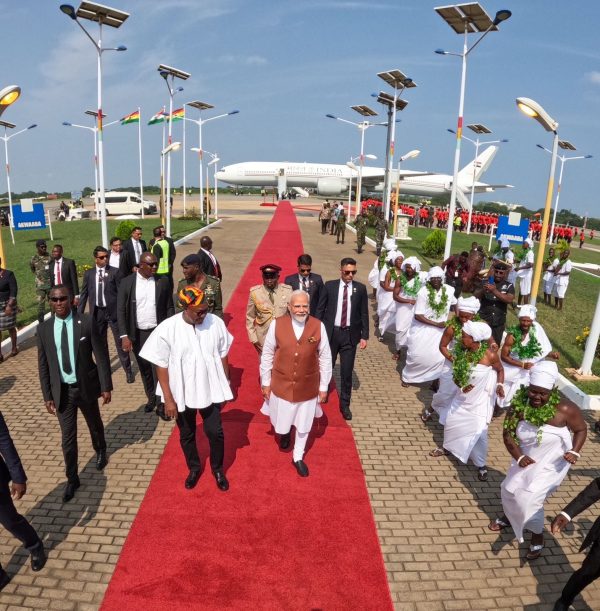
Introduction
In a fractured global economy struggling with polarisation, protectionism, and climate emergencies, BRICS (Brazil, Russia, India, China, South Africa, and newer entrants like Egypt, UAE, Iran, Ethiopia, and Indonesia) offers a vision for equitable transformation. Representing 55% of global population and nearly 40% of world GDP, it exceeds even the G7 in scale. But beyond statistics, BRICS is a story of alternative futures—rooted in shared aspirations and a common pursuit of multipolarity.
For India, BRICS is not just a bloc. It is a strategic imperative.
India’s Strategic Stakes in BRICS
India’s growing involvement in BRICS echoes its long-standing goals: market access, regional value chain integration, and sovereign financing through non-Western institutions like the New Development Bank (NDB). These aspirations align with India’s model of sustainable and inclusive growth, especially in sectors like renewable energy, agriculture, IT services, pharmaceuticals, and textiles.
BRICS also offers India the chance to de-risk its supply chains, moving away from dependence on Western markets and currencies, particularly the dollar. As geopolitical fractures deepen, India’s pivot toward BRICS is a hedge against uncertainty—and a bid to shape the future of global governance.
From Platform to Powerhouse: The Business Role
To make BRICS truly impactful, Indian industry must move from participant to protagonist. Industry chambers, especially SMEs, need stronger representation across all BRICS Business Council groups. Greater private sector engagement will:
-
Strengthen India’s voice in shaping trade norms,
-
Advance tech and manufacturing diplomacy,
-
Facilitate green financing and climate resilience efforts.
A harmonised BRICS trade ecosystem—with Mutual Recognition Agreements (MRAs), digital documentation, and simplified customs—can dramatically lower trade friction. With intra-BRICS trade already exceeding $600 billion, the untapped growth potential is vast.
Diplomatic and Developmental Leverage
By shaping BRICS consensus on issues like food security, climate finance, and infrastructure resilience, India can influence the global agenda while aligning BRICS commitments with its own Panchamrit targets.
Moreover, as disillusionment grows with traditional institutions’ failure to meet climate finance promises, BRICS offers a more reliable forum to push for South-South solidarity. India’s leadership in climate-related ventures within BRICS—like energy transitions and sustainable agriculture—can bridge the gap between global climate goals and ground realities.
Conclusion: A South-South Springboard
BRICS is no longer an acronym. It is a platform of possibility, one where emerging voices like India’s can co-author a fairer future. As the bloc expands and deepens institutional architecture, Indian enterprise must rise not only to benefit from the opportunities, but to shape the rules of tomorrow.
In Rio 2025, the world will watch. But it’s what India builds within the bloc—not just what it says—that will define its place in a reordered world.
Q&A Section
1. Q: What is the BRICS bloc’s current share of global population and GDP?
A: BRICS represents 55% of the global population and nearly 40% of world GDP, surpassing the G7 in economic scale.
2. Q: How does BRICS support India’s economic ambitions?
A: Through expanded market access, regional value chains, and development financing via the New Development Bank.
3. Q: What role can Indian SMEs play in BRICS?
A: They can benefit from trade simplification, predictable regulations, and integrated value chains, especially in sectors like textiles, IT, and manufacturing.
4. Q: What are India’s climate-related priorities within BRICS?
A: Promoting renewable energy, climate resilience, sustainable agriculture, and aligning climate efforts with its Panchamrit commitments.
5. Q: Why is India advocating a stronger voice in BRICS mechanisms?
A: To push for a multipolar global order, improve dispute settlement mechanisms, and reduce over-reliance on dominant currencies and Western supply chains.

