
India AI Ambitions Require Strategy Before Execution
Why in News?
India has expressed its desire to become a global leader in Artificial Intelligence (AI) governance. However, its approach lacks a unified, democratic national AI strategy, risking ineffective and opaque implementation that could hamper both domestic innovation and global influence. 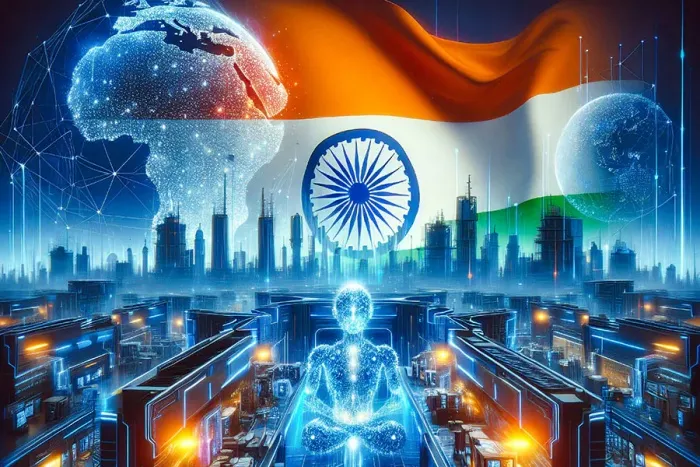
Introduction
India, the world’s largest democracy and an emerging tech hub, has set its sights on global AI leadership. But this ambition may falter due to the absence of a national strategy that aligns with democratic values and national priorities. Most of India’s AI activities are currently housed in the IndiaAI Mission, a bureaucratic entity under the Ministry of Electronics and IT. Without strategic alignment, the country risks opaque governance, loss of public trust, and missed economic potential.
Key Issues and Institutional Concerns
-
No Defined National AI Strategy
India’s AI activities are mission-oriented, not strategy-driven. While missions can be useful, they cannot substitute a comprehensive plan rooted in national goals like sovereignty, security, and social equity. -
Opaque Governance and Public Distrust
Lack of transparent data governance frameworks risks turning AI platforms into monopolistic systems. This could deepen inequality and reduce public confidence in AI policies. -
Labour and Economic Challenges
India’s workforce is underprepared for AI’s impact. Despite 26% of the workforce being exposed to generative AI, there’s limited planning for reskilling or economic transition, especially in labour-intensive sectors. -
High Energy Demands of AI
AI is energy-hungry. With global data centre energy use expected to double by 2030, India must plan for sustainability. Bengaluru and Hyderabad already face electricity shortages, which could constrain AI growth. -
Global Influence at Risk
India’s ability to shape global AI norms depends on having a robust domestic strategy. Without one, it may be sidelined in international forums, unable to influence rules on bias, privacy, and data justice.
Conclusion
India must shift from reactive missions to a forward-looking AI strategy grounded in democratic legitimacy and public deliberation. This includes Cabinet approval of a national strategy, a Parliamentary committee on AI, and a national roadmap on AI’s labour market impact. Only then can India become a true AI leader, domestically and globally.
Q&A Section
1. Q: What is India’s current approach to Artificial Intelligence governance?
A: India’s AI efforts are led by the IndiaAI Mission under the IT Ministry, but lack a unified national strategy rooted in democratic values and public policy priorities.
2. Q: Why is a national AI strategy important?
A: It helps ensure India’s strategic autonomy, promotes public trust, and aligns AI development with national security, economic, and social objectives.
3. Q: What are the key risks of lacking such a strategy?
A: Opaque governance, job displacement, energy strain, and weakened global influence in shaping AI norms.
4. Q: What labour challenges does India face with AI?
A: A significant portion of India’s workforce is at risk from AI-driven disruption, but there is no clear plan for reskilling, employment transition, or safeguarding worker rights.
5. Q: What steps are suggested as the way forward?
A: Parliament should endorse a national AI strategy, form a standing committee on AI and Emerging Tech, and implement a national roadmap to manage AI’s economic and social effects.

