
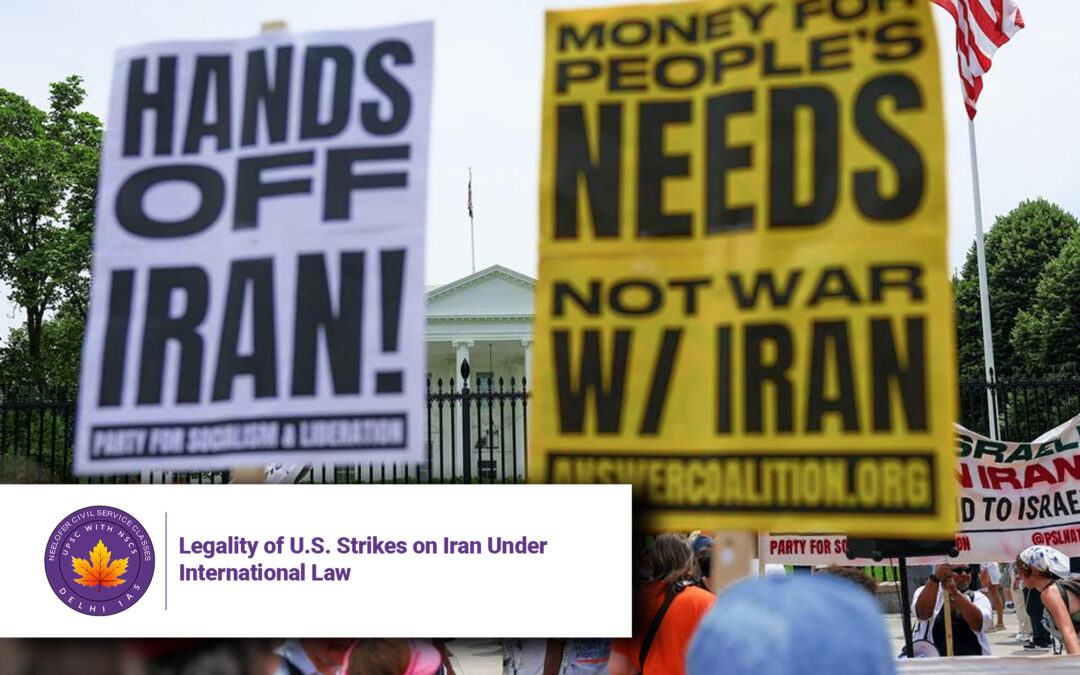
Source: The Hindu
Topic: Legality of U.S. Strikes on Iran Under International Law
Why in News?
On June 22, the U.S. launched military strikes on Iran, joining Israel’s escalating efforts to curb Iran’s nuclear programme. This development has sparked global concern over the legality of pre-emptive self-defence and raised urgent questions about international law under the UN Charter. 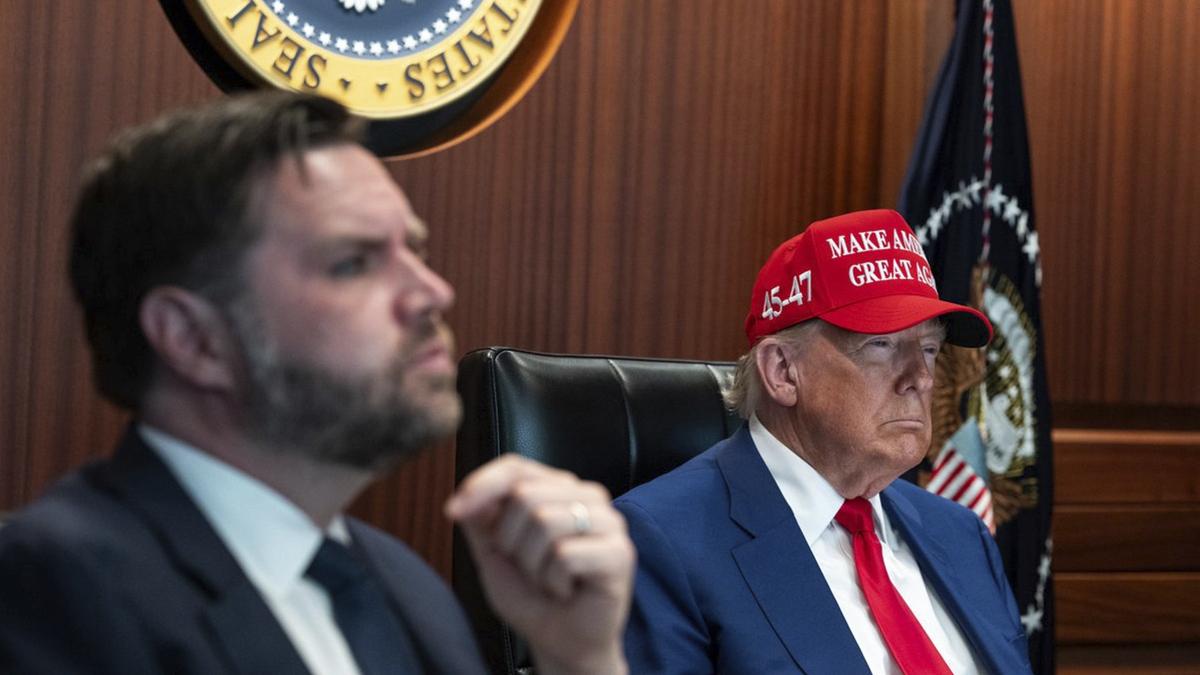
Introduction
As tensions intensify in West Asia, the legality of the U.S. military strike on Iran without UN Security Council (UNSC) approval is being fiercely debated. The issue hinges on interpretations of Article 51 of the UN Charter, which outlines when a state can legally use force in self-defence.
Key Legal Concepts and International Position
1. What the UN Charter Says
-
Article 2(4) of the UN Charter prohibits use of force against any state’s territorial integrity or political independence.
-
Self-defence is permitted only in response to an armed attack or with UNSC authorization, as per Article 51.
2. What is Pre-Emptive Self-Defence?
-
A controversial doctrine under which a state may act in self-defence before an armed attack if an imminent threat exists.
-
This idea originated from the Caroline case (19th century), which set the precedent that self-defence must be “instant, overwhelming, and leaving no choice of means or moment for deliberation.”
3. The 2004 UN High-Level Panel View
-
The panel concluded that anticipatory self-defence is not valid unless the threat is truly imminent.
-
Emphasized the importance of proportionality and last resort in justifying any attack.
What Happened with Iran?
-
The U.S. cited Iranian attacks on military bases and rapid nuclear programme advancement as a justification.
-
However, Iran had not launched any actual attack, raising questions about whether the threat met the “imminent” threshold.
-
U.S. intelligence agencies had conflicting views on whether Iran was close to building nuclear weapons.
What Does International Law Say?
-
The International Court of Justice (ICJ) has consistently rejected pre-emptive strikes as legal self-defence.
-
In the Nicaragua v. U.S. case (1986), the ICJ held that acts of force in anticipation of a threat do not qualify under self-defence unless an actual attack has occurred.
Why Is This Debate Important?
-
Undermines global law: Unilateral military action outside UN approval sets a dangerous precedent.
-
Weakens multilateralism: Nations may bypass collective mechanisms and justify aggression unilaterally.
-
Increases global tensions: Especially in regions like West Asia where alliances are fragile.
Conclusion
The legality of the U.S. strike on Iran remains a grey zone in international law. With the criteria for “imminent threat” still hotly contested, pre-emptive self-defence continues to challenge the foundation of the UN-based global order. The world community must clarify and possibly update the Charter provisions to address modern threats, while upholding international peace and security.
5 Q&A Based on the Article
Q1. What does Article 51 of the UN Charter permit?
A1. Article 51 allows a state to use force in self-defence only if an armed attack occurs or with UNSC authorization.
Q2. What is the “Caroline case” and why is it relevant?
A2. The Caroline case set the criteria for lawful self-defence: the threat must be imminent, overwhelming, and leave no room for alternative action or delay.
Q3. Why is the U.S. strike on Iran controversial?
A3. Iran had not launched an armed attack, and the imminence of threat was not clearly proven, making the U.S. action potentially a violation of international law.
Q4. What is the international community’s view on pre-emptive strikes?
A4. The UN and ICJ have generally rejected pre-emptive self-defence, emphasizing that actual attacks must occur to justify such action.
Q5. What could be the consequence of legitimizing pre-emptive self-defence?
A5. It may encourage more nations to take unilateral action, weakening the authority of the UN and increasing the risk of global conflicts.

