
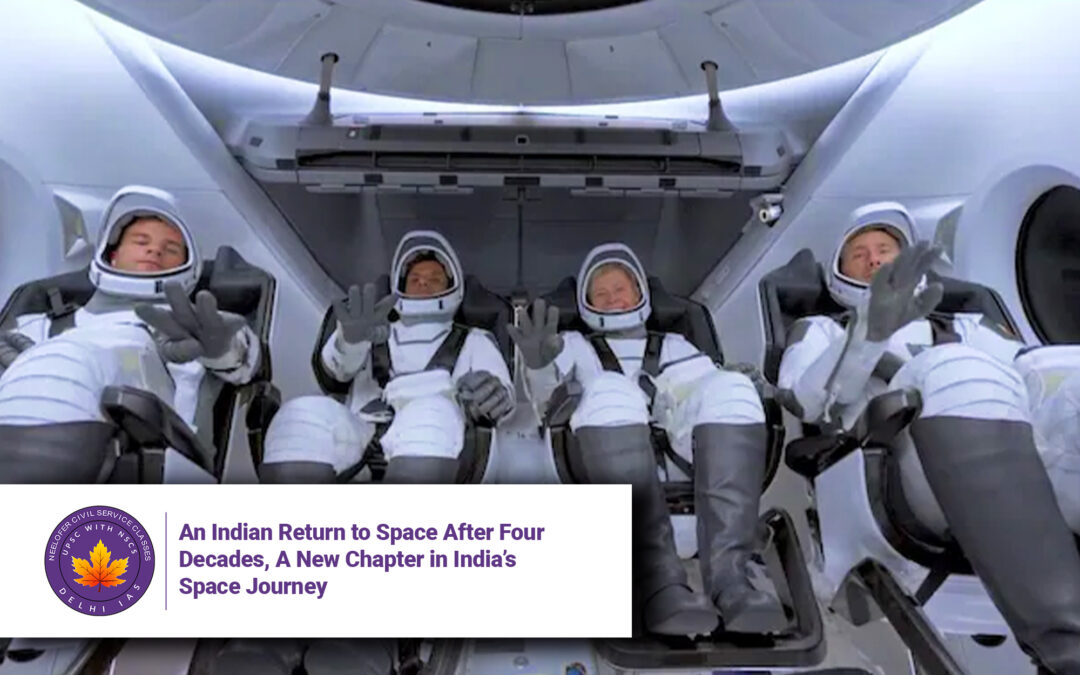
An Indian Return to Space After Four Decades, A New Chapter in India’s Space Journey
Why in News?
Group Captain Shubham Shukla became the second Indian to venture into space, nearly four decades after Rakesh Sharma’s historic 1984 Soviet mission. His journey aboard the Axiom-3 private mission to the International Space Station (ISS) marks a significant milestone for India’s renewed human spaceflight ambitions under the Gaganyaan program. 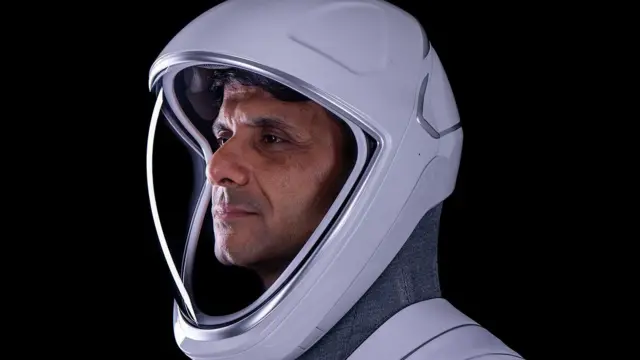
Introduction
India has once again marked its presence in space with Group Captain Shubham Shukla’s recent trip to the ISS as part of a private commercial mission by Axiom Space. Unlike Rakesh Sharma’s Cold War-era flight, Shukla’s mission comes at a time when India is actively developing its own indigenous human spaceflight capability through ISRO’s Gaganyaan program, expected to launch in 2025 or later.
Key Highlights
-
Who is Shubham Shukla?
A serving Group Captain in the Indian Air Force and a fighter pilot, Shukla was selected for a mission aboard the Axiom-3 mission to the ISS. His training included understanding microgravity, space medicine, life support, and operating onboard experiments. His learnings are expected to significantly aid India’s Gaganyaan crew training. -
Learning from History:
Rakesh Sharma’s 1984 Indo-Soviet space mission was historic, but it didn’t result in the establishment of a continuous Indian human space program. Shukla’s flight represents the start of a more structured and self-reliant phase in India’s space ambitions, building toward future independence in crewed missions. -
India’s Gaganyaan Ambitions:
The Gaganyaan program aims to send a three-member Indian crew to Low Earth Orbit on an indigenous spacecraft launched by ISRO’s GSLV Mk-III rocket. Although delayed, it remains India’s flagship space project, aimed at demonstrating India’s capabilities in human spaceflight. -
Strategic and Geopolitical Dimensions:
Shukla’s flight also has geopolitical implications. With the US, China, and Russia dominating human spaceflight and space diplomacy, India’s collaboration with Axiom Space (a private U.S. company) is a significant move. It enhances India’s engagement with emerging space alliances and signals its readiness to join the elite club of spacefaring nations. -
Cultural Impact and National Pride:
Rakesh Sharma’s iconic response to then Prime Minister Indira Gandhi — “Saare Jahan Se Accha” — became a symbol of national pride. Shukla’s mission rekindles that sentiment and introduces a new generation to the potential of Indian space exploration.
Conclusion
Shubham Shukla’s mission is more than just a personal achievement. It is a precursor to India’s grand ambitions in space exploration. As ISRO inches closer to its Gaganyaan launch, the experience, data, and exposure from such international missions will be invaluable. Unlike 1984, India today is better equipped and more determined to take human spaceflight further — not as a one-off feat, but as a sustained national endeavor.
5 Questions and Answers
1. Who is Shubham Shukla and what is his achievement?
Shubham Shukla is a Group Captain in the Indian Air Force who became the second Indian to fly to space, participating in a private Axiom-3 mission to the ISS.
2. How is Shukla’s spaceflight different from Rakesh Sharma’s 1984 mission?
While Sharma flew under a Soviet-led program during the Cold War, Shukla’s flight is a private international mission aligned with India’s indigenous Gaganyaan ambitions.
3. What is the significance of this mission for Gaganyaan?
Shukla’s hands-on training and experience in space will support ISRO in preparing astronauts for Gaganyaan by refining training protocols and enhancing mission readiness.
4. What are the geopolitical implications of this mission?
India’s involvement in space missions with private U.S. firms like Axiom Space boosts its global positioning in space diplomacy and reflects strategic autonomy in aligning space partnerships.
5. When is Gaganyaan expected to launch and what is its goal?
Gaganyaan is expected to launch by 2025 or later. Its goal is to send three Indian astronauts to Low Earth Orbit using indigenous technology, marking India’s entry into manned spaceflight.

