
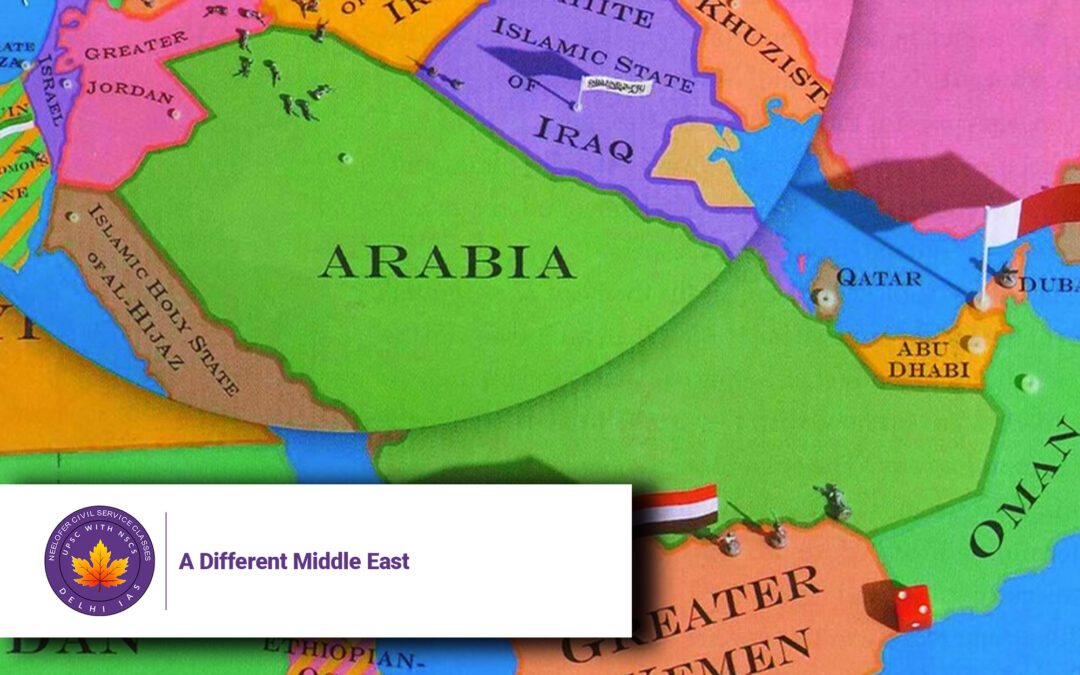
A Different Middle East
Iran-Israel war signals a shift in regional power dynamics — and a reckoning for Tehran’s allies
Why in News?
The ongoing military conflict between Iran and Israel has transformed the political and strategic landscape of West Asia. As regional players shift alliances and power centers, the broader implications of this war are now global. The once unshakable dominance of Tehran in regional politics is being challenged, particularly after its recent confrontations with Israel and internal instability. 
Introduction
The latest face-off between Iran and Israel has gone beyond simple military exchange. It has unveiled the deep ideological divide, the changing roles of global alliances, and a power recalibration in the Middle East. Iran’s influence in West Asia is being tested by new power realignments and the assertiveness of Arab leaders once seen as neutral.
Key Issues and Geopolitical Implications
1. Ideological Battle Front
The central battle is ideological: Iran’s version of anti-Western Islamic leadership, backed by the Revolutionary Guard, against Israel’s Western-backed liberal democracy. The war is not merely military—it’s symbolic of broader regional and global tensions.
2. The October Escalation
On October 1, 2024, Iran fired over 180 missiles at Israeli territory. Israel retaliated five days later with widespread strikes across Iranian military targets. This tit-for-tat exposed Iran’s vulnerability—Israel specifically avoided civilian areas, while Tehran did not.
3. A Shift in Arab Alliances
Arab states like Saudi Arabia, UAE, Egypt, and Qatar have moved away from silent neutrality. They now appear to support Israel either explicitly or via diplomatic channels. Iran’s former influence is shrinking under its economic isolation and unpopular domestic policies.
4. Internal Crisis in Iran
The war, coupled with economic sanctions, has reignited internal dissent. Youth protests are calling out Tehran’s governance, questioning its legitimacy and civil rights record. These internal pressures may determine Iran’s future more than any war.
Challenges and the Way Forward
-
Diplomatic deadlock: With the U.S. and EU out of nuclear talks, and with China and Russia distracted or complicit, a peaceful diplomatic solution remains elusive.
-
Fragmentation of Iranian control: Tehran’s allies (like Hezbollah and Shiite militias in Iraq and Syria) now face growing pressure as Iran’s image weakens.
-
Global tensions: The conflict affects global oil markets, shipping lanes (notably the Strait of Hormuz), and the realignment of alliances toward Western or neutral blocks.
Conclusion
The Israel-Iran war is more than a regional confrontation—it represents a shift in Middle Eastern geopolitics. If Iran continues to lose credibility, especially with its own people, it might face an internal reckoning as impactful as external military defeat. A “different Middle East” is already emerging.
Q&A Section
1. What triggered the recent Iran-Israel military conflict?
Iran fired over 180 missiles into Israeli territory on October 1, 2024, prompting a swift Israeli retaliation targeting military bases inside Iran.
2. How did Arab nations respond to the conflict?
Arab countries like Saudi Arabia, UAE, Egypt, and Qatar took a more active diplomatic stance, leaning closer to Israel and undermining Iran’s regional influence.
3. What internal issues are plaguing Iran post-conflict?
Protests have re-emerged, especially among youth, focusing on civil liberties, economic instability, and questioning the legitimacy of the current regime.
4. Why is this conflict considered ideological?
It reflects a deeper divide between Iran’s Islamist anti-West stance and Israel’s Western-aligned, democratic identity, with implications for regional politics.
5. What are the global consequences of this war?
It impacts oil prices, global shipping routes (notably via the Strait of Hormuz), and triggers new alignments in international diplomacy, affecting even non-regional actors like the U.S., China, and the EU.

