
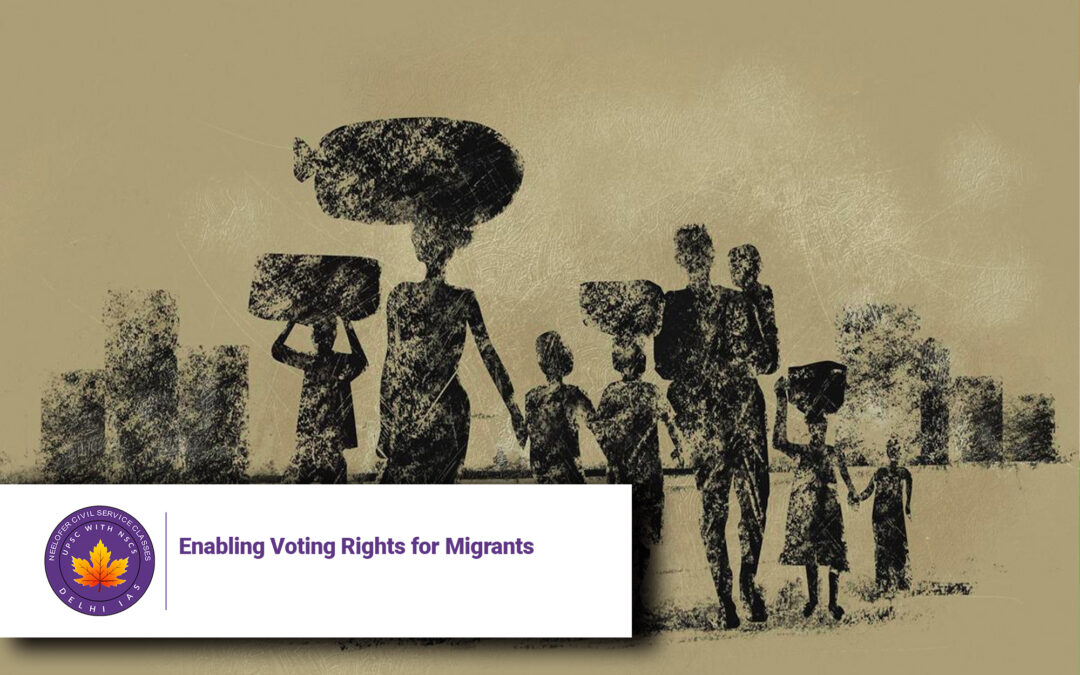
Enabling Voting Rights for Migrants
Why in News?
With Bihar — a state with one of India’s largest out-migration populations — heading for elections later this year, the challenge of ensuring voting rights for migrants is once again under focus. A substantial section of the population, especially inter-State migrants, remains unable to cast their vote due to mobility for work and lack of voter-friendly mechanisms. 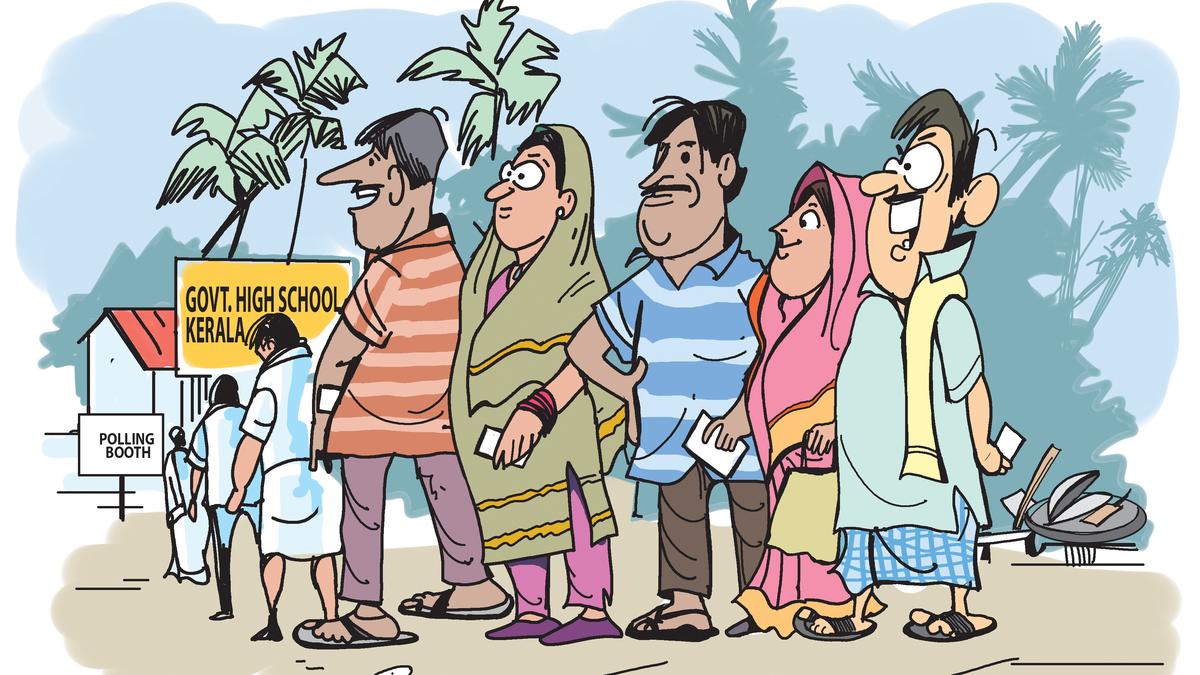
Introduction
In the 2024 Lok Sabha elections, voter turnout in Bihar was 56%, significantly lower than the national average of 66%. More than half of all households in Bihar report migration in some form, which has been a major contributor to low turnout. Migration is a key factor that continues to disenfranchise a large group of Indians.
Key Issues and Institutional Concerns
Migration and the Franchise Gap
According to the 2021 migration report, India’s overall migration rate stood at 29.8%. Most migrants are moving for marriage or work, with 10% specifically relocating for jobs. Urban centres in southern and western states receive a large number of these migrants, especially from poorer northern regions.
Despite ongoing discussions and ECI (Election Commission of India) pilot projects, there is still no nationwide solution to enable voting for migrants. In 2023, the ECI showcased a prototype of remote voting machines (RVMs), but progress has been slow, and pilot rollouts have faced logistical and technical challenges.
Challenges Faced by Migrants
Migrants are often required to return to their home constituency to vote — a costly and inconvenient process. Issues include:
-
Lack of proper identity linkage
-
No transport support to polling areas
-
Difficulty in address verification
-
Absence of a standardized process for voter registration at work destinations
Mechanisms Being Proposed
-
Remote Voting Machines (RVMs): Allow voting from different locations using secured EVMs configured with multiple constituency options.
-
Postal Ballots: Inspired by practices used for the armed forces, this method could be extended to verified migrants who register in advance.
-
Shuttle Bus Services: To assist migrant workers in returning home for elections without income loss.
Challenges and the Way Forward
-
Identity Verification: Matching voter lists with ID databases remains a concern, especially for mobile or unregistered migrants.
-
Lack of Awareness: Migrants are often unaware of their options or unable to access local election offices.
-
Technical & Logistical Barriers: Implementing remote voting would require major administrative reforms, infrastructure upgrades, and robust data management.
Way Forward:
-
Combine various mechanisms like RVMs, postal ballots, and transport facilitation.
-
Collaborate with employers and local administrations to identify and assist migrant voters.
-
Regularize and digitize inter-state voter registration processes.
Conclusion
India must move decisively to uphold the voting rights of all its citizens, regardless of their location. As migration increases, the need for inclusive electoral reform becomes more urgent. Ensuring that migrant workers — who form a key part of India’s labour force — can vote, is vital for democracy and representation.
Q&A Section
1. Why is migrant voting a concern in Bihar elections?
Because more than half of Bihar’s households report migration, and many migrants cannot return home to vote, leading to low voter turnout.
2. What are Remote Voting Machines (RVMs)?
RVMs are special EVMs designed to allow migrants to vote from locations away from their registered constituency.
3. What challenges do migrant voters face?
They struggle with address mismatch, lack of transport, ID verification issues, and absence of streamlined registration at new locations.
4. What methods are being proposed to enable voting for migrants?
Suggested methods include RVMs, postal ballots (like those used for the armed forces), and special transportation arrangements.
5. What should be done to ensure long-term migrant enfranchisement?
The ECI and government must combine technical innovation with administrative reforms to create inclusive and scalable systems for migrant voting.
