
India Nuclear Power Vision, What It Needs to Take Off
Why in News?
India’s push toward non-fossil fuel power, especially nuclear energy, has gained new urgency due to climate commitments. However, the nuclear sector still faces major policy, legal, and technological roadblocks that prevent it from scaling up effectively. 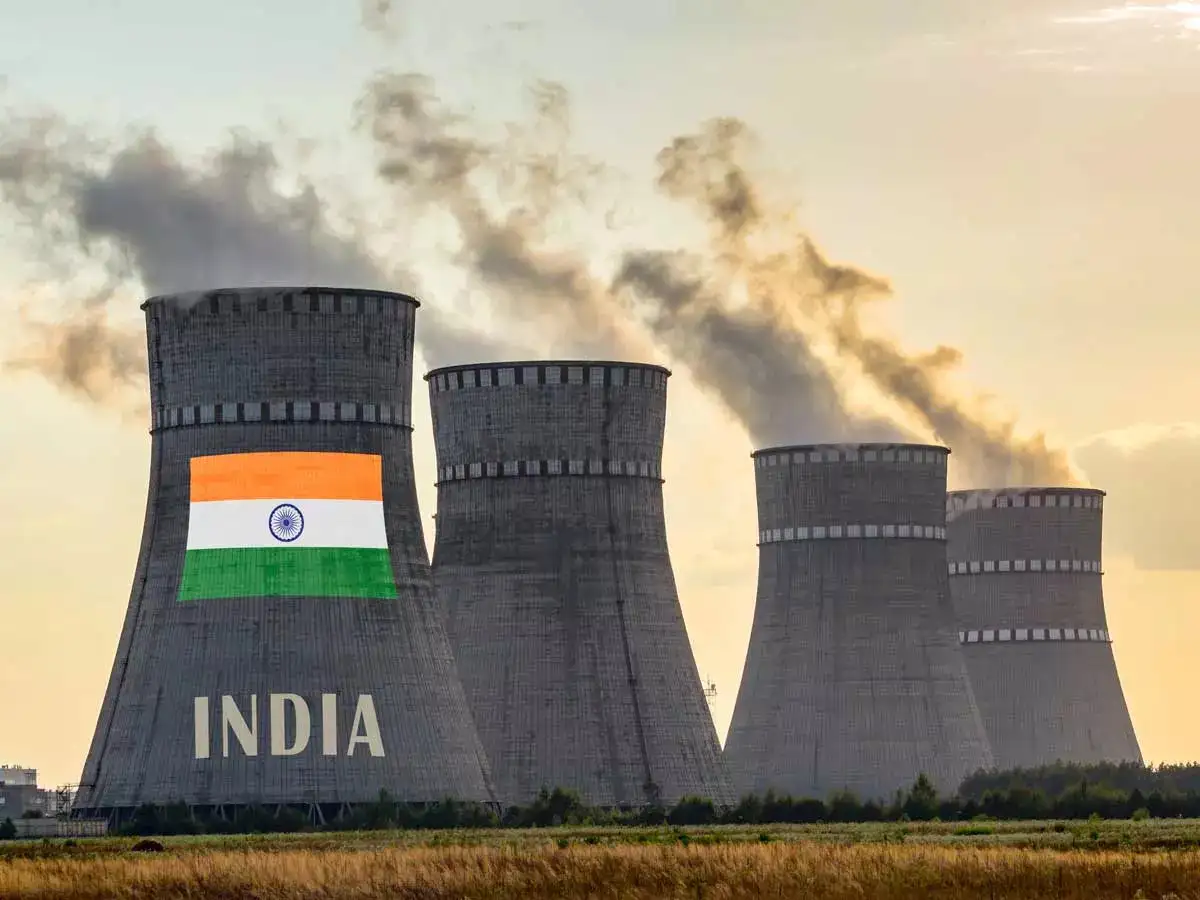
Introduction
India’s nuclear power program has long been seen as a crucial pillar of its energy security and clean energy goals. With a declared target of 100 GW nuclear capacity by 2047, India is currently far from its goal, with just 6.8 GW installed capacity (as of now). A number of factors—legal hurdles, financing issues, and lack of private sector participation—are delaying the sector’s takeoff.
Key Issues
1. Insufficient Installed Capacity
India currently operates 23 reactors producing only 6.8 GW, with no significant additions in recent years. To meet the 100 GW target, India would need massive scaling, especially in small modular reactors (SMRs), which are quicker to build and more flexible in deployment.
2. Legal and Liability Hurdles
India’s Civil Liability for Nuclear Damage Act (CLND), 2010, places financial liability for accidents on suppliers, unlike international norms. This has deterred foreign suppliers and manufacturers from entering the Indian market.
3. Lack of Private Sector Involvement
Currently, nuclear power generation is solely government-controlled, with no room for private players under the Atomic Energy Act. This limits capital infusion and innovation, especially in building modern reactor technologies like fast breeder or fusion reactors.
4. High Costs and Long Timelines
A single 1000 MW nuclear plant in India can cost over ₹18,000 crore and take more than 10 years to complete. Financing, regulatory clearance, and land acquisition further slow the process.
5. Public Perception and Safety Concerns
Nuclear power still carries public fear due to incidents like Fukushima. There is also a lack of consistent awareness regarding nuclear safety standards and the long-term waste disposal system in India.
Challenges and the Way Forward
-
Amend Liability Laws: Reforms to CLND could help attract foreign suppliers and developers.
-
Open Sector to Private Investment: Like renewable energy, nuclear too can benefit from public-private partnerships.
-
Promote SMRs: Small Modular Reactors are cheaper, scalable, and ideal for remote locations.
-
Financing Support: Long-term, low-interest financing with multilateral help (e.g., from IAEA) could speed up new builds.
-
Public Awareness: Safety assurance, transparency, and stakeholder engagement are essential to building public trust.
Conclusion
India’s nuclear vision is ambitious but needs strong institutional reforms, legal overhauls, and private sector participation to become a viable solution to its clean energy future. With global focus shifting to energy independence and low emissions, nuclear energy must be re-imagined as a modern, flexible, and essential pillar of India’s net-zero roadmap.
5 Questions & Answers
1. What is India’s target for nuclear energy capacity by 2047?
India has set a target of achieving 100 GW of nuclear power capacity by 2047.
2. What is the current installed nuclear power capacity in India?
As of now, India has 23 nuclear reactors with a total capacity of 6.8 GW.
3. Why is the Civil Liability for Nuclear Damage Act (CLND) considered a hurdle?
The CLND Act places liability on equipment suppliers in case of a nuclear accident, which is against global norms and discourages international collaboration.
4. What are Small Modular Reactors (SMRs) and why are they important?
SMRs are compact, scalable nuclear reactors that can be deployed faster and in remote areas. They are seen as a flexible alternative to traditional large nuclear plants.
5. Can the private sector invest in nuclear power in India currently?
No, the Atomic Energy Act reserves nuclear power generation for government entities, effectively excluding the private sector from ownership or operation.
