
Three Lessons from Emergency 1975, A Historical Reminder for Today’s Democracy
Why in News?
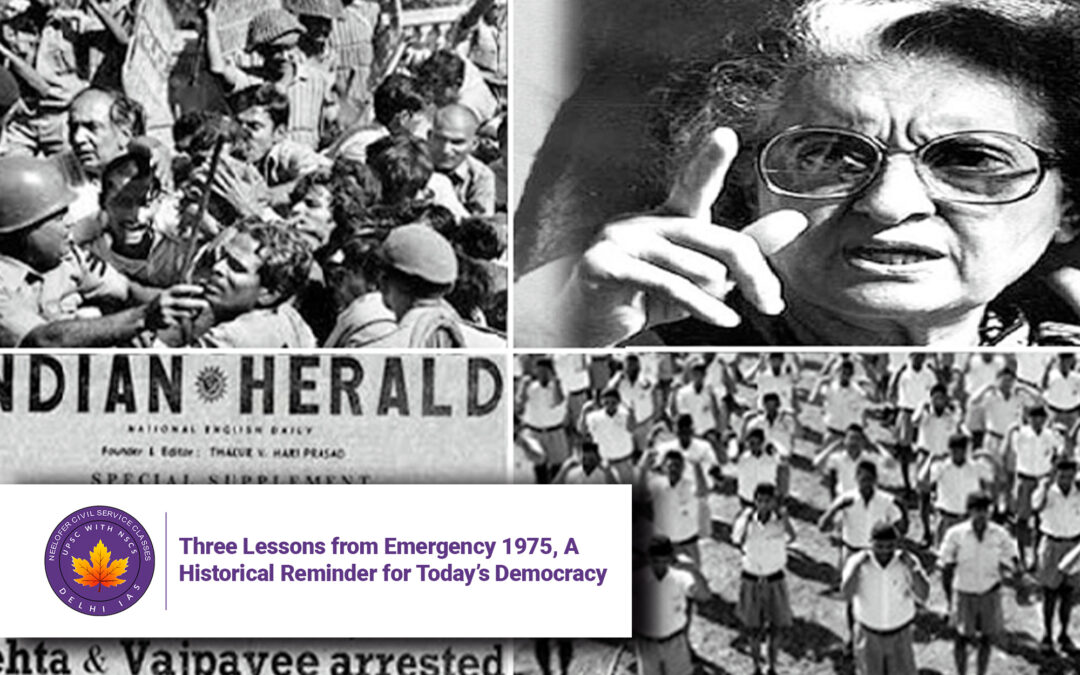
June 25, 2025, marks the 50th anniversary of the proclamation of Emergency in India by then Prime Minister Indira Gandhi in 1975. As India reflects on one of the darkest chapters in its democratic history, the period offers critical lessons relevant to the nation’s political and democratic future. 
Introduction
On the midnight of June 25, 1975, India was plunged into a state of Emergency, suspending civil liberties, jailing opposition leaders, and silencing the media. This era, now half a century old, serves as a stark reminder of how democracy can be threatened from within and how the people’s resilience remains its strongest safeguard.
Key Historical Background
-
Imposition of Emergency: Following the Allahabad High Court’s ruling declaring Indira Gandhi’s election invalid due to electoral malpractice, the then PM chose to suspend democracy rather than resign. A plea of national crisis was used to justify this drastic action.
-
Actions Taken: Over the next 21 months:
-
Over 1.5 lakh political workers were imprisoned.
-
Fundamental rights were suspended.
-
Media was censored.
-
Forced sterilizations and slum demolitions were carried out.
-
Dynastic consolidation in the Congress intensified.
-
Three Key Lessons for Contemporary India
-
Unaccountable Power Breeds Dictatorship
The Emergency showed how unchecked power in a democracy can turn authoritarian. It underlined the importance of institutional safeguards and judicial independence to protect citizens from state excesses. -
Need for Democratic Vigilance by Citizens
Many citizens and intellectuals initially supported the Emergency, later realizing the grave mistake. Today, too, public awareness and participation in democratic processes are vital to preserve freedoms. -
The Rise of Dynastic Politics
Ironically, the Emergency also laid the foundation for dynastic politics in India. Even those who speak against authoritarianism now often remain silent about or even encourage family-based political succession in their own parties.
Impact and Relevance Today
-
Freedom of Expression: The Emergency period is a chilling reminder of what happens when freedom of speech and the press is curbed. Even today, the media and civil society must resist such pressures.
-
Democratic Accountability: Leaders must be held accountable not just through elections, but through constant civic vigilance. The judiciary, legislature, and executive must act independently and transparently.
-
Youth and Political Participation: The lesson of Sanjay Gandhi’s forced leadership shows the perils of handing power to untested individuals. India’s youth must be given opportunities based on merit, not inheritance.
Conclusion
The Emergency of 1975 stands as a historical warning against the erosion of democratic values. As India continues to be the world’s largest democracy, the lessons of those 21 months must never be forgotten. Political power must always be tempered with constitutional values, institutional checks, and above all, the will of the people.

