
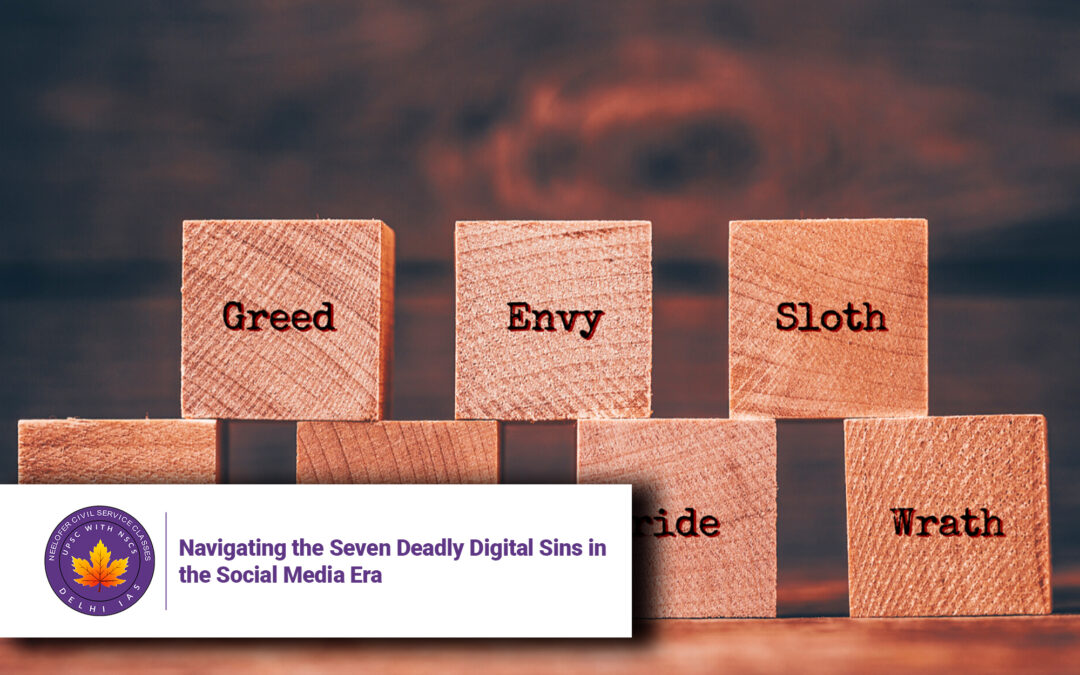
Navigating the Seven Deadly Digital Sins in the Social Media Era
Why in News?
As digital platforms increasingly shape behavior, identity, and mental health, concerns about the misuse and psychological impact of social media have reached global discourse. A recent reflection on the “Seven Deadly Digital Sins” highlights how timeless vices—Pride, Greed, Wrath, Envy, Lust, Gluttony, and Sloth—are manifesting anew in the digital landscape, posing fresh challenges to societal well-being. 
Introduction
The ancient classification of moral failings—often associated with religious or philosophical thought—is undergoing a revival in modern form. These seven sins are no longer just metaphysical concepts; they are being digitized, amplified, and algorithmically reinforced on platforms like Instagram, Facebook, Tinder, LinkedIn, and YouTube.
Key Issues and Examples
-
Pride: Curated lives on social media (especially Instagram and LinkedIn) showcase exaggerated achievements, creating an illusion of perfection. This fuels insecurity and unrealistic life comparisons.
-
Greed: The consumerist culture of digital advertising and influencer marketing promotes excessive desire for wealth, fame, and material possessions—often beyond means or reality.
-
Wrath: Online rage and outrage cycles dominate Twitter (X) and Facebook. Comment sections often devolve into hate speech, abuse, and tribalism, showcasing unchecked anger.
-
Envy: Comparing lives through filtered photos and milestone posts triggers envy and a sense of inadequacy, particularly among youth and adolescents.
-
Lust: Tinder, Instagram, and even professional networks are now flooded with content that objectifies bodies and hyper-sexualizes appearances. Platforms become validation-seeking arenas.
-
Gluttony: Digital addiction—binge-watching, endless scrolling, and overconsumption of media—feeds mental fatigue and intellectual stagnation.
-
Sloth: The ease of information and entertainment access encourages intellectual laziness. It reduces the appetite for real-world problem solving and long-term productivity.
Impact and Observations
-
The overexposure to filtered lifestyles has worsened mental health concerns such as depression, anxiety, and FOMO (fear of missing out).
-
Young adults suffer from self-worth crises and a decline in deep thinking and emotional stability.
-
Instant gratification culture is replacing patience, critical thought, and long-term ambition.
Conclusion
The digital revolution has subtly redefined age-old sins, embedding them into the core of modern life. As we consume content passively, we risk being consumed by it. A recalibration of digital habits, introspection, and awareness is needed to ensure the internet remains a tool for empowerment rather than a trap of self-destruction.
Q&A Section
Q1. What are the “Seven Deadly Digital Sins”?
A1. They are Pride, Greed, Wrath, Envy, Lust, Gluttony, and Sloth—reinterpreted through the lens of digital behavior.
Q2. Which platforms are most associated with these sins?
A2. Instagram (pride, lust, envy), LinkedIn (pride), Twitter/X (wrath), Facebook (envy, wrath), and YouTube/Netflix (gluttony, sloth).
Q3. What are the psychological impacts?
A3. They include self-worth issues, depression, attention deficiency, consumerism addiction, and impaired real-world social skills.
Q4. How can individuals safeguard themselves?
A4. By limiting screen time, unfollowing toxic accounts, focusing on real-life achievements, and practicing digital mindfulness.
Q5. Why is this topic relevant now?
A5. With screen time at record highs post-pandemic and increasing reliance on social platforms, the moral and mental health implications are urgent and far-reaching.

