
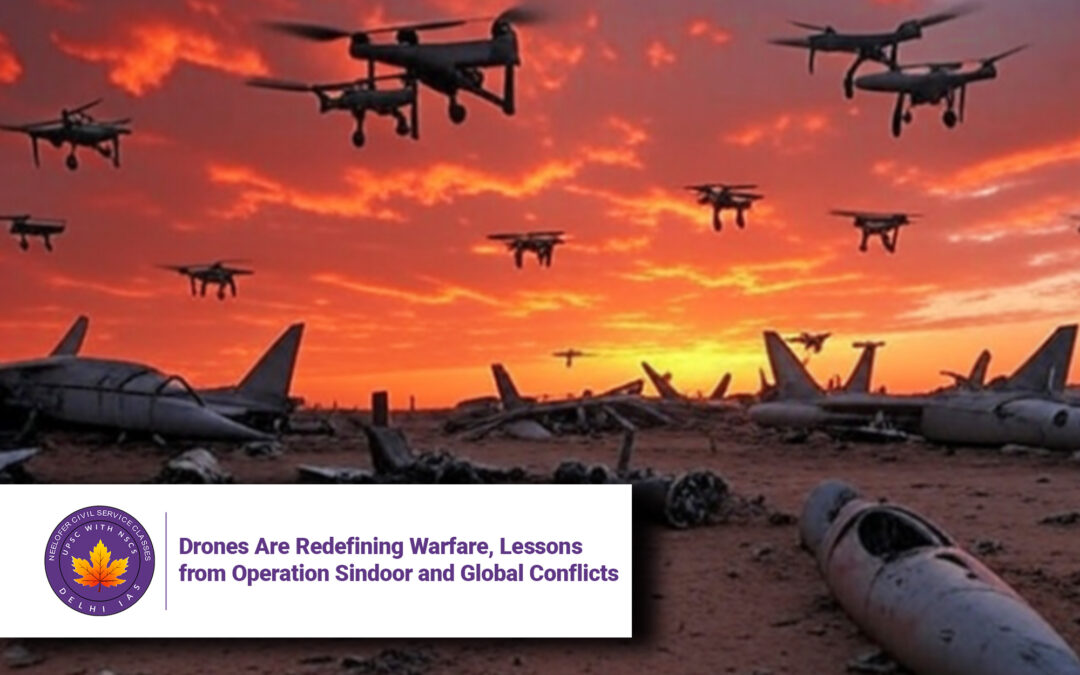
Drones Are Redefining Warfare, Lessons from Operation Sindoor and Global Conflicts
Why in News?
India’s recent Operation Sindoor has brought global attention to the increasing role of drones in warfare. Following a terrorist attack in Pahalgam, India used Unmanned Aerial Vehicles (UAVs) alongside standoff weapons, marking a major shift in its military doctrine and highlighting the growing global trend of autonomous combat systems. 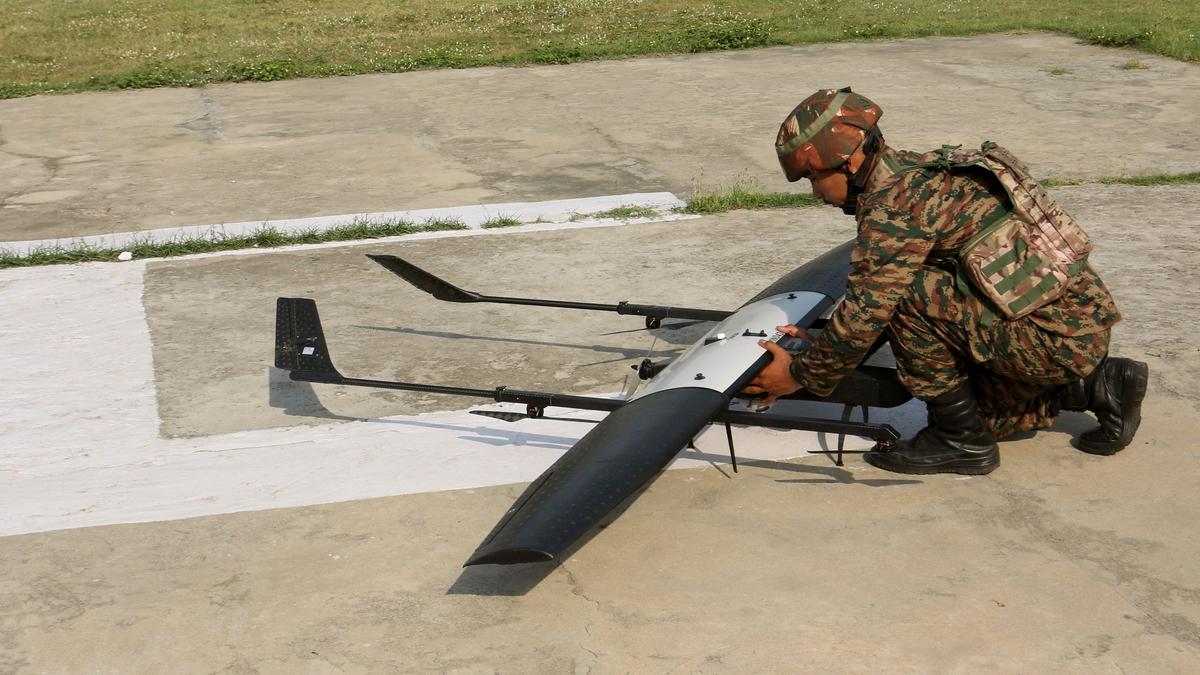
Introduction
The modern battlefield is witnessing a dramatic transformation, driven by drones. These UAVs — ranging from low-cost, 3D-printed models to high-tech, military-grade machines — are now central to global conflicts. Whether it is Ukraine’s defense against Russia, Azerbaijan’s victory in the Nagorno-Karabakh war, or India’s latest strategic maneuvers, drones have become a force multiplier that transcends traditional warfare.
Key Features of Drone Warfare
-
Tactical Shift: Operation Sindoor is India’s turning point, using drones to deliver precision strikes and act as surveillance agents.
-
Force Multiplier: Drones amplify battlefield effectiveness, combining real-time data, AI navigation, and the ability to avoid detection.
-
Asymmetric Advantage: In nations like Ukraine and Myanmar, even low-cost drones have leveled the battlefield against stronger militaries.
Global Examples and Trends
-
Nagorno-Karabakh War (2020): Azerbaijan used kamikaze drones like the Harop to destroy Armenian air defences.
-
Ukraine’s Operation Spider Web: Showed how DIY drones with strategic targeting could damage Russia’s long-range bomber fleet.
-
Myanmar: Rebel groups deploy 3D-printed drones against state forces, highlighting how accessible drone warfare has become.
India’s Readiness and Challenges
-
Adversarial Pressure: China’s advanced fleet and drone exports to Pakistan heighten India’s regional vulnerability.
-
Counter-Drone Systems: India has deployed indigenous soft- and hard-kill solutions that proved effective during recent Pakistani drone strikes.
-
Production Gaps: India’s slow procurement and manufacturing have discouraged industry innovation, limiting the speed at which drones can be scaled.
The Military-Commercial Crossover
-
Blurring Lines: Off-the-shelf drones can be modified for combat. Commercial models are now frequently used by non-state actors.
-
3D Printing Revolution: Ukraine and Myanmar have used 3D printers to mass-produce drone parts, bypassing expensive and slow military logistics.
-
AI & Navigation: Drones now evade radar through machine vision, terrain mapping, and frequency hopping.
Implications for India
-
Strategic Ambiguity: Drones provide India a new layer of capability in the grey zone between conventional and nuclear conflict.
-
Internal Security Risks: Easily weaponized commercial drones could be misused by terrorists. Thus, drone defense is not just military but also a policing priority.
-
Need for Policy Push: India must invest in a defence industrial base capable of rapid production, replenishment, and innovation.
Conclusion
Drones are no longer future tech — they are the present face of warfare. From Ukraine to Operation Sindoor, their strategic impact is reshaping how nations defend, attack, and deter. For India, building a robust drone ecosystem — spanning manufacturing, countermeasures, and military doctrine — is not optional but urgent. The battlefield of tomorrow has taken flight, and India must soar with it.
Q&A Section
Q1. What is Operation Sindoor?
A tactical military operation by India that used drones and standoff weapons in response to a terror attack in Pahalgam.
Q2. Why are drones becoming central in warfare?
They offer precision, cost-effectiveness, flexibility, and the ability to bypass traditional air defences.
Q3. How has Ukraine used drones innovatively?
Ukraine has used homemade and 3D-printed drones combined with machine vision to bypass radar and attack strategic Russian targets.
Q4. What risks do drones pose to India internally?
They could be used by terrorists or non-state actors to target critical infrastructure, requiring strong counter-drone systems.
Q5. What should India prioritize to strengthen its drone strategy?
Building a defence industrial base, increasing domestic drone production, and investing in AI and anti-drone technology.

