
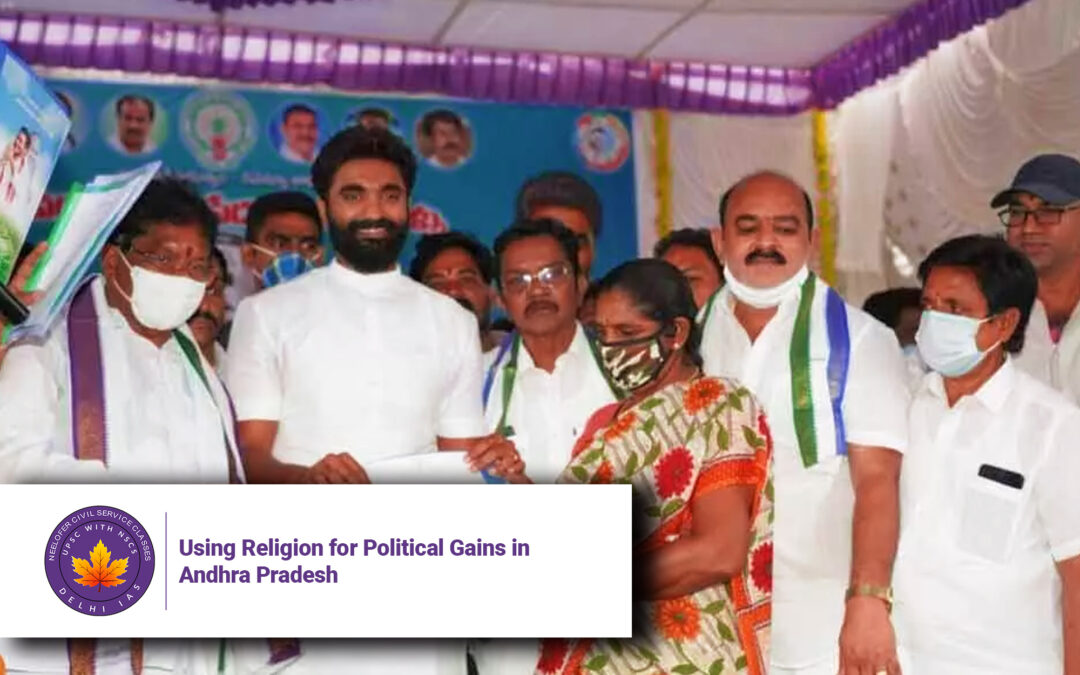
Using Religion for Political Gains in Andhra Pradesh
Why in News?
Religious issues are increasingly dominating political narratives in Andhra Pradesh. Recent incidents involving controversies around temple management, religious conversions, and accusations of promoting a particular faith have brought religion to the forefront of political discourse in the State. 
Introduction
For decades, caste equations have largely shaped Andhra Pradesh politics. However, in recent years, a growing trend of using religion for political mobilisation has emerged. Political parties are now leveraging religious identity and sentiments to consolidate support, particularly in the lead-up to elections.
This shift raises concerns about the polarisation of society and the erosion of secular democratic values in the State.
Key Issues and Background
1. Traditional Caste-based Politics
Historically, politics in Andhra Pradesh was centred on caste. The TDP drew support from the Kamma community, the YSRCP from the Reddys, and the JSP from the Kapus.
Religion was not a dominant narrative until recent years.
2. Emergence of Religious Polarisation
Since the YSRCP came to power in 2019, opposition parties have accused Chief Minister Y.S. Jagan Mohan Reddy, a practising Christian, of promoting his faith.
Incidents of temple vandalism and alleged religious conversions have been used to reinforce this narrative of an “anti-Hindu” government.
3. Specific Controversies
-
Tirumala Temple Board: Allegations arose regarding the board’s handling of Hindu temple funds and practices.
-
Cow Deaths Incident: Accusations were made against former TTD chairman B. Karunakar Reddy regarding the death of cows in a goshala.
-
Political Appointments: Controversy erupted over appointments of individuals allegedly promoting religious bias in temple trusts.
Specific Impacts or Effects
1. Public Backlash
Incidents have triggered public outrage, especially among Hindu communities.
The opposition has intensified its campaign accusing the government of undermining Hindu interests.
2. Communal Tensions
Religious polarisation has increased tensions between communities.
The misuse of religious sentiments for electoral gain risks disturbing communal harmony.
3. Political Misuse
Political parties across the spectrum have exploited religious issues to consolidate their vote banks.
The upcoming 2024 elections are expected to see a further escalation of such narratives.
Challenges and the Way Forward
Challenges
-
Rising religious polarisation threatens secularism and social harmony.
-
Political opportunism around religion undermines democratic values.
-
Sensationalism in media reporting exacerbates communal tensions.
Way Forward
-
Political discourse must respect India’s secular framework and avoid religious polarisation.
-
Opposition to policies must remain within the bounds of democratic expression, avoiding communal rhetoric.
-
Judiciary and law enforcement must act firmly against those promoting religious hatred or violence.
-
Media should foster informed, balanced discussions on sensitive religious issues.
Conclusion
The use of religion for political gains in Andhra Pradesh reflects a troubling trend that risks deepening social divisions. While political debate and dissent are essential in a democracy, they must not compromise the secular character of the State.
Parties and leaders must prioritise communal harmony and uphold constitutional values. Public discourse should encourage mutual respect and discourage the exploitation of religious identities for electoral advantage.
5 Questions & Answers
Q1: What is the new trend in Andhra Pradesh politics?
A: The growing use of religious issues to dominate political narratives and mobilise voters.
Q2: How has the YSRCP been criticised regarding religion?
A: The YSRCP government has been accused of promoting Christianity and undermining Hindu traditions.
Q3: What incidents have fuelled religious controversies in the State?
A: Temple vandalism, alleged illegal conversions, cow deaths at a goshala, and controversial appointments to temple boards.
Q4: How are political parties using religion in elections?
A: By leveraging religious identity and incidents to polarise voters and consolidate caste-based vote banks with religious sentiment.
Q5: What should be done to address this issue?
A: Promote secular, respectful political discourse; ensure judicial action against communal incitement; and foster balanced media coverage of sensitive religious matters.

