
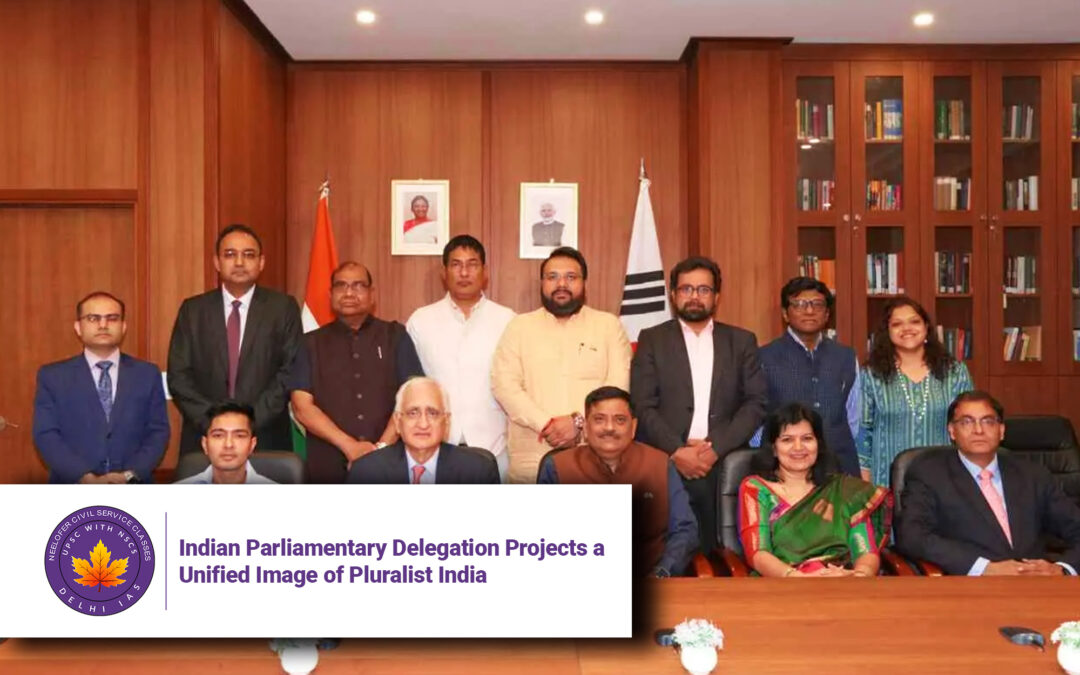
Indian Parliamentary Delegation Projects a Unified Image of Pluralist India
Why in News?
A group of seven Indian delegations, including Members of Parliament and former diplomats, was recently tasked by the government to carry diplomatic messages in the wake of Operation Sindoora. The delegations visited 32 countries to clarify India’s position on the Pakistan-linked terrorist attack and to project a unified, pluralist image of India to the world. 
Introduction
India’s diplomatic outreach has intensified after the Pakistan-linked terror attack and subsequent Operation Sindoora. This outreach is aimed not only at influencing foreign governments but also at informing international media, global lawmakers, and civil society about India’s evolving position on terrorism and its diplomatic stance on Pakistan.
Key Issues and Background
1. Government’s New Approach
-
The government has adopted a “new normal” in its diplomatic engagement after the terror strikes.
-
The outreach aims to influence not only governments but also lawmakers, media, and the general public.
-
This approach was designed to counter Pakistan’s terrorist infrastructure narrative and strengthen support for India globally.
2. Role of the Delegations
-
The seven delegations visited 32 countries.
-
Special focus was on countries where India previously found it challenging to secure the desired support.
-
Delegations included MPs and former diplomats.
3. Target Audience
Many of the countries visited were:
-
Members of the United Nations Security Council (UNSC).
-
Nations where non-permanent members will soon be elected.
-
Countries actively engaged in counter-terrorism dialogues.
4. Key Diplomatic Context
-
The effort came at a time when Pakistan faced a diplomatic setback after its links to the terror attack were exposed.
-
Pakistan’s attempts to influence UNSC statements and deny links to the attack were countered by India’s proactive diplomacy.
-
India highlighted the role of the Resistance Front (TRF) in the attack and its ties to Pakistan.
Specific Impacts or Effects
1. Strengthening India’s Case at International Forums
-
The delegations helped build momentum to:
-
Support sanctions.
-
Influence statements at the UNSC.
-
Ensure Pakistan faces greater scrutiny under Financial Action Task Force (FATF).
-
2. Countering Pakistan’s Narrative
-
Pakistan was attempting to deflect responsibility and appear as a victim.
-
India’s delegations actively worked to project Pakistan’s support for terrorist groups and to block its diplomatic manoeuvres.
3. Role of the U.S. and Europe
-
India noted critical voices from Europe and the U.S. about Pakistan’s role.
-
Indian diplomacy highlighted:
-
U.S.-India cooperation on counterterrorism.
-
Europe’s increasing concern about terror financing.
-
4. Managing the Media Narrative
-
The delegations also sought to correct international media narratives that had been tilted in Pakistan’s favour.
-
Emphasis was placed on:
-
India’s democratic values.
-
Pluralist society.
-
Consistent stand against terrorism.
-
Challenges and the Way Forward
Challenges
-
Countering well-organised Pakistani lobbying in Western capitals.
-
Shifting perceptions in non-aligned countries.
-
Sustaining momentum in international cooperation against terrorism.
Steps Forward
-
Continue proactive parliamentary diplomacy.
-
Build stronger media partnerships abroad to promote India’s narrative.
-
Deepen coordination with like-minded countries at the UNSC and FATF.
-
Promote India’s image as a democratic, pluralist nation committed to the rule of law.
Conclusion
The Indian delegations successfully projected a united, pluralist image of India in a challenging diplomatic environment. Their outreach reinforced India’s position as a resolute but democratic actor in global affairs. Going forward, sustained efforts in parliamentary diplomacy, media engagement, and international cooperation will be vital in maintaining this momentum.
5 Questions and Answers
Q1: Why did India send seven parliamentary delegations abroad recently?
A: To convey India’s stance on Pakistan’s links to a recent terror attack and to promote a pluralist image of the country.
Q2: How many countries did the delegations visit?
A: They visited 32 countries, including key UNSC members and future non-permanent members.
Q3: What were the main goals of these diplomatic missions?
A: To counter Pakistan’s narrative, seek international support for sanctions, and promote India’s image as a democratic and pluralist society.
Q4: How did the delegations address media narratives?
A: They engaged with international media to correct biases and highlight India’s consistent stand against terrorism.
Q5: What challenges does India face in continuing this diplomatic strategy?
A: Overcoming Pakistani lobbying, influencing non-aligned countries, and maintaining sustained international support against terrorism.

