
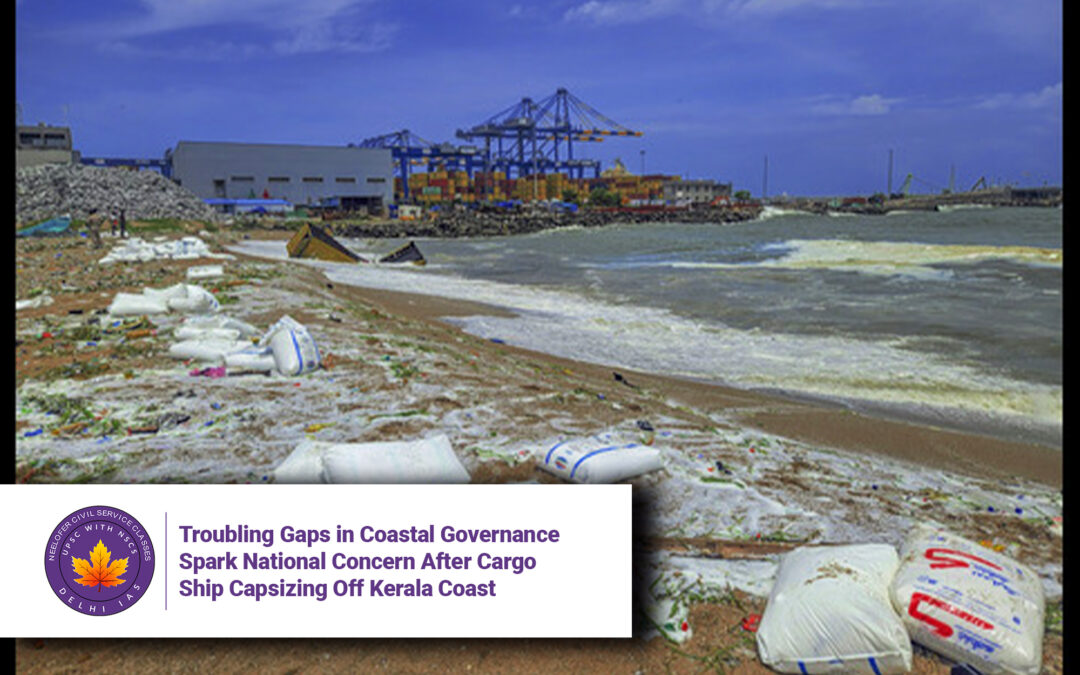
Troubling Gaps in Coastal Governance Spark National Concern After Cargo Ship Capsizing Off Kerala Coast
Why in News?
A cargo vessel capsizing near the Kerala coast has brought to light serious flaws in India’s maritime governance and coastal traffic regulation. The incident highlights the urgency of reforming oversight mechanisms for vessels, especially those flagged under countries with poor compliance records. 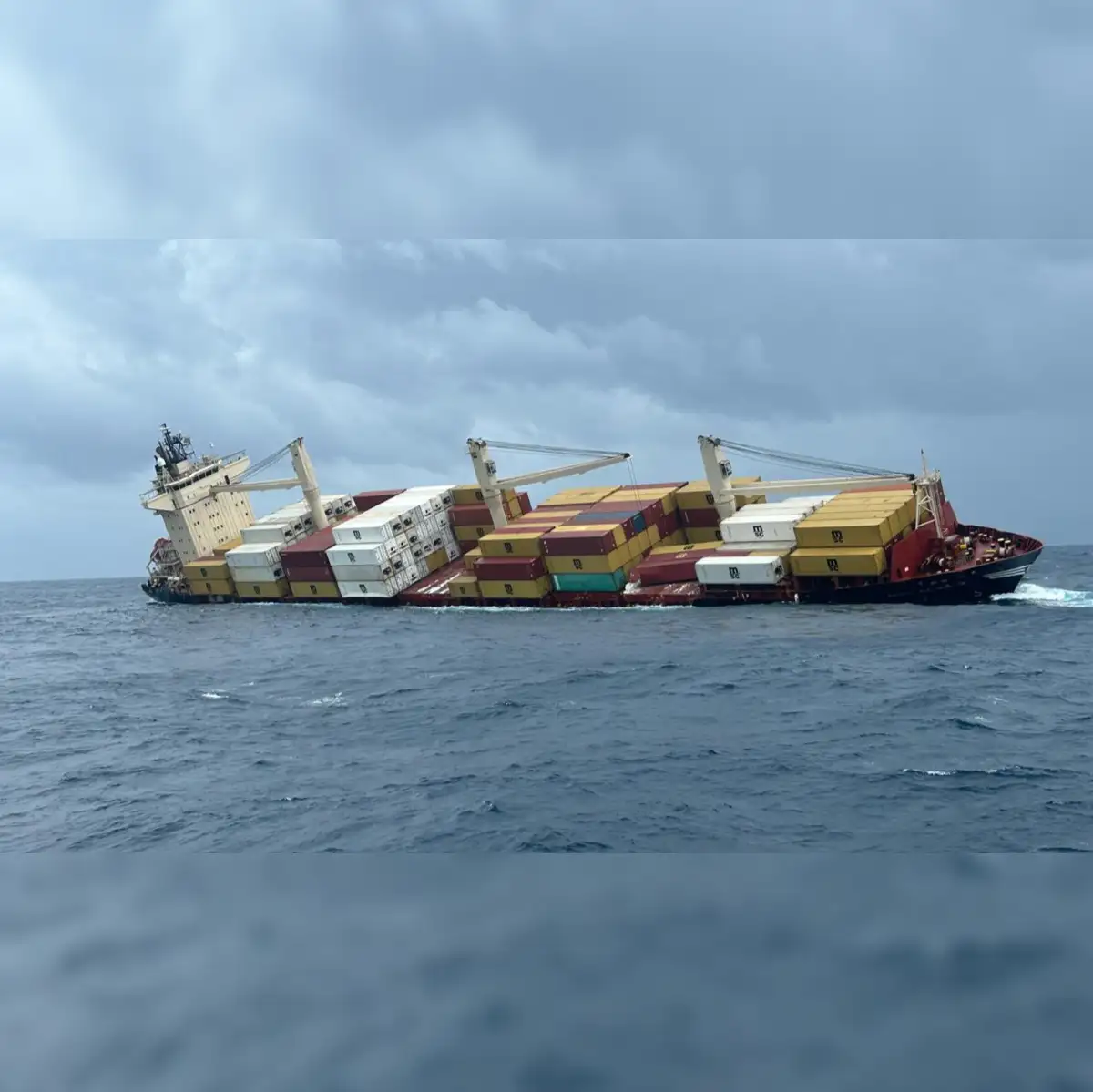
Introduction:
The recent capsizing of a container ship off the Kerala coast has raised alarm bells over India’s maritime preparedness. The vessel, owned by a foreign firm and sailing under a flag of convenience, broke loose in high seas and ran aground—despite storm warnings. The crew’s safety and cargo loss aside, the incident has revealed India’s vulnerability when it comes to monitoring coastal traffic and responding to maritime threats effectively.
Key Issues Highlighted in the Article:
-
Lack of Adequate Monitoring Systems:
The Indian Coast Guard (ICG), responsible for maritime surveillance, could not act in time as there was no immediate vessel tracking data available. Despite advances in monitoring technology, enforcement at sea remains weak. -
Flags of Convenience Pose Legal Loopholes:
The ship was sailing under a “flag of convenience” – a practice where vessel owners register ships in countries with weak regulations to cut costs. This limits India’s ability to enforce maritime laws effectively, especially for vessels registered under non-compliant jurisdictions. -
Violation of Safe Anchoring Protocols:
The ship was allegedly anchored without proper clearance and close to the high seas during storm warnings. Under international norms, this should not have happened without port control clearance, indicating weak enforcement or disregard of existing rules. -
Repeating Mistakes from the Past:
This isn’t an isolated case. India has had several maritime accidents in recent years, often linked to foreign-flagged ships, poor coordination among agencies, and slow disaster response. -
Urgent Need for Structural Reform:
Experts suggest India should reassess its engagement with ships under non-compliant flags, improve inter-agency coordination (like ICG, port authorities, and customs), and invest in real-time monitoring infrastructure to prevent similar disasters.
Five Key Takeaways:
-
India’s maritime safety mechanisms are under strain, especially regarding foreign-flagged vessels.
-
Flag of convenience registrations bypass strict safety regulations, leading to enforcement loopholes.
-
Poor coordination between maritime authorities resulted in delayed or no action despite weather warnings.
-
There is an urgent need to review India’s port and maritime safety laws in light of frequent shipping accidents.
-
India must assert control over vessels using its coastal waters, even if they fly foreign flags, especially during emergencies.
Q&A Section:
1. What triggered the concern about coastal governance in India recently?
The capsizing of a cargo vessel off the Kerala coast during a storm, which ran aground due to poor regulation and monitoring, triggered the concern.
2. What is meant by “flag of convenience”?
It refers to ships registered in countries with weak maritime laws to avoid strict safety, labor, and environmental regulations.
3. Why couldn’t the Indian Coast Guard act in time?
The ICG lacked real-time information on the vessel’s position, as enforcement systems failed to track or stop the ship despite weather alerts.
4. What changes are experts recommending?
India should reconsider its rules on vessels flagged under non-compliant jurisdictions, enforce anchoring protocols, and enhance real-time coastal monitoring.
5. Is this a rare occurrence in Indian waters?
No. Similar maritime accidents involving foreign ships have occurred earlier, indicating systemic issues in India’s maritime governance.
Conclusion:
The Kerala cargo ship accident is a wake-up call. With India aiming to grow its maritime economy under the Sagarmala initiative, plugging regulatory loopholes, strengthening coastal surveillance, and ensuring strict compliance—even for foreign vessels—must become top national priorities.
Disclaimer: This article has been written by an AI based on the provided image content.

