
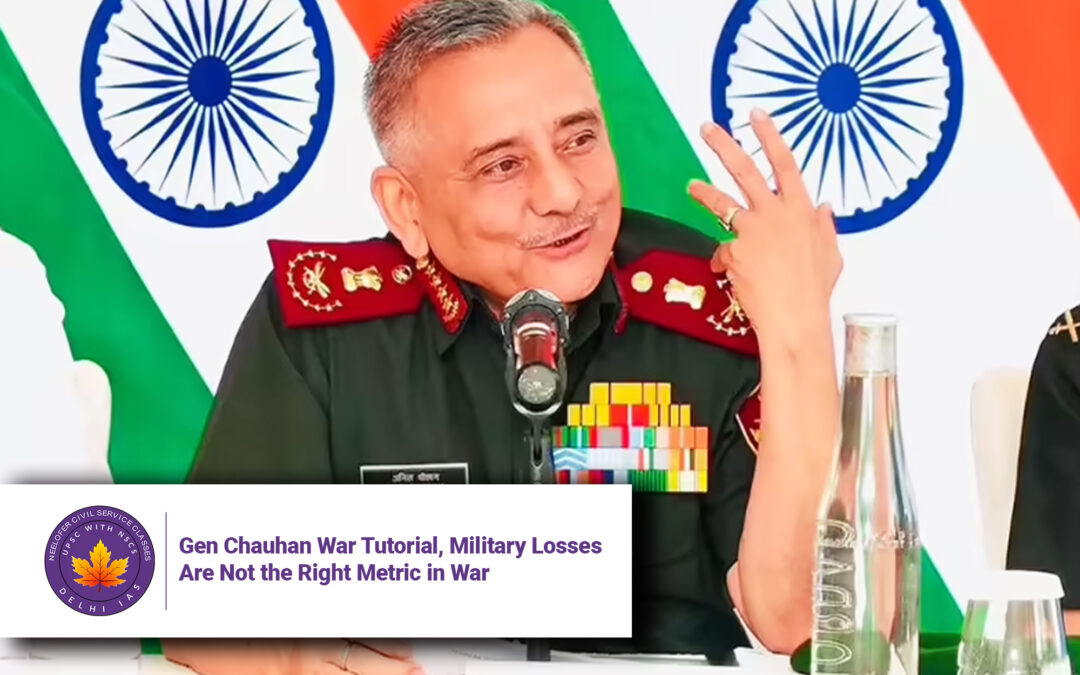
Gen Chauhan War Tutorial, Military Losses Are Not the Right Metric in War
Why in News?
Chief of Defence Staff (CDS) General Anil Chauhan, during a recent address at the Shangri-La Dialogue in Singapore, clarified critical facts regarding Operation Sindoor, emphasizing that success in war is judged by political outcomes, not by the number of military losses. His speech revisits key historical conflicts and challenges the conventional interpretation of military success. 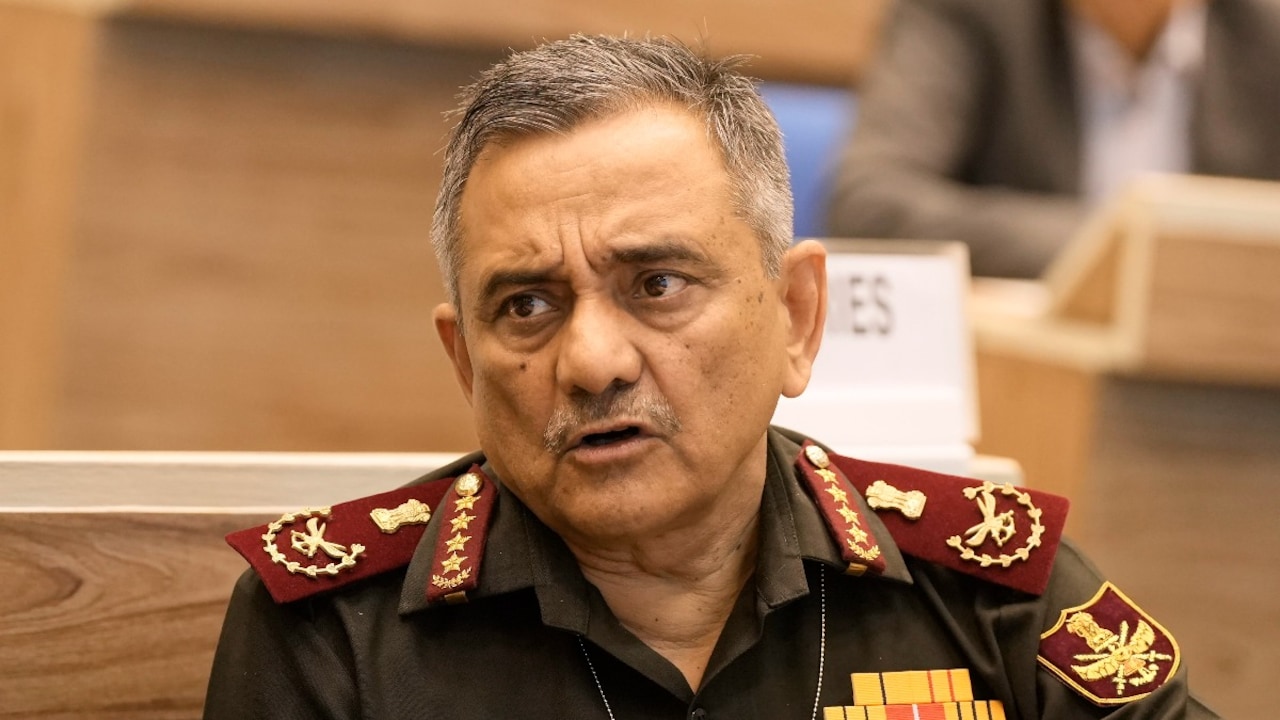
Introduction
In military strategy, numbers and losses can be misleading metrics of victory. General Anil Chauhan, India’s CDS, presented a strong case against overemphasizing military hardware losses during conflict, highlighting that war aims are political, not just tactical or material. His remarks come amid debates following the India-Pakistan skirmishes of May and interpretations of past military conflicts, particularly the 1965 war and the India-China dynamics.
Key Points Highlighted by Gen Chauhan
1. History and Misinterpretation of Military Conflicts
-
Quoting the World War II example: Allies lost 91,045 aircraft and 15.8 million soldiers, while the Axis powers lost only 70,569 aircraft and fewer troops. But the Allies won the war. This shows that losses do not determine victory.
-
During the 1965 India-Pakistan war, Pakistan’s Operation Gibraltar and Grand Slam failed despite high Indian military losses.
-
In 22 days, India lost 35 aircraft, while Pakistan lost 43, with 17 more damaged. However, India’s strategic control remained intact.
2. Clarification on Operation Sindoor (May Skirmishes)
-
General Chauhan refuted misleading claims from Pakistani sources about India’s Air Force (IAF) losses.
-
He emphasized that what mattered was India’s success in striking key military targets:
-
Pakistani radar sites,
-
Airbases,
-
Runways,
-
Ammunition depots.
-
3. Success of India’s Pinpoint Airstrikes
-
Satellite imagery and intelligence confirmed India’s precision targeting in retaliation.
-
The IAF hit Pakistan’s defence logistics and strategic nodes, reducing their capabilities.
-
This demonstrated India’s superior planning and execution.
4. China and the Western Narrative
-
Chauhan criticized the hype around “China’s untested military hardware”, calling it exaggerated and speculative.
-
He urged a rational evaluation of capabilities and reminded that disinformation clouds perception of military success.
5. The Real Measure of War
-
War should be evaluated on whether political objectives are achieved.
-
“Pak bluster to go nuclear was irrationality for a precise purpose,” said Gen Chauhan — indicating that psychological warfare also plays a role in shaping outcomes.
Conclusion
CDS Gen Chauhan’s address serves as a military doctrine lesson — shifting focus from body counts and equipment losses to strategic victories and political objectives. With global and regional conflicts escalating, this recalibration of how war success is measured is vital for public understanding and defence policy.
Q&A Section
Q1. What was the main message of Gen Chauhan’s speech in Singapore?
He emphasized that military losses are not the right metric to measure success in war; the real indicator is whether political objectives were achieved.
Q2. What historical example did Gen Chauhan cite to support his view?
He cited World War II, where the Allies suffered more material losses than the Axis powers but still won the war.
Q3. What is the relevance of Operation Sindoor?
It refers to India’s recent military response during the May India-Pakistan skirmishes, where India successfully targeted strategic Pakistani infrastructure.
Q4. What claim did Gen Chauhan challenge regarding China?
He criticized the Western narrative about the success of China’s untested military systems, stating it is not based on real battlefield evidence.
Q5. How should military success be evaluated, according to Gen Chauhan?
By assessing whether the political aim of the war is met, not by the number of tanks, planes, or soldiers lost.
