
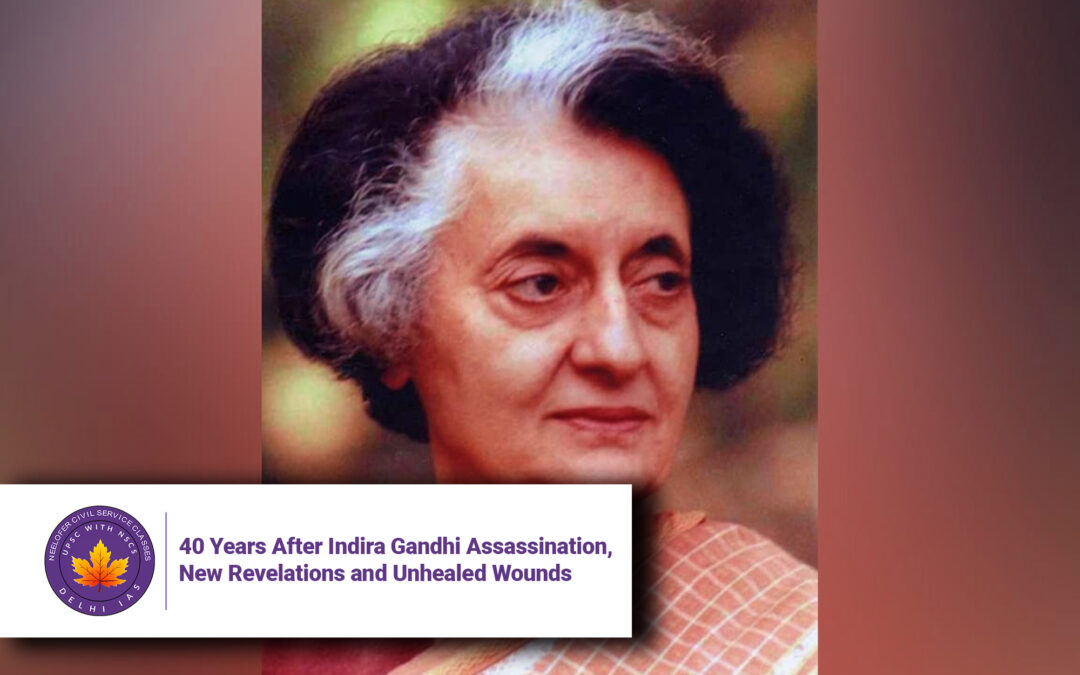
40 Years After Indira Gandhi Assassination, New Revelations and Unhealed Wounds
Why in News?
As India marks four decades since Prime Minister Indira Gandhi’s assassination (October 31, 1984), a memoir by former AIIMS Director Dr. Sneh Bhargava and archival reports reveal chilling new details about the day that reshaped India’s political landscape and triggered anti-Sikh riots. 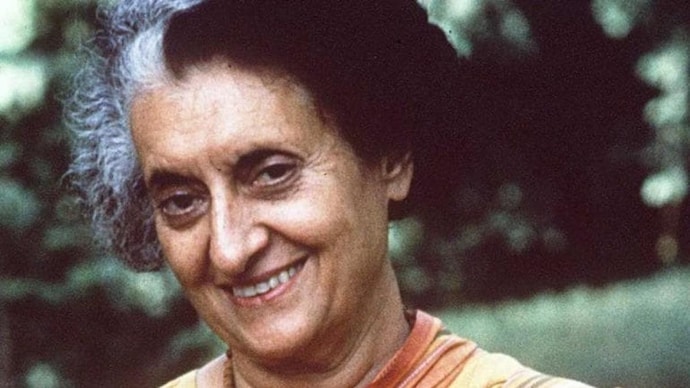
Key Revelations
-
The AIIMS Cover-Up:
-
Dr. Bhargava’s memoir The Woman Who Ran AIIMS discloses how doctors performed a “charade” of resuscitation for 4 hours despite knowing Gandhi was dead, while a Sikh perfusionist fled the OT fearing mob violence.
-
Rajiv Gandhi’s warning to his mother about a “suspicious-looking” Sikh guard (possibly Beant/Satwant Singh) days before the shooting—a detail never before made public.
-
-
Media’s Role:
-
Journalist Ritu Sarin’s eyewitness account describes breaching security to reach AIIMS’ 8th floor, later tracking down Satwant Singh’s pre-police photo from a Qutab Minar studio.
-
Her 1990 book The Assassination of Indira Gandhi documented the trial and riots that killed 3,000+ Sikhs.
-
-
Pre-Monition of Violence:
-
Even in the OT, doctors feared Sikh staff would be targeted. Dr. Bhargava writes: “A bloodbath against Sikhs could not be ruled out”—a prophecy fulfilled within hours.
-
Historical Context
-
Assassins’ Fate: Beant Singh was killed immediately by guards; Satwant Singh was hanged after trial.
-
1984 Riots: Congress leaders accused of orchestrating retaliatory violence; no senior convictions to date.
-
Rajiv’s Infamous Quote: “When a big tree falls, the earth shakes”—seen as justifying the riots.
5 Critical Questions Answered
Q1: Why did doctors continue CPR for 4 hours?
A: To maintain stability amid chaos, knowing Gandhi’s death would trigger unrest.
Q2: What was Rajiv Gandhi’s warning?
A: He allegedly cautioned his mother about a Sikh guard’s “suspicious” behavior weeks before the attack.
Q3: How did the media cover the event?
A: Limited by 1984’s tech—Sarin’s photo “scoop” of Satwant Singh was a journalistic coup.
Q4: Why is this relevant today?
A: The riots remain a festering wound for Sikhs; recent memoirs keep accountability debates alive.
Q5: What’s unresolved?
A: Whether Rajiv acted on his suspicions, and why justice for riot victims remains elusive.
Conclusion
Four decades later, Indira Gandhi’s assassination continues to haunt India’s collective memory. While new accounts like Dr. Bhargava’s peel back layers of secrecy, they also underscore how institutional failures—from security lapses to riot complicity—still demand redress. For a nation moving forward, confronting this past remains essential to healing.
— With archival inputs from Ritu Sarin’s reporting and Dr. Bhargava’s memoir

