
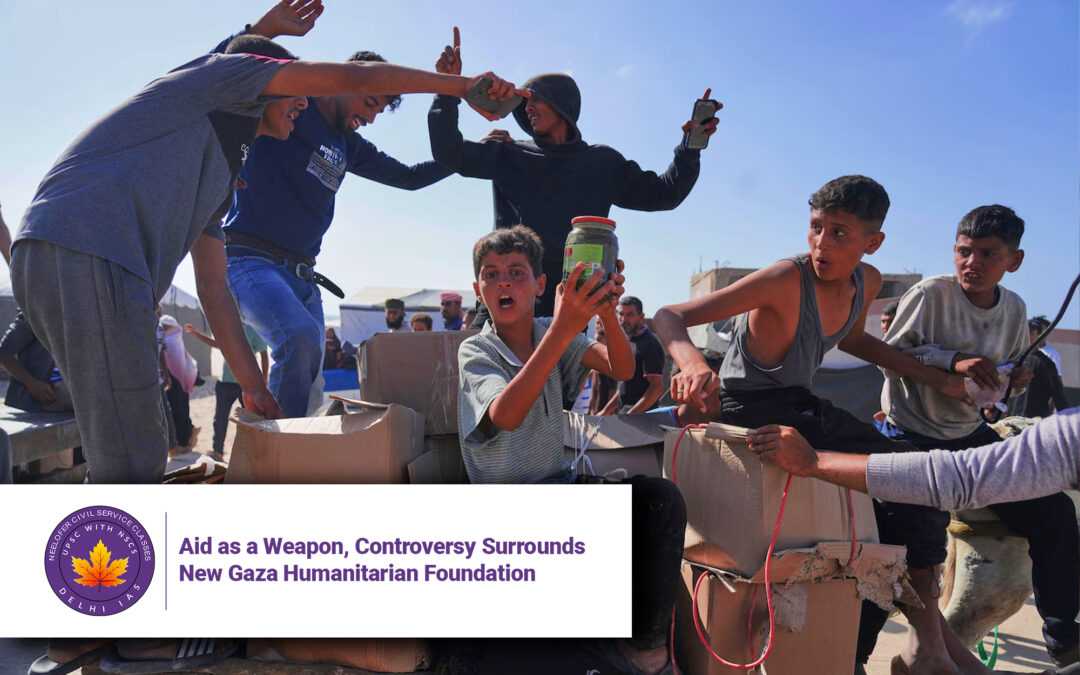
Aid as a Weapon, Controversy Surrounds New Gaza Humanitarian Foundation
Why in News?
The newly formed Gaza Humanitarian Foundation (GHF), backed by the U.S. and Israel, has begun distributing aid in Gaza amid accusations of “aid-washing”—using humanitarian efforts to mask Israel’s blockade policies. UN agencies and Palestinian groups allege the initiative violates humanitarian principles while failing to address famine conditions affecting 2 million Gazans. 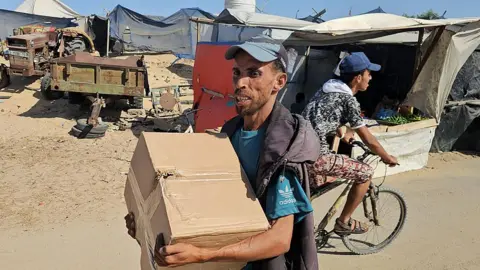
Key Developments
-
GHF’s Controversial Launch:
-
Structure: Run by U.S. military veterans and private contractors, with alleged ties to Israeli officials.
-
Operations: Aid delivered via armored tanks to 4 centralized hubs (3 in Rafah, 1 near Israeli-controlled Netzarim corridor).
-
Criticism:
-
UNRWA calls it a “parallel mechanism” undermining established aid networks.
-
Reports of violent crowd control (e.g., projectiles fired at Palestinians near distribution sites).
-
-
-
Humanitarian Crisis:
-
Famine Conditions: WHO warns of irreversible stunting in children due to malnutrition.
-
Blockade Impact: Israel’s 3-month aid suspension preceded GHF’s launch, exacerbating starvation.
-
-
Political Backlash:
-
UN Accusations: GHF accused of legitimizing Israel’s blockade while sidelining UNRWA (defunded by Israel and Western nations over disputed claims).
-
Funding Opacity: U.S. and Israel deny direct financing; EU government reportedly pledged $100M.
-
Why This Matters
-
Aid as Leverage: GHF’s centralized model lets Israel control aid flow, raising ethical concerns.
-
UNRWA’s Decline: With UNRWA crippled by funding cuts, Gaza faces a vacuum in reliable aid.
-
Long-term Risks: Dependency on militarized aid channels could normalize humanitarian conditionalities.
5 Critical Questions Answered
Q1: What is the GHF’s stated goal?
A: To distribute aid “apolitically,” but critics argue it reinforces Israeli control over Gaza’s survival.
Q2: How does GHF differ from UNRWA?
A: GHF uses private contractors/soldiers; UNRWA relies on local Palestinian staff for community-based aid.
Q3: What are the allegations of “aid-washing”?
A: Using humanitarian operations to deflect blame for Gaza’s man-made famine while maintaining blockade policies.
Q4: Why is northern Gaza excluded from GHF hubs?
A: The region, hardest-hit by Israeli strikes, remains inaccessible, highlighting selective aid access.
Q5: What’s the future of aid in Gaza?
A: Uncertain—GHF plans 8 hubs, but without addressing root causes (blockade, war), famine risks persist.
Conclusion
The GHF epitomizes the politicization of aid, where survival becomes contingent on geopolitical agendas. As Gaza’s famine worsens, the international community must demand neutral, unimpeded aid access—not mechanisms that weaponize relief. The stakes transcend Gaza: this sets a dangerous precedent for humanitarian coercion worldwide.
— With reports from AP, BBC, and UN agencies

