
Malaria Reinfection Triggers Unique Immune Cells, A Breakthrough Study
Why in News?
A major scientific study published in Science Immunology has uncovered how malaria reinfections stimulate a special type of immune cells called T follicular helper (Tfh) cells, offering promising insights into better vaccine development and novel treatments. This discovery could transform the way scientists understand not just malaria, but also other diseases where effective vaccines are still lacking. 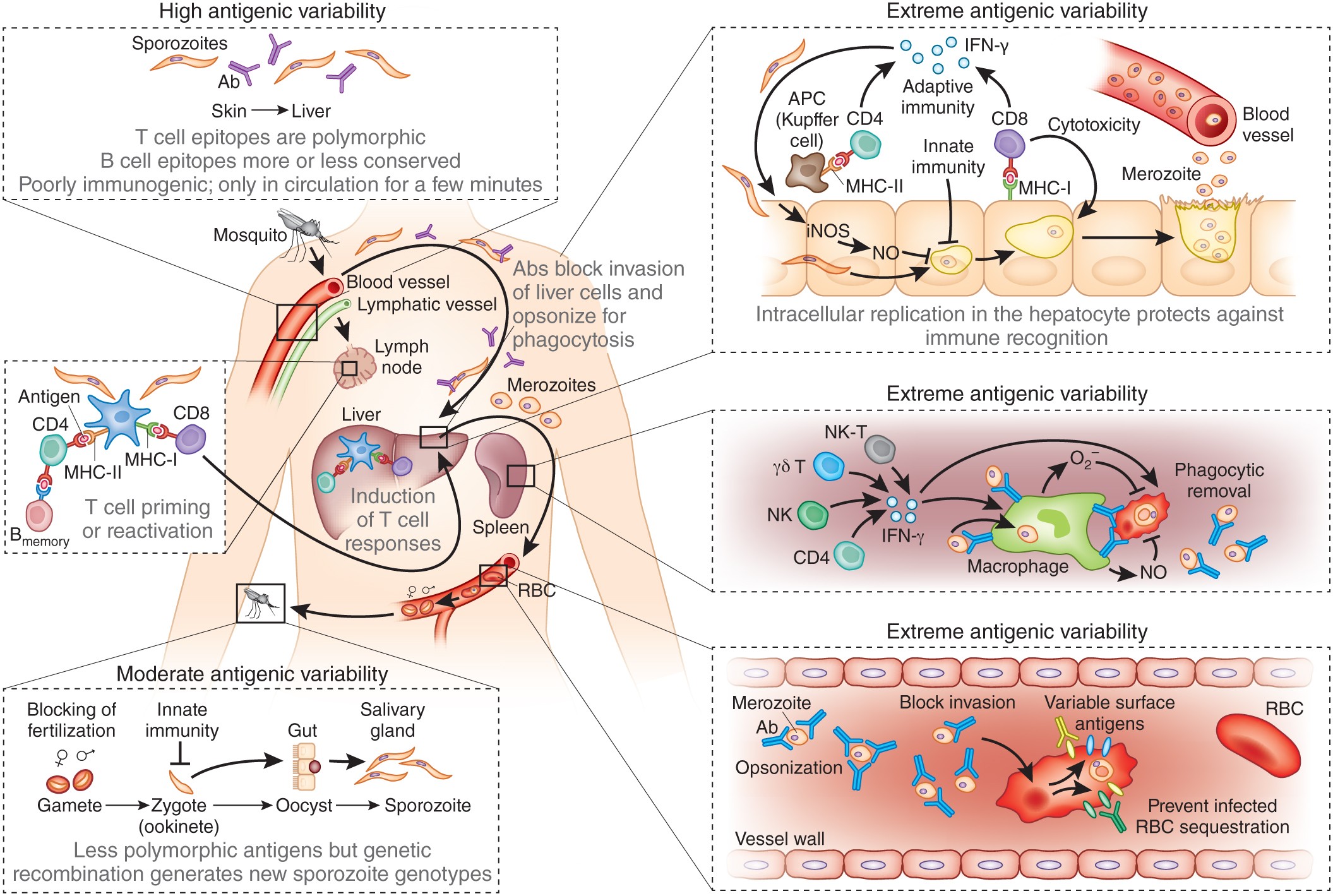
Introduction
In a groundbreaking advancement, researchers from Stanford University and Uganda’s Makerere University have discovered that repeated malaria infections reprogram helper T cells to become more effective over time. These special immune cells—T follicular helper (Tfh) cells—play a key role in helping B cells produce antibodies, which are essential to fight recurring infections like malaria.
Key Insights from the Study
-
Special T Cells Fight Malaria Reinfection
-
These reprogrammed Tfh cells act like elite commandos, quickly responding to malaria reinfection.
-
Normally, these cells are few in number, but in children repeatedly exposed to malaria, the immune system recruits them in higher numbers, making them more responsive.
-
-
Study Based on Children in Uganda
-
The research studied children under five in Uganda, where malaria reinfection is common.
-
These children often suffer more than 15 episodes of malaria by age five, making them ideal candidates for this immunological study.
-
-
Genetic Sequencing Unlocks Secrets
-
By sequencing the RNA of helper CD4+ T cells, scientists tracked their transformation during malaria reinfection.
-
These T cells gained new genetic signatures that allowed them to respond faster and more precisely upon reinfection.
-
-
Key Finding: Pf-specific Tfh Cells
-
The study found that Pf-specific (Plasmodium falciparum-specific) Tfh cells were the game-changers.
-
They were seen helping B cells to produce high-quality antibodies, essential for long-term protection.
-
-
Impact on Vaccine Research
-
The research can pave the way for next-generation vaccines that mimic the body’s natural response to malaria.
-
It also opens doors for developing similar immune strategies against HIV, dengue, and other infectious diseases.
-
Five Key Takeaways
-
Tfh helper cells are critical in fighting recurring malaria infections.
-
Children exposed to repeated malaria develop a stronger, smarter immune memory.
-
Pf-specific Tfh cells help B cells produce antibodies effectively during reinfection.
-
The study used RNA sequencing to understand T cell changes and memory development.
-
The findings may help create more effective malaria vaccines and improve vaccine design for other diseases.
Challenges and the Way Forward
Challenges:
-
The immune response to malaria varies between individuals, making vaccine design complex.
-
Many current vaccines fail to stimulate long-lasting immunity, especially in tropical, high-exposure areas.
-
Children in malaria-endemic regions often receive repeated treatments, which may affect immune memory formation.
Way Forward:
-
Leverage the study’s insights to design vaccines that activate Pf-specific Tfh cells.
-
Conduct larger, long-term studies to monitor how T cell memory evolves in real-world conditions.
-
Extend similar research models to HIV, dengue, and tuberculosis, where immune memory is still poorly understood.
Conclusion
This study marks a turning point in malaria research. By identifying the role of specialized Pf-specific Tfh cells, scientists now understand how the immune system “remembers” malaria, improving its response with each reinfection. This can lead to targeted vaccines and better therapeutic tools, bringing us closer to ending the burden of malaria and transforming approaches to chronic infectious diseases.
Q&A Section
1. What type of immune cells were found to respond strongly during malaria reinfection?
The study identified T follicular helper (Tfh) cells, especially Pf-specific CD4+ Tfh cells, as crucial responders.
2. How many malaria episodes do children under five in Uganda typically experience?
Children often suffer more than 15 episodes of malaria by the time they are five years old.
3. What method did scientists use to study the Tfh cells?
Researchers used RNA sequencing of helper CD4+ T cells to trace their evolution during reinfection.
4. What is the significance of Pf-specific Tfh cells?
These cells help B cells produce strong antibodies, creating an effective and lasting immune response against malaria.
5. How can this study impact future vaccine development?
The findings can help scientists design vaccines that trigger the same type of Tfh cell memory, making them more effective in high-risk areas.

