
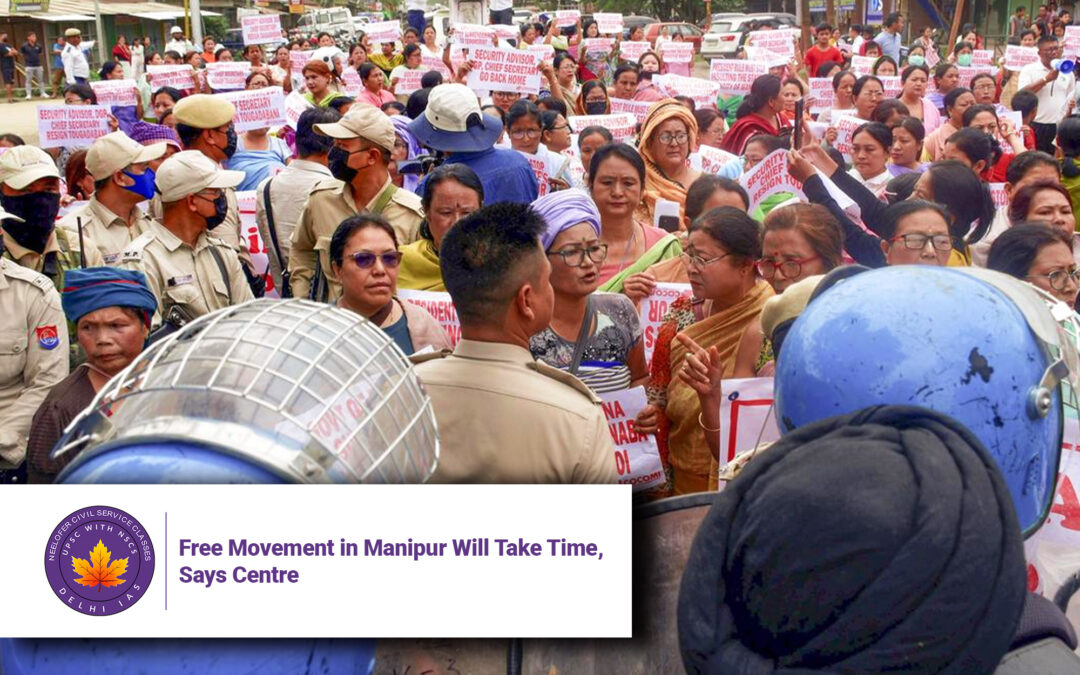
Free Movement in Manipur Will Take Time, Says Centre
Why in News?
The Central Government has informed the Meitei community that the resumption of free movement along the National Highway areas in Manipur, as well as the resettlement of internally displaced persons, will not be achievable in a few months or weeks. This statement was made in response to growing demands from civil society groups for quicker resolution of the ongoing ethnic violence in Manipur. 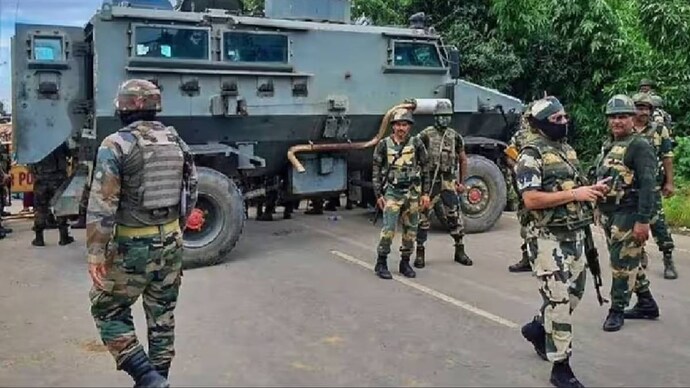
Introduction
The ongoing ethnic unrest in Manipur since May 2023 has deeply impacted the free movement of people, especially along highways, and forced thousands into displacement. Despite demands for urgent rehabilitation and normalization, the Centre has acknowledged that the process will take significant time.
Key Issues
-
Lack of Timeline
-
The Union Home Ministry, in a meeting with members of the Coordination Committee on Manipur Integrity (COCOMI), stated that no concrete timeline can be promised at this stage.
-
-
Displacement and Highway Blockades
-
Internally displaced persons (IDPs), especially Meiteis, continue to face challenges in returning home.
-
Armed groups allegedly block free movement, especially along the Kuki-Zo dominated areas.
-
-
Centre’s Message
-
The Centre emphasized that while dialogue and peace are desired, ground realities are too complex to allow swift action.
-
Any solution must ensure the safety and rehabilitation of displaced persons from all communities.
-
Alternative Approaches
-
A peace-building dialogue involving all ethnic communities could help de-escalate tensions.
-
Deployment of neutral forces and monitored zones may be considered to safely reopen highways and allow gradual return of IDPs.
Challenges and the Way Forward
Challenges:
-
Ethnic distrust and recurring violence.
-
Presence of armed groups.
-
Political sensitivities around normalizing the situation.
Way Forward:
-
Continuous communication between civil society and the government.
-
Concrete steps toward rehabilitation, even if partial or phased.
-
Broader dialogue involving Meiteis, Kukis, and other stakeholders under a neutral mediator.
Conclusion
While the Centre’s statement underscores the difficulty in immediate resolution, it also reveals a lack of urgency that worries civil groups. The return to normalcy in Manipur will need consistent efforts, transparent action, and genuine commitment to resolving ethnic tensions on the ground. Communities, especially the displaced, deserve both hope and tangible progress.
5 Questions and Answers
Q1: What did the Centre tell the Meitei delegation regarding free movement?
A: The Centre said resuming free movement and resettling displaced people is not achievable in a few months or weeks.
Q2: Who met with Union Home Ministry officials to raise concerns?
A: Delegates from the Coordination Committee on Manipur Integrity (COCOMI).
Q3: What is one major reason delaying the resumption of movement?
A: Armed groups, particularly in Kuki-Zo dominated areas, are allegedly blocking access and posing threats.
Q4: What was the Centre’s core message to the Meitei representatives?
A: The government wants long-term peace and dialogue but cannot offer a fixed timeline due to ground realities.
Q5: What solution did the civil groups expect from the meeting?
A: A clear timeline for resettling displaced persons and restoring access to blocked areas.

