
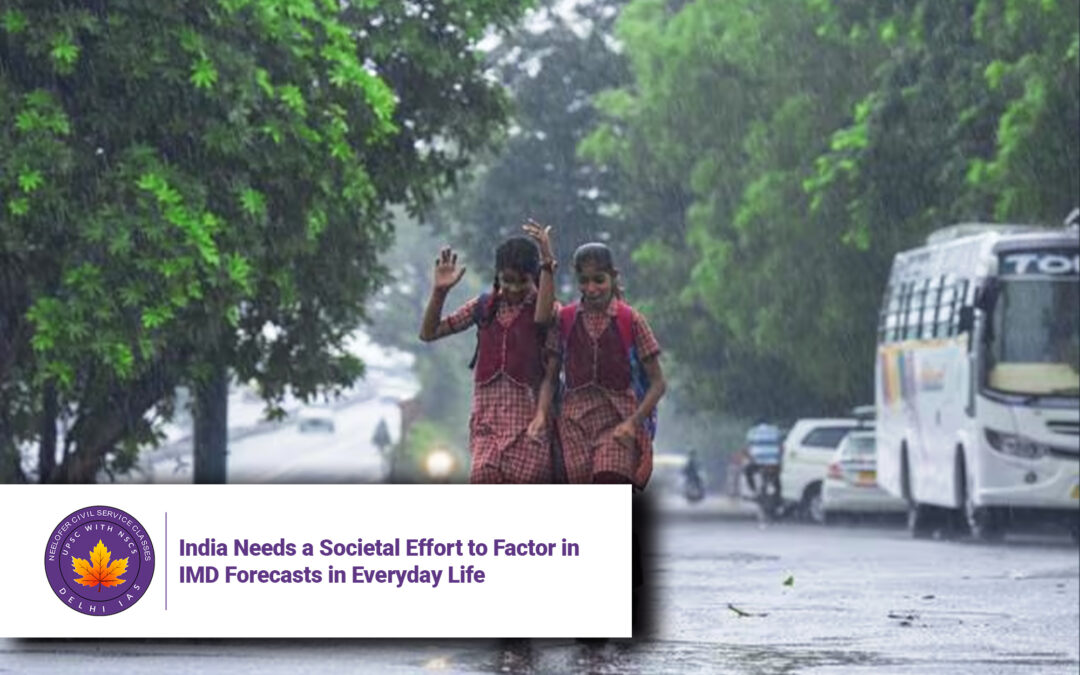
India Needs a Societal Effort to Factor in IMD Forecasts in Everyday Life
Why in News?
The southwest monsoon arrived in Kerala a week early, advancing across parts of India, with Mumbai recording its earliest monsoon in 35 years. The India Meteorological Department’s (IMD) role in issuing accurate and early forecasts brings attention to the need for better public integration and response to such information. 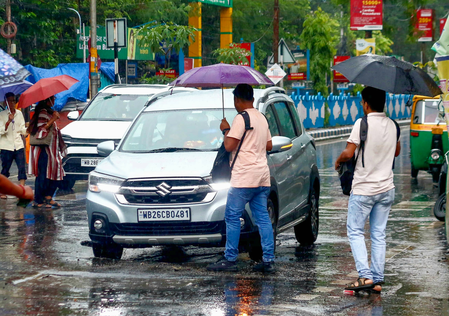
Introduction
India’s changing monsoon patterns and improved IMD predictions are prompting calls for broader societal and administrative responsiveness. The IMD had predicted the monsoon’s arrival by mid-April, and recent events prove the increasing accuracy and significance of such early forecasts in mitigating disaster and planning.
Key Features
1. Early Monsoon Onset
-
Monsoon arrived in Kerala on May 31, a week before its scheduled onset.
-
This is the fifth time since 2014 that monsoon has arrived early due to pre-cyclonic circulations in the Arabian Sea.
-
Maharashtra and Konkan coasts experienced early rainfall due to this.
2. Rare Early Monsoon in Mumbai
-
Mumbai saw rain on June 1, the earliest in 35 years.
-
Typically, Mumbai experiences monsoon in the second week of June.
3. IMD’s Forecast Accuracy
-
The IMD had forecasted an above-normal monsoon for 2024, and 5% more rain than average was recorded by mid-April.
-
The current rain tally is already 6% above average, confirming predictions.
Specific Impacts or Effects
1. Changed Rainfall Accounting
-
IMD accounts rainfall from June 1 to September 30 as monsoon rain.
-
Rain before June 1 is considered ‘pre-monsoon’ but still impacts real conditions like flooding and crop cycles.
2. Implications for Cities and Agriculture
-
Early rainfall in cities like Mumbai is not fully included in official monsoon statistics.
-
Needs better integration with city-level planning, especially for reservoirs, disaster response, and urban flooding management.
-
Farmers and agriculturists must factor in variability in rain for healthy crop planning.
Challenges and the Way Forward
Challenges
-
Misalignment between forecast data and policy action.
-
Poor integration of IMD forecasts into local and regional disaster management strategies.
-
General public unawareness or indifference to IMD updates.
Way Forward
-
Authorities must treat forecasts as planning tools, not just weather updates.
-
Wider dissemination of IMD warnings to farmers, urban planners, and citizens.
-
Strengthen awareness campaigns to make forecasts a part of daily decision-making.
Conclusion
While the IMD is becoming more accurate and technologically robust, the challenge lies in mainstreaming its warnings. A shift in perception is needed—one that views meteorological forecasts as essential components in public safety, agriculture, urban planning, and climate resilience. Societal and government responses must evolve to match the science.
Q&A Section
-
When did the southwest monsoon arrive in Kerala in 2024?
On May 31, a week ahead of its scheduled date. -
Why did the monsoon arrive early this year?
Due to a pre-cyclonic circulation in the Arabian Sea that caused an early surge. -
What’s significant about the monsoon in Mumbai this year?
Mumbai received monsoon rain on June 1, the earliest in 35 years. -
What is the IMD’s official monsoon period?
From June 1 to September 30. -
What societal change is recommended by the article?
To incorporate IMD forecasts into daily planning and improve responsiveness to climatic warnings.

