
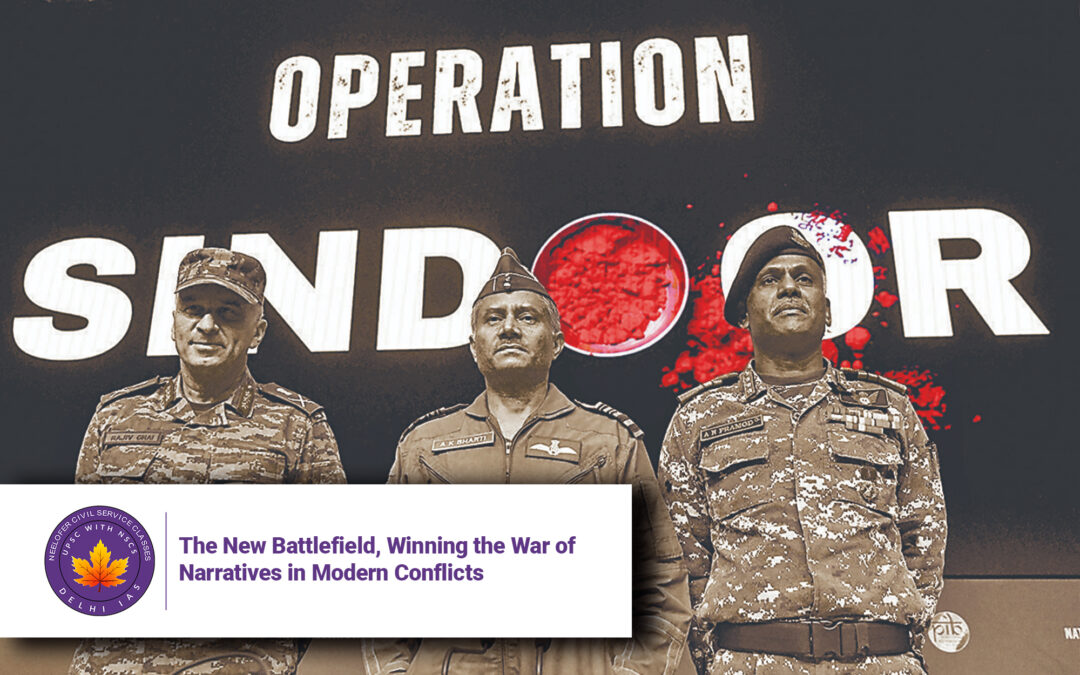
The New Battlefield, Winning the War of Narratives in Modern Conflicts
Why in News?
In the era of hybrid warfare, the information domain has emerged as a key battleground. As fake news and misinformation become powerful weapons to shape public perception and policy, the article by Lt. Gen. (Retd.) Deependra Singh Hooda offers insight into how this war of narratives is impacting national security and conflict strategies.
Introduction
While traditional warfare focuses on physical destruction, modern conflicts now involve psychological and digital warfare, where narratives often determine who wins in the court of global opinion. Recent events—from the Balakot strikes to the Russia-Ukraine war—highlight how control over information is just as crucial as military strength.
Key Issues and Background
1. Lessons from Operation Sinodar and Balakot
-
India’s strike post-Pulwama led to a battle not just on the ground but also in the information space.
-
Despite India’s factual reporting, Pakistan’s false counter-narratives—such as false claims of shooting down Indian jets—gained global attention.
-
Videos and manipulated content from Pakistan went viral, influencing global opinion and questioning the credibility of Indian media.
2. Rise of Fake News and Disinformation
-
Platforms like YouTube and TikTok are increasingly used to spread misinformation.
-
Fake content is rapidly created and distributed, sometimes outpacing official responses.
-
Example: During the Russia-Ukraine war, deepfake videos and manipulated footage were used to shape international support.
The Core of the Concern
-
Control over digital narratives can tilt the strategic balance in any conflict.
-
Nations that fail to respond effectively in the information domain risk losing moral credibility and domestic unity.
-
False claims, deepfakes, and biased media reports can create confusion, erode trust, and weaken the military and diplomatic stance of a country.
Key Observations
-
Speed and reach are key elements of successful information campaigns.
-
The general public is often unable to differentiate between verified and unverified content.
-
Democracies like India face unique challenges, as freedom of speech often delays censorship, unlike authoritarian regimes.
-
Armed forces often operate in media-sensitive environments, limiting their ability to respond rapidly or aggressively to false claims.
Challenges and the Way Forward
Challenges:
-
Disinformation spreads faster than facts.
-
Low digital literacy among citizens.
-
Platforms prioritize clicks over truth, making fake content more visible.
-
A lack of unified response strategy across military and civilian communication teams.
Steps Forward:
-
Establish dedicated teams for narrative warfare within armed forces and government agencies.
-
Encourage the public to rely on credible sources and support digital literacy campaigns.
-
Coordinate with tech platforms to flag or remove harmful content promptly.
-
Use data analytics to monitor and counter hostile information operations.
-
Promote authentic storytelling from reliable veterans and officials to combat lies with lived experience.
Conclusion
In the modern age, wars are fought not just with weapons but with words, videos, and data. The battle of narratives is as strategic as battlefield victories. India and other democratic nations must urgently prioritize information warfare capabilities to safeguard national integrity and public perception.
Q&A Section
-
What is the “war of narratives”?
It refers to using misinformation and fake news to influence public perception and international opinion during conflicts. -
Why is this significant now?
Digital platforms enable rapid spread of false narratives that can impact military strategies and diplomatic standing. -
What example is cited from India?
The post-Pulwama Balakot strikes, where false Pakistani narratives outpaced India’s official communication. -
What is the biggest challenge in narrative warfare?
Combating the speed and emotional impact of fake news while preserving freedom of speech. -
What is the suggested way forward?
Building institutional capacity for information operations, improving media literacy, and real-time coordination with tech platforms.

