
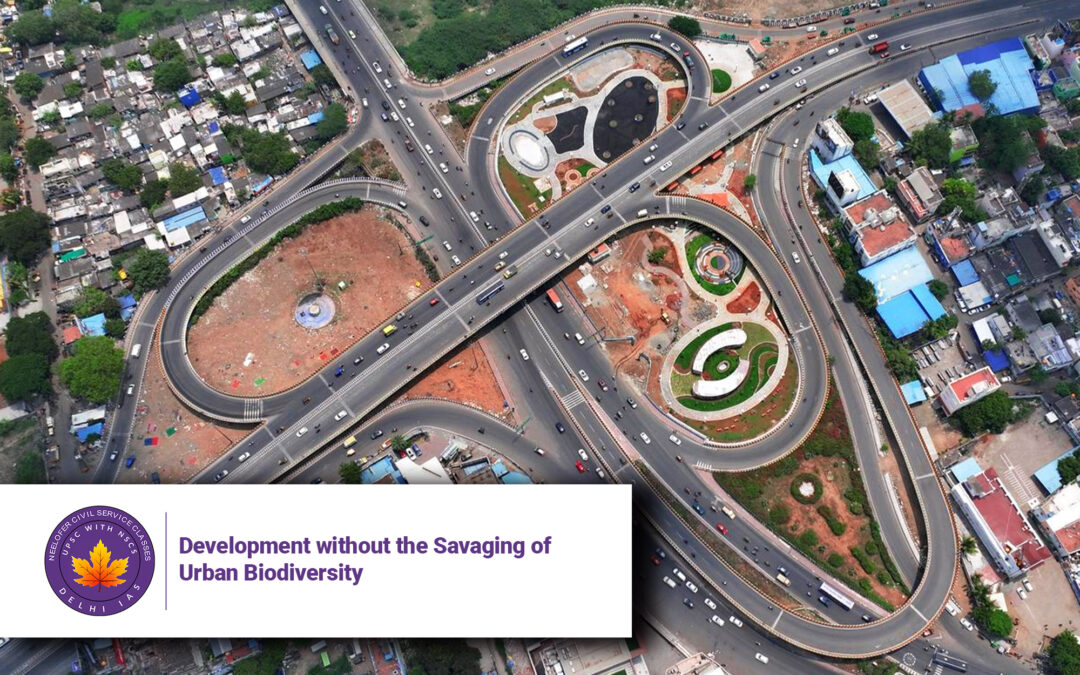
Development without the Savaging of Urban Biodiversity
Why in News?
On the occasion of International Day for Biological Diversity (May 22), discussions have intensified about the growing threat to biodiversity in India’s urban landscapes due to rapid development and shrinking green spaces. 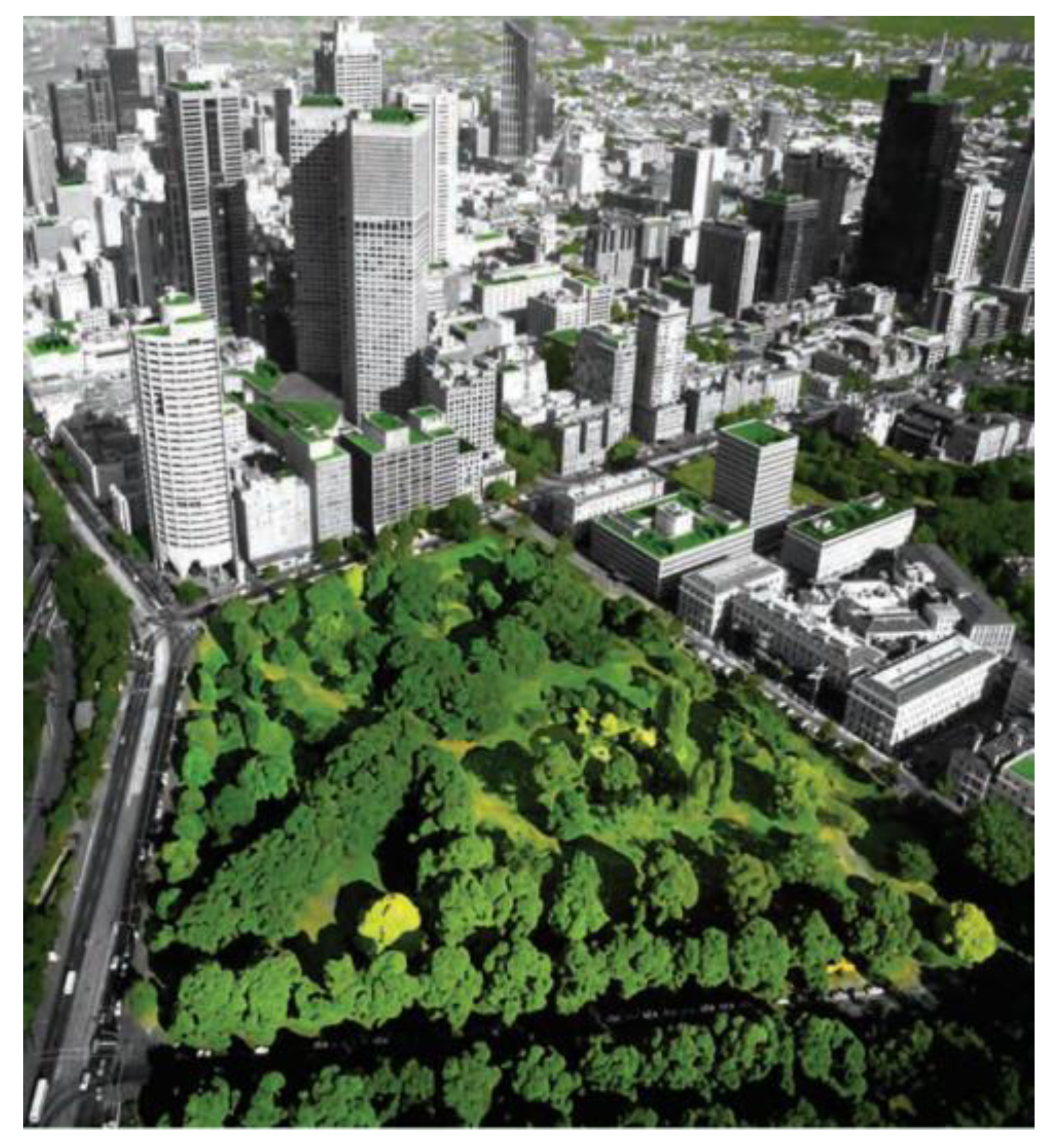
Introduction
Biodiversity, which includes the variety and variability of life on Earth, is critical to human well-being and a sustainable future. Yet around 25% of species are currently threatened with extinction. With more than half the world’s population now living in urban areas, maintaining biodiversity in cities is essential for health, climate resilience, and economic stability.
Key Issues and Background
Global Biodiversity Framework (GBF)
Adopted under the Convention on Biological Diversity, the GBF includes 23 targets to protect and manage biodiversity. Target 12 focuses on enhancing urban green spaces and biodiversity conservation to support human well-being.
Loss of Urban Greenery
According to the Forest Survey of India, Indian cities have only 10.26% green cover. Chennai (8.52%) and Hyderabad (6.84%) lag behind cities like Mumbai (25.43%) and Bengaluru (28.46%). From 2012 to 2022, Chennai and Hyderabad lost 2.6 and 1.6 sq. km of green cover, respectively.
Threats to Ecosystems
Many urban wetlands and green zones are under threat. For instance, Chennai’s Pallikaranai marsh has been severely degraded despite being a Ramsar site. Similarly, natural recharge zones are being replaced with artificial structures, undermining groundwater sustainability.
Benefits of Urban Biodiversity
-
Health and Environment: Trees reduce urban heat, improve air quality, and reduce noise pollution. In Frankfurt, street trees lowered temperature and improved livability.
-
Economic Value: Research from the University of New York shows that trees add around ₹6,70,000 per square kilometre in economic benefits annually.
-
Social and Cultural Value: Urban parks and green spaces provide areas for recreation, spiritual reflection, and community interaction.
The Core of the Concern
Urban development often ignores the long-term ecological costs. City planning without consideration of biodiversity results in the destruction of habitats, loss of ecosystem services, and decreased quality of life for residents.
Key Observations
-
UN Habitat recommends three trees per home or workplace and 0.5–1 hectare of green space within a 300-meter radius.
-
Community gardens, kitchen gardens, and street tree planting are effective ways to promote biodiversity.
-
Chennai’s efforts, such as planting 27,000 trees as part of green cover expansion, show potential but need to be scaled up and better planned.
Conclusion
India’s urban development must align with the principles of sustainability and biodiversity preservation. Local bodies, planners, and citizens must come together to protect green spaces, conserve wetlands, and integrate biodiversity in city planning. Making biodiversity conservation a people’s movement is not just urgent—it is essential for our survival.
Q&A Section
-
What is the International Day for Biological Diversity?
It is observed on May 22 to promote awareness about the importance of biodiversity. -
What does the Global Biodiversity Framework aim for by 2030?
To conserve and manage at least 30% of global terrestrial and marine biodiversity. -
How much green cover do Indian cities have on average?
Only about 10.26% of their total geographical area. -
What are the health benefits of urban trees?
They improve air quality, reduce noise and heat, and promote mental well-being. -
How can cities improve biodiversity conservation?
Through community engagement, adopting the City Biodiversity Index, protecting wetlands, and integrating green spaces in planning.

