
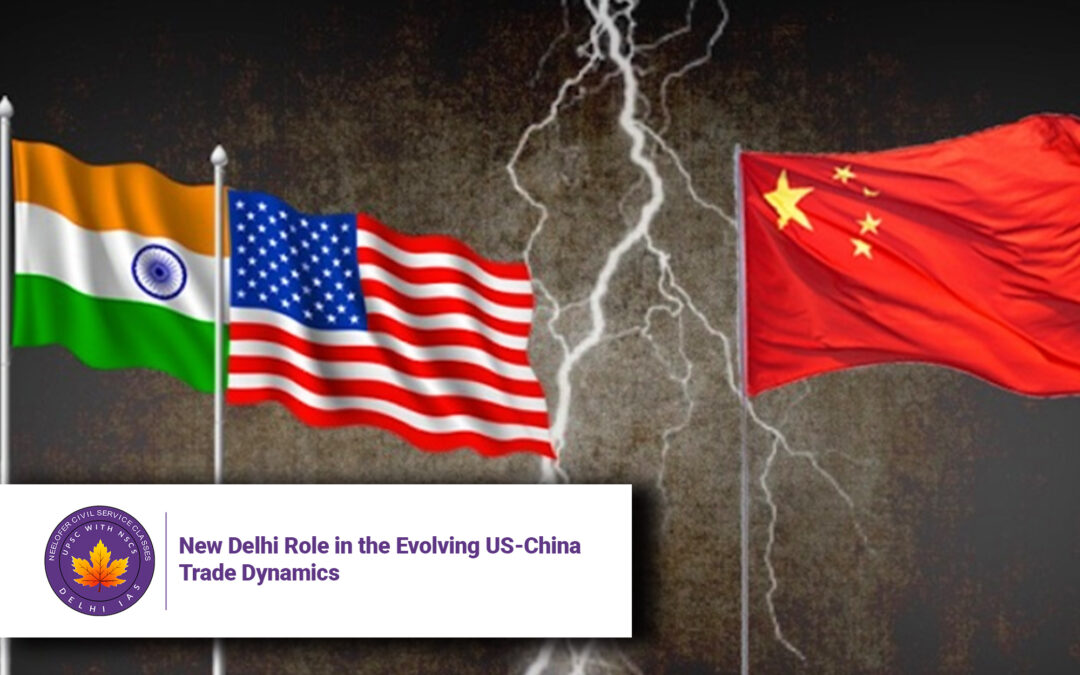
New Delhi Role in the Evolving US-China Trade Dynamics
Why in News?
On May 12, the United States and China announced a temporary reduction in tariffs, signaling a fresh diplomatic phase in their ongoing trade war. This change holds significant implications for global trade flows, especially for India, which now stands at a crossroads in recalibrating its economic strategies with major global powers. 
Introduction
The US-China trade war, ongoing since 2018, has affected global supply chains, tariffs, and technological cooperation. The recent step to reduce tariffs marks a potential thaw in relations, with both sides agreeing to set up mechanisms for economic dialogue. For India, this situation opens both risks and opportunities in navigating its position between two major economies while securing national interests.
Key Developments and Background
1. Temporary Tariff Reduction
-
New US-China tariff rates came into effect on Wednesday (May 15).
-
A mechanism for bilateral economic and trade relations has been initiated, including direct talks between Scott Bessent (US) and Chinese Premier Li Qiang.
-
The US wants to reduce the trade deficit and ease supply chain disruptions.
2. Strategic Shifts and Industry Impacts
-
Trump-era tariffs impacted US industries relying on Chinese imports.
-
Chinese companies and manufacturers are closely watching these developments for signs of stability in supply chains.
-
Over 2000 trade complaints have been filed against China at the WTO, 37 of them by India.
3. India’s Growing Trade Interests
-
India has an opportunity to strengthen economic ties with the US and EU while maintaining strategic autonomy from China.
-
India’s trade with China has risen to over $113 billion, but a widening trade deficit and strategic concerns persist.
-
PM Narendra Modi’s engagements with Greece, France, and the UK point toward diversifying trade partnerships.
The Core of the Concern
India cannot afford to remain passive in this new global trade equation. The US and EU are moving toward new supply chain alignments, and New Delhi needs to position itself as a reliable and attractive alternative to Chinese manufacturing. This will require:
-
Economic policy reforms.
-
Infrastructure improvements.
-
Strengthened Free Trade Agreements (FTAs) with Western powers.
Conclusion
India’s global trade strategy must evolve with the changing dynamics between the US and China. It must act swiftly to consolidate its role in alternative supply chains and leverage partnerships with the EU and US, without alienating China. The art of this “New Deal” lies in balancing strategic diplomacy with economic pragmatism.
5 Questions and Answers
Q1. What recent development took place between the US and China regarding trade?
A: On May 12, the US and China agreed to temporarily reduce tariffs and set up a bilateral economic dialogue mechanism.
Q2. Why is this development important for India?
A: It presents India with an opportunity to strengthen its trade relations with the US and EU while positioning itself as an alternative to Chinese supply chains.
Q3. How is India affected by the US-China trade war?
A: India has faced indirect impacts such as trade disruptions, a rising trade deficit with China, and challenges in its own industrial competitiveness.
Q4. What role is India playing to counterbalance China in global trade?
A: India is enhancing its engagement with Western nations, signing new trade agreements, and seeking to become a part of trusted supply chains.
Q5. What are the risks if India fails to act in the current trade realignment?
A: India could miss out on becoming a key manufacturing hub, lose investment opportunities, and remain dependent on Chinese imports.

