
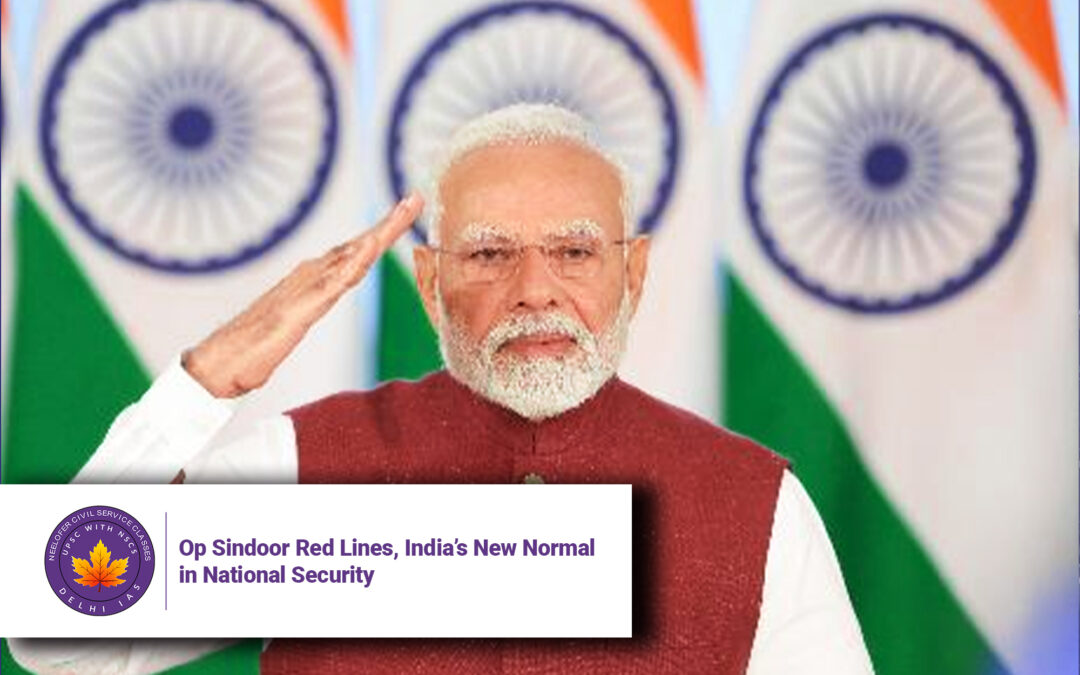
Op Sindoor Red Lines, India’s New Normal in National Security
Why in News?
Prime Minister Narendra Modi’s strong address after the Operation Sindoor briefing and the Pulwama-like terror strike at Pahalgam has redefined India’s approach to peace and security. His speech highlighted a shift from reactive to assertive defence strategy, establishing clear red lines for hostile forces and signaling a “new normal” in India’s national security doctrine. 
Introduction
In the wake of fresh cross-border threats and terror incidents, India has launched Operation Sindoor, combining technological superiority and strategic firmness. PM Modi’s remarks signaled a turning point in how India will respond to future attacks, by integrating military, diplomatic, and societal resilience into one unified strategy.
Key Issues and Highlights from PM Modi’s Address
1. A Nation Holding Its Breath
The terror strike in Pahalgam and the events after Operation Sindoor revived fears of past large-scale military escalations. For the first time since 1971, India has witnessed both cross-border shelling and attacks inside cities, emphasizing the evolving nature of hybrid warfare.
2. Linking Dots: A Clear Strategy
PM Modi’s approach focused on “connecting the dots” — linking terror attacks in places like Bahawalpur, Muridke, and Pahalgam to Pakistani military camps. This articulation placed responsibility squarely on Pakistan for fostering terrorism and using its territory for attacks on India.
3. No Pause for Retaliation
PM Modi made it clear that retaliation is not just an option but a moral and strategic responsibility. “We have just suspended our retaliatory action,” he said, indicating that India’s forces stand ready and capable to respond at a time and place of its choosing.
4. Focus on Unity and Humanitarian Duty
A powerful portion of his speech was dedicated to the emotional and human cost of terror attacks:
“The daughters who were killed, and their female relatives were forced to watch.”
He extended a message of unity across the nation — “from every brother to every sister” — urging citizens to rise above political divides and stand with the nation.
5. The New Normal in Defence Policy
Modi’s emphasis on India’s deterrence capability backed by strong intelligence, offensive action, and national resolve defines a new phase. No longer reactive, India is now shaping its security environment by denying terrorists and their sponsors any safe haven or moral legitimacy.
Challenges and the Way Forward
-
Balancing Retaliation with Responsibility: While India now asserts a more aggressive stance, it must still balance action with international law and regional stability.
-
Need for Institutional Reform: Institutionalizing the “new normal” will require reforms in intelligence, military preparedness, and cyber capabilities.
-
Diplomatic Pressure: Continued global engagement is essential to hold Pakistan accountable and isolate it diplomatically.
-
Public Awareness and Unity: The role of citizens is vital in resisting divisive narratives and supporting national integrity.
Conclusion
Operation Sindoor and PM Modi’s address have marked a new chapter in India’s national security approach — one that merges military might with moral clarity. As India faces modern warfare and ideological battles, this assertive yet humane strategy will define its path forward.
Five Questions and Answers
Q1. What triggered the national focus on Operation Sindoor?
A: A terror strike in Pahalgam followed by India’s strategic briefing on Operation Sindoor brought attention to new cross-border threats and India’s response plan.
Q2. What was PM Modi’s key message after Operation Sindoor?
A: PM Modi emphasized that India has not abandoned retaliation but has only paused it. He linked terrorism directly to camps in Pakistan and called for national unity and justice.
Q3. What does “new normal” in India’s security strategy mean?
A: It refers to a shift from passive to active deterrence — combining military readiness, political will, and citizen involvement to confront and neutralize threats proactively.
Q4. How did PM Modi use humanitarian references in his speech?
A: He spoke about the emotional trauma caused by terrorism, especially women’s suffering, to underline the human cost and justify India’s moral duty to act.
Q5. What long-term changes does India aim for under this doctrine?
A: India aims to institutionalize this assertive policy, strengthen defence capabilities, maintain global diplomatic pressure, and build national unity to deter future threats.

