

Expanding Tree Cover, A Vital Strategy for India’s Climate Goals
Why in News?
As climate change intensifies, expanding tree cover and implementing afforestation strategies have become crucial pillars in India’s effort to meet its net-zero carbon emissions target by 2070. Recent policy pushes, corporate participation, and agroforestry efforts highlight a growing consensus around the environmental and economic importance of large-scale tree plantation. 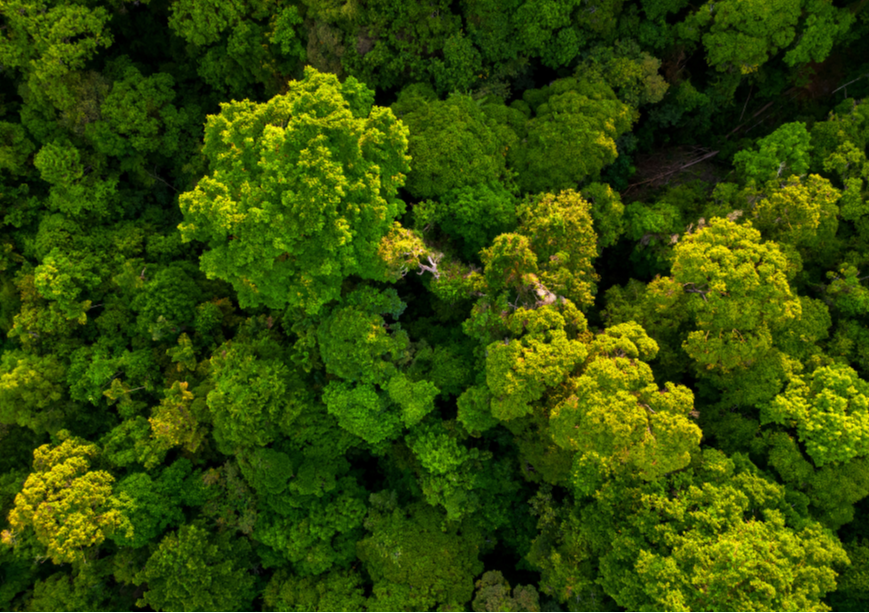
Introduction
India’s forest and tree cover currently stands at 25.7%, falling short of the 33% target set by the National Forest Policy of 1988. With rising industrial emissions, deforestation, and urbanisation threatening ecosystems, enhancing tree cover is not only an environmental imperative but also an economic opportunity—especially for rural communities and industries under pressure to reduce their carbon footprint.
Key Issues and Background
1. Importance of Afforestation
Tree plantations help reduce greenhouse gas emissions by storing atmospheric carbon dioxide (CO₂). In India, the full potential of carbon sequestration remains underutilized. Afforestation also improves soil health, reduces erosion, increases rainfall, and helps in climate resilience.
2. Government Initiatives
Several national policies aim to promote afforestation:
-
The National Agroforestry Policy (2014) and Trees Outside Forests in India (TOFI) promote tree planting among farmers and rural landowners.
-
Green India Mission (GIM) under the National Action Plan on Climate Change aims to restore degraded forest lands. GIM increased India’s forest cover by 0.56% between 2017 and 2021.
3. Corporate Participation
Companies are increasingly including afforestation in their carbon offset strategies. This aligns with Corporate Social Responsibility (CSR) goals and international sustainability standards. Examples include sectors like automobile manufacturing, cement, and energy.
The Core of the Concern
India faces pressure to reduce its carbon emissions due to international regulations like the European Union’s Carbon Border Adjustment Mechanism (CBAM), set to begin in 2026. This mechanism will tax carbon-intensive imports such as steel and cement. For Indian exporters, afforestation offers a cost-effective solution to reduce carbon footprints and remain competitive.
Key Observations
-
Agroforestry’s Promise: Integrating trees into agriculture systems can improve soil fertility, boost farm incomes (by 20–30% as per ICAR), and enhance climate resilience.
-
Private Sector Involvement: Voluntary initiatives, such as carbon offset markets, provide incentives for businesses to invest in plantations.
-
Employment Generation: Large-scale afforestation can generate millions of jobs in nursery management, agroforestry, and forest conservation.
-
Policy Challenges: Despite benefits, implementation remains difficult due to the high cost of carbon credits, lack of a strong domestic carbon trading policy, and limited private investment.
Conclusion
As India moves towards its net-zero target by 2070, afforestation and carbon sequestration must become key pillars of its sustainability strategy. Strategic policy support, corporate involvement, rural participation, and international collaboration are essential. The risks of inaction—in terms of environmental degradation and economic disadvantage—are simply too high.
5 Questions and Answers
Q1. What is India’s current tree and forest cover as a percentage of its land area?
A) 33%
B) 25.7%
C) 20%
D) 29.4%
Answer: B) 25.7%
Q2. What is the target forest cover set by the National Forest Policy of 1988?
A) 25%
B) 30%
C) 33%
D) 35%
Answer: C) 33%
Q3. Which government mission helped increase India’s forest cover between 2017 and 2021?
A) National Green Tribunal
B) Green India Mission
C) Clean Energy Mission
D) Tree for All Programme
Answer: B) Green India Mission
Q4. What international policy will impose tariffs on carbon-intensive exports like steel and cement starting in 2026?
A) Kyoto Protocol
B) Paris Agreement
C) EU Carbon Trading Directive
D) EU Carbon Border Adjustment Mechanism
Answer: D) EU Carbon Border Adjustment Mechanism
Q5. According to the Indian Council of Agricultural Research, how much can agroforestry increase farm incomes?
A) 5–10%
B) 10–15%
C) 15–20%
D) 20–30%
Answer: D) 20–30%
