
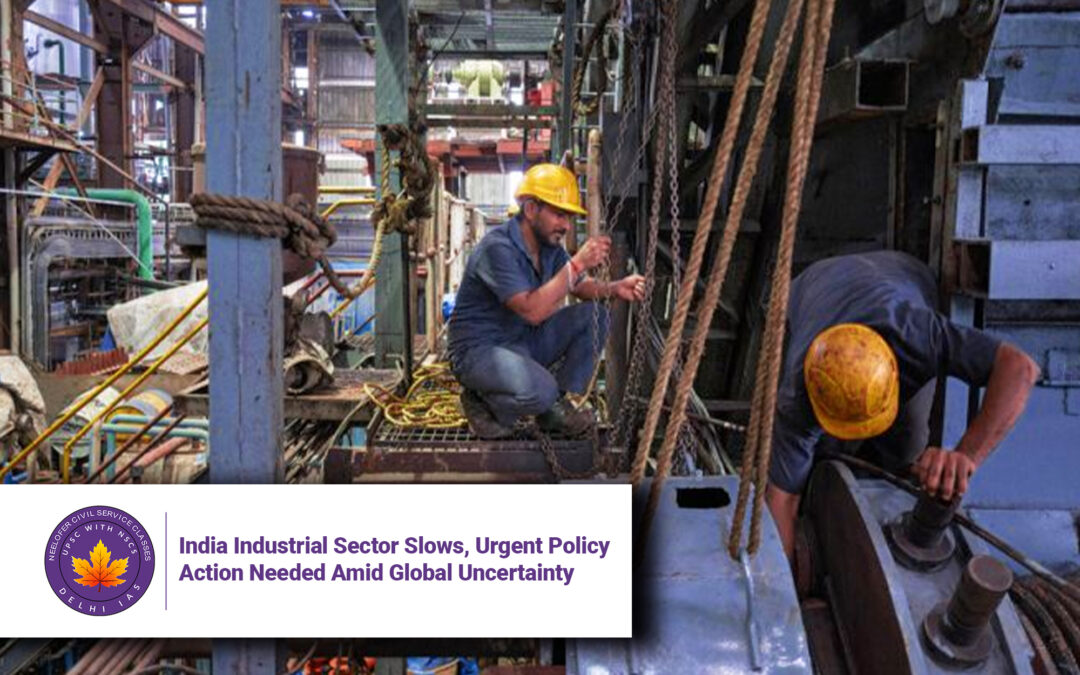
India Industrial Sector Slows, Urgent Policy Action Needed Amid Global Uncertainty
Why in News?
India’s Index of Industrial Production (IIP) has hit a four-year low in FY2025, reflecting a broader economic slowdown. With uncertainties in the global economy, subdued demand, and weaker private investment, the industrial sector—especially manufacturing and non-durables—demands immediate policy attention. 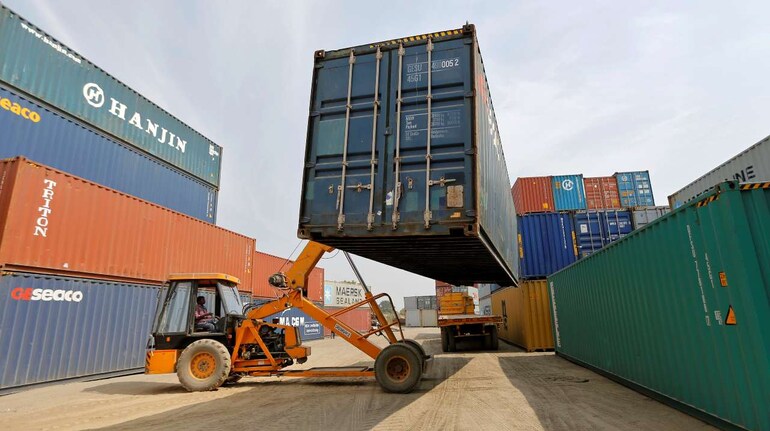
Key Highlights
-
IIP Growth Slumps: FY25’s average IIP is at its lowest in four years, pointing to a deceleration in industrial activity.
-
Power Output Spike: IIP rose from 2.7% (Feb) to 3% (Mar), driven mostly by a seasonal surge in power production (6.3%), not industrial momentum.
-
Sectoral Underperformance: Mining fell from 7.5% (FY24) to 2.9% (FY25); manufacturing dropped to 4% from 5.5%; electricity slid to 5.1% from 7%.
-
Consumer Non-Durables Dip: A -1.6% degrowth was recorded in FY25, down from a 4.1% rise last year.
-
Retail Inflation & Demand Stress: Retail inflation fell to 4.6%, the lowest in six years, yet steep falls in vegetable prices hurt rural incomes and consumption.
-
Urban Consumption Holds: Urban demand, especially for durables, almost doubled—from 3.6% (FY24) to 8% (FY25).
-
RBI Lending Rate Cut: Repo rate reduced to 6% in April FY25, from 6.5%, aiming to revive credit flows.
-
Exports Face Pressure: Slowing goods exports and strained US trade ties risk hurting MSMEs reliant on international markets.
-
MSME Dependence on US Trade: The US, India’s top trading partner, is critical for the 45.8% MSME share in exports.
Background and Issues
Global & Domestic Headwinds:
-
Global economic slowdown affects exports, leading to lower factory output.
-
Domestic consumption remains weak despite inflation relief and rate cuts.
Policy Gaps:
-
Lack of targeted stimulus for sectors like mining and manufacturing.
-
Insufficient support for consumer non-durables, which are seeing contraction.
MSME Sector Risks:
-
Despite growth from ₹24 lakh crore (FY21) to ₹112 lakh crore (FY25) in MSME exports, global trade tensions may undo gains.
-
Nearly half of India’s exports rely on MSMEs—most vulnerable to policy or diplomatic shocks.
The Way Forward
Revive Industrial Growth:
-
Introduce sector-specific incentives for lagging industries like mining and consumer goods.
-
Boost infrastructure and logistics for manufacturing hubs.
Strengthen MSME Resilience:
-
Ensure smooth Bilateral Trade Agreement negotiations with the US to safeguard export demand.
-
Expand financial support and credit access for small enterprises.
Boost Rural Demand:
-
Provide direct income support or subsidies to compensate for low agricultural prices.
-
Increase public investment in rural infrastructure and employment schemes.
Conclusion
India’s industrial stagnation signals deeper structural issues in demand, investment, and global trade dependencies. While power production gives a temporary lift, real recovery lies in targeted reforms, strategic trade diplomacy, and strengthening consumption—especially in rural and manufacturing sectors. Without timely policy action, India risks prolonged slowdown in its growth engine.
5 MCQs with Answers
Q1. What is the average IIP growth rate for FY25, and why is it significant?
A) 4.6%, highest in four years
B) 3%, driven by exports
C) Lowest in four years, indicating industrial slowdown
D) Highest since COVID recovery
Answer: C) Lowest in four years, indicating industrial slowdown
Q2. What sector saw the highest growth in March due to seasonal trends?
A) Manufacturing
B) Power Production
C) Mining
D) MSME exports
Answer: B) Power Production
Q3. What was the rate of degrowth in consumer non-durables in FY25?
A) -4.1%
B) +1.6%
C) -1.6%
D) +2.5%
Answer: C) -1.6%
Q4. What percentage of India’s exports are contributed by the MSME sector?
A) 25.3%
B) 33.2%
C) 45.8%
D) 60%
Answer: C) 45.8%
Q5. What is one major concern about India’s trade relations with the US mentioned in the article?
A) Bans on vegetable imports
B) Delay in bilateral trade agreements
C) Increase in oil prices
D) Rise in US import duties
Answer: B) Delay in bilateral trade agreements

