
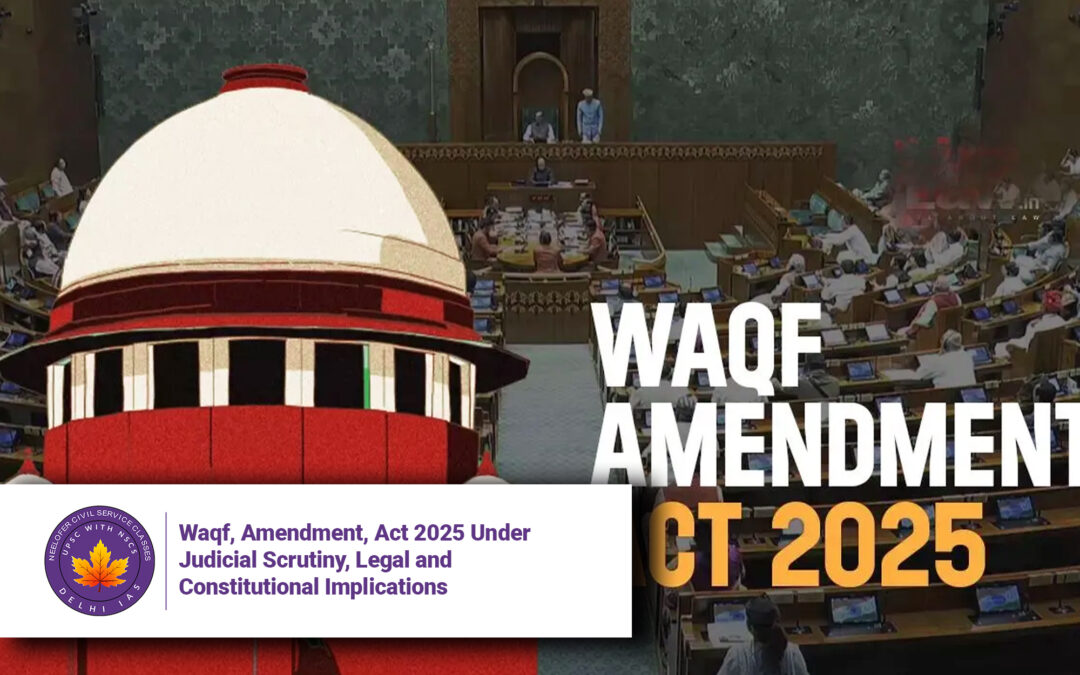
SC Waqf Verdict, A Beacon of Hope for Citizens Rights and Constitutional Morality
Why in News?
The Supreme Court’s recent observations on the Waqf (Amendment) Act, 2025 have gained national attention for reaffirming the Court’s role as a guardian of constitutional rights, especially in the context of religious freedom and state neutrality. 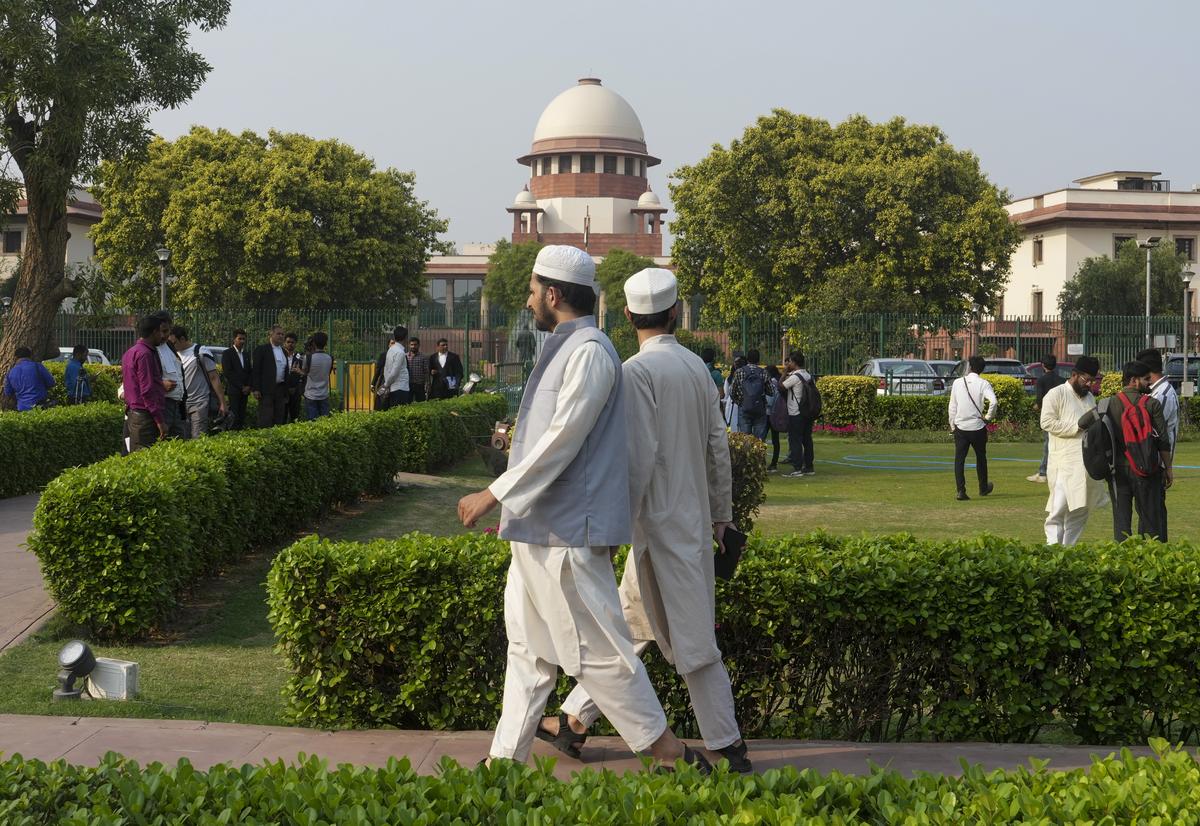
Introduction
The Indian judiciary, particularly the Supreme Court, has often emerged as a refuge for vulnerable communities. The latest intervention, where the Court addressed the implications of the Waqf (Amendment) Act, 2025, continues this legacy by protecting fundamental rights guaranteed under Articles 25 and 26 of the Indian Constitution.
Key Issues and Background
What is the Waqf (Amendment) Act, 2025?
The Act proposes sweeping changes to the Waqf Act, including:
-
Control over religious institutions.
-
Potential infringement on rights under Articles 25 and 26, which guarantee freedom of religion, conscience, and independence in managing religious affairs.
SC’s Observations
The Supreme Court, while hearing a case in Juma Masjid v. State of Maharashtra, expressed concern about:
-
State interference in religious matters.
-
The marginalisation of minorities, especially Muslims, through unjustified legal action.
-
The need for governance to respect constitutional values and secularism.
The Core of the Concern
Freedom of Religion Under Threat
The Court observed that:
-
The proposed amendments strike at the heart of religious autonomy.
-
Article 26 guarantees every denomination the right to manage its own religious affairs without state control.
-
Using legal provisions to target religious institutions may lead to sectarian divisions and injustice.
Wider Constitutional Context
Referring to Ambedkar’s historic warnings, the article emphasizes:
-
Democracy demands respect for sentiments of minorities.
-
State neutrality is essential to prevent majoritarianism.
-
Constitutional morality must guide governance, not political convenience or prejudice.
Key Observations
Secularism and Constitutional Balance
-
The judgment cited that “the State has no religion.”
-
It reaffirmed that public donations for religious purposes should be governed with the donor’s intention in mind.
-
Institutions like the Waqf must operate independently and not become tools of political control.
Impact on Society
-
Such verdicts play a critical role in maintaining public trust in judicial systems.
-
They serve as reminders that constitutional rights are non-negotiable, even amid political shifts.
Conclusion
The Supreme Court’s stand on the Waqf issue sends a strong message against state overreach into religious matters. It underscores the judiciary’s responsibility to protect citizens’ rights, especially when they are threatened by legislative or executive actions. In doing so, it upholds the spirit of secularism, inclusivity, and justice.
Q&A Section
Q1. What is the main concern with the Waqf (Amendment) Act, 2025?
Ans: It is believed to infringe upon the fundamental rights of religious communities under Articles 25 and 26, particularly by interfering in the internal management of religious institutions.
Q2. What constitutional principles did the SC uphold in its verdict?
Ans: The SC upheld the values of secularism, religious freedom, and state neutrality, emphasizing that the government cannot dictate or interfere in religious affairs.
Q3. What was B.R. Ambedkar’s warning mentioned in the article?
Ans: Ambedkar warned that sovereignty must always remain impartial, and governments must avoid pandering to majority sentiments while neglecting minority rights.
Q4. How did the SC describe the State’s role in religion?
Ans: The Court reiterated that “the State has no religion,” and its actions must be free of bias, ensuring that all communities are treated equally under the Constitution.
Q5. Why is this judgment considered significant?
Ans: It is a strong judicial reminder that citizens’ fundamental rights cannot be overridden by political decisions and that the Constitution remains the supreme guiding force in India’s democracy.
