
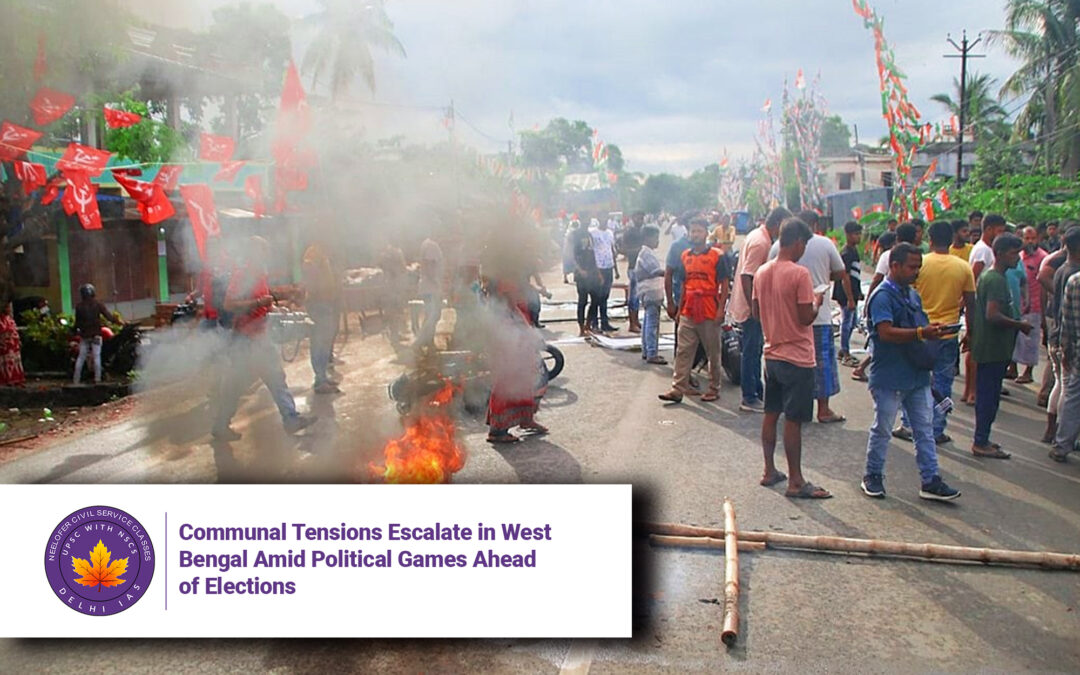
Communal Tensions Escalate in West Bengal Amid Political Games Ahead of Elections
Why in News?
Recent violent protests in West Bengal’s Murshidabad district over the Waqf (Amendment) Act have claimed three lives, revealing deep-rooted communal divisions. With Assembly elections approaching in a year, political parties are being accused of inflaming tensions for electoral gains. 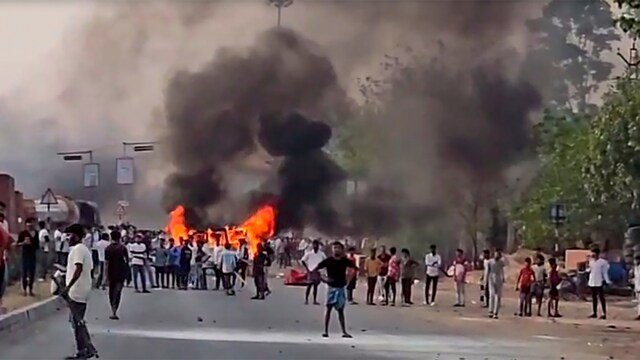
Introduction
West Bengal is once again at the center of communal unrest. What began as protests against the Waqf (Amendment) Act in Murshidabad on April 8 has spiraled into widespread violence. Despite assurances by Chief Minister Mamata Banerjee that the Act would not be implemented in the state, public confidence remains low. The situation is now being exploited by political forces for their own benefit.
Key Issues and Political Fault Lines
1. Murshidabad Protests and Violence
The violence, resulting in three deaths, started with protests against the Waqf Act and escalated despite prohibitory orders and internet shutdowns. Public property was attacked in areas like Jangipur and parts of Kolkata.
2. Political Blame Game
Both the ruling Trinamool Congress (TMC) and the opposition BJP are being held responsible for worsening the situation. The TMC has been accused of silently encouraging Muslim protests, while the BJP backed Ram Navami processions that were communally charged.
3. Weak Policing and Administrative Failure
Despite prior experience with similar unrest in 2019 during protests against the Citizenship Amendment Act, the administration failed to prevent this round of violence. The police’s inaction before and during the unrest has raised serious concerns.
4. Calcutta High Court’s Intervention
In response to the deteriorating situation, the Calcutta High Court has ordered the deployment of central armed police forces in Murshidabad to restore law and order.
5. Communal Polarisation for Electoral Gain
With the Assembly elections due in 2026, both major parties appear to be stoking communal sentiments for political mileage. This is seen as part of a troubling trend visible across the nation.
Challenges and the Way Forward
-
Restoring Public Trust: Both the state and central governments must act with impartiality and transparency.
-
Depoliticizing Law Enforcement: The police need to operate independently, free from political pressure, to ensure peace.
-
Preventing Further Communal Division: Political parties must be held accountable for inciting unrest and focus instead on development and governance.
-
Addressing Poverty and Local Grievances: Murshidabad is one of the poorest regions, and long-standing economic issues must be addressed to prevent further unrest.
-
Maintaining Peace During Festivals: Religious occasions must not be politicised; preventive action and monitoring are necessary to avoid flare-ups.
Conclusion
The current unrest in West Bengal is a result of political opportunism and administrative failure. As the state braces for the 2026 Assembly elections, the focus must urgently shift to restoring normalcy, enforcing the rule of law, and addressing the real needs of the people. Governance must take precedence over polarisation.
Q&A Section
Q1. What triggered the recent violence in West Bengal?
The violence erupted in Murshidabad during protests against the Waqf (Amendment) Act and has since spread to other regions, including Kolkata.
Q2. How have political parties reacted to the situation?
The TMC is accused of encouraging protests, while the BJP backed Ram Navami processions. Both are seen as exploiting the situation for political gain.
Q3. What action has the Calcutta High Court taken?
The High Court ordered the deployment of central armed police forces in Murshidabad to restore order.
Q4. Why is Murshidabad particularly vulnerable to unrest?
It is one of the state’s most impoverished areas, where economic hardship makes the population more susceptible to communal and political manipulation.
Q5. What is being recommended to resolve the situation?
Swift, impartial administrative action, strong policing, and a shift in political focus from communal issues to governance and development are recommended.
