
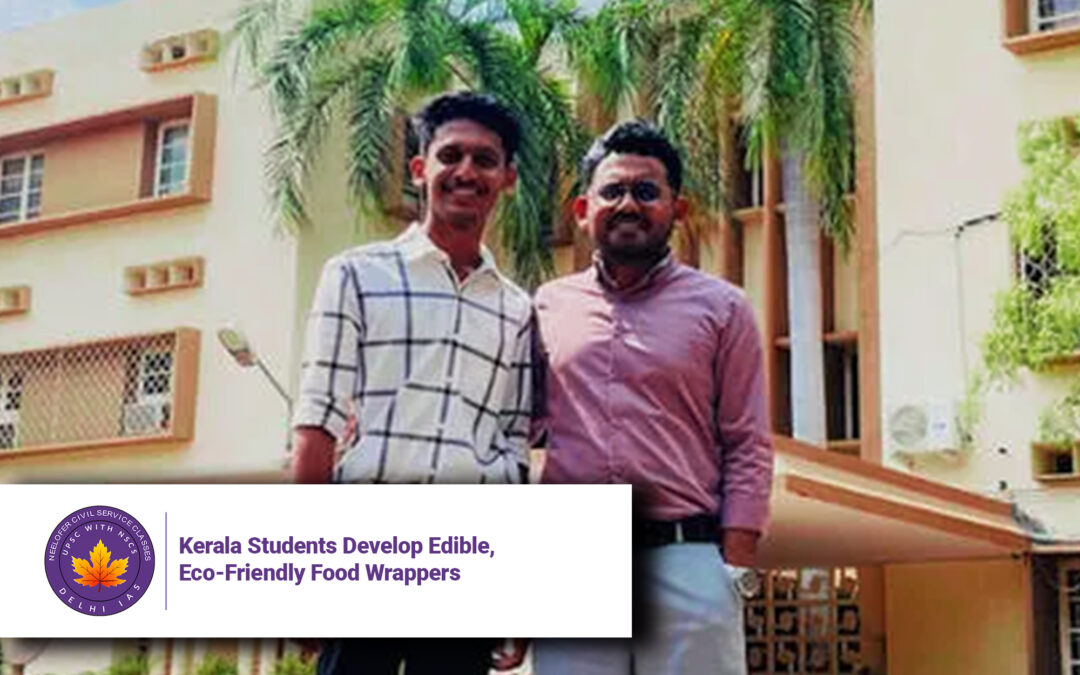
Kerala Students Develop Edible, Eco-Friendly Food Wrappers
Why in News?
Two students from Kerala have developed an edible and biodegradable food wrapper, addressing the growing concern over plastic waste. Their innovation, named ‘Eden Wrap’, is poised to revolutionize sustainable packaging. 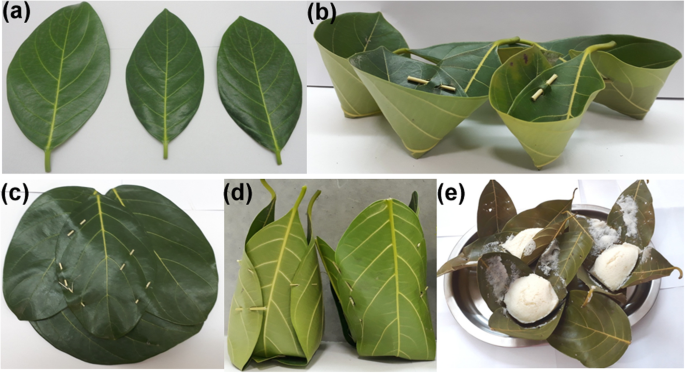
Introduction
In a promising step towards reducing plastic waste, Ashir Kariyattil and Mohammed Nabin, students from the College of Agriculture, Vellayani (near Thiruvananthapuram), have developed an edible food wrapper using natural, biodegradable materials. Their invention not only aligns with sustainability goals but also has potential commercial applications in the food packaging industry.
Key Issues / Background
-
The Innovators
Ashir Kariyattil, a recent M.Sc. (Integrated) Biotechnology graduate, and Mohammed Nabin, a B.Sc. (Hons.) Agriculture student, are the minds behind the eco-friendly packaging innovation. -
The Product: Eden Wrap
The edible wrapper is made using bacterial cellulose produced by specific bacteria and infused with essential oils from selected plants. These oils offer anti-microbial properties and extend shelf life. -
Environmental Benefits
The wrapper decomposes within a month if discarded and mimics the texture and appearance of plastic. It reduces plastic waste and promotes sustainable living. -
Mentorship and Recognition
The duo credited their success to mentorship by Soumya V.I. from the Department of Microbiology. They also gained funding through competition wins and guidance from experts during innovation events. -
Future Plans
Ashir and Mohammed plan to spend the next year enhancing the product, studying market trends, and applying for a patent. They have an opportunity to work with the Council of Scientific and Industrial Research (CSIR) on further development.
Key Takeaways
-
Innovation: Creation of ‘Eden Wrap’, an edible, biodegradable food wrapper.
-
Sustainability: Helps reduce plastic waste and promotes eco-friendly alternatives.
-
Science-backed: Developed using cellulose-producing bacteria and essential oils.
-
Commercial Potential: Extends food shelf life; suitable for mass production.
-
Support System: Mentorship, competitions, and research backing facilitated progress.
Challenges and the Way Forward
While the product shows immense promise, public awareness and acceptance of edible wrappers must be cultivated. Further testing, cost-efficiency, and scalability need to be addressed before large-scale adoption. Collaboration with CSIR could play a pivotal role in bringing the innovation to the market.
Conclusion
‘Eden Wrap’ is a shining example of how student-led innovation can contribute meaningfully to environmental sustainability. The success story of Ashir and Mohammed serves as an inspiration for young scientists and entrepreneurs aiming to make a real-world impact.
Q&A Section
Q1. Who developed the edible food wrapper ‘Eden Wrap’?
Ashir Kariyattil and Mohammed Nabin, students from the College of Agriculture, Vellayani in Kerala.
Q2. What materials are used in the edible wrapper?
The wrapper is made from bacterial cellulose and infused with essential oils that provide anti-microbial properties.
Q3. How long does the wrapper take to decompose if discarded?
It decomposes within one month and resembles plastic in appearance.
Q4. What benefits does the wrapper offer besides being edible?
It helps reduce plastic waste, extends shelf life of food, and is environmentally sustainable.
Q5. What are their future plans regarding the project?
They plan to further develop the product, apply for a patent, research market trends, and collaborate with the Council of Scientific and Industrial Research (CSIR).
